
What happened
An Oct. 19 Reuters report cited by 24/7 Wall St. says AI-related investment could approach $1 trillion in 2027, about 3% of U.S. GDP, while the Fed's benchmark rate sits at 3.75% to 4.00% after September's quarter-point increase.
Why it matters
The same spending that keeps the economy growing may also keep inflation elevated, so the Fed could tighten further and make borrowing costlier for everyone else.
Summaries like this, in your inbox every morning.
The tension is that AI has become one of the American economy's most powerful growth engines, with technology companies pouring hundreds of billions of dollars into data centers, semiconductors, and electrical infrastructure. That spending creates jobs and fuels demand, but it also chases a limited supply of construction workers, electrical equipment, power supplies, and computing infrastructure, and when demand outpaces supply, prices rise. The Fed is already struggling to contain inflation, and its benchmark rate stands at 3.75% to 4.00% following September's quarter-point increase.
A split exists within the AI industry itself. Microsoft, Alphabet, and Amazon generate billions in operating cash flow, and Alphabet alone generates more than $100 billion annually, giving them financing flexibility that smaller competitors lack. By contrast, CoreWeave reported approximately $35 billion in debt and $640 million in quarterly interest expenses earlier this year, making its expanding debt burden a risk investors cannot ignore. Homebuilders such as D.R. Horton and smaller retailers and manufacturers face rising financing costs without benefiting directly from AI investment.
The AI boom is not necessarily bad for the economy, since its productivity benefits could eventually help reduce inflation, but those gains may arrive years after the bills come due. Investors are advised to favor companies capable of financing growth through operating cash flow and to approach leveraged AI infrastructure stocks and interest-rate-sensitive businesses more cautiously. The Fed meets again Oct. 27–28, with another increase widely expected later this year.
Pick your industry and the AI tools you use, and get news related to your work every day.
Free · 30 seconds with Google · unsubscribe anytimeWhat is AIToday? →
Ask AI anything about this article. The AI reads this article, earlier AIToday articles, and Wikipedia, and cites its sources. Q&As are published on this page for other readers too.
ASI Inc., formerly Air Space Intelligence, raised a $325 million Series C led by Spark Capital, valuing it at…

Google released TorchTPU, a version of the PyTorch framework that lets developers run existing AI apps and mod…
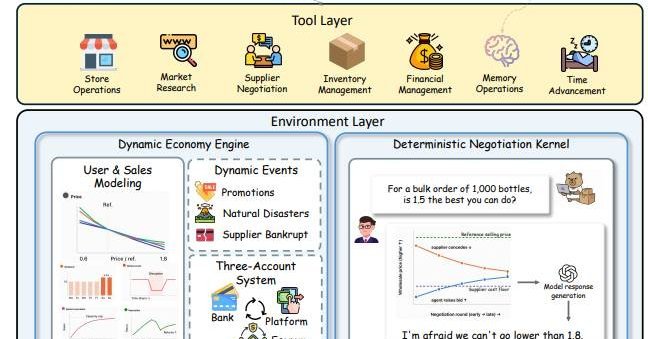
In a benchmark called E-Commerce Bench, 18 AI models ran up to four simulated shops for 365 days, using 18 too…
ITmedia's AI Plus released a 14-page booklet on using Gemini Notebook's (formerly NotebookLM) Studio feature…

Axon stock is down 54% from its 2025 peak and 30% year-to-date, even as the iShares Expanded Tech-Software Sec…

Dell CFO David Kennedy told theCUBE that CFOs are adding a dedicated line item for token spend and tracking it…