
What happened
Kimi K3, a Chinese AI model released as open-source (free to download and modify), has been available for a week. Early testing shows it underperforms compared to leading US AI models—it is weaker at finding cybersecurity vulnerabilities and consumes far more tokens than US equivalents despite appearing efficient on paper.
Why it matters
Although Kimi K3 itself is not a competitive threat, open-source models can be stripped of safety guardrails (including Chinese government restrictions) and repurposed by hackers. Safety advocates worry that future, more capable open-source models could be used to develop bioweapons, since it is harder to get closed-source models to assist with such requests. The real risk lies not in today's models but in preparing for a future where powerful AI can be freely downloaded and used without safeguards.
What to watch
Banning open-source AI models is impractical to enforce. The focus should shift to preparing defenses and safety practices for a scenario in which powerful open-source models become standard, rather than attempting to prevent their release.
Ask the AI about this article →
Summaries like this, in your inbox every morning.
Kimi K3 exemplifies a recurring pattern in Chinese AI releases: strong benchmark performance that does not translate to real-world capability. The model's weak performance on cybersecurity tasks and high token consumption relative to US models suggest that current open-source offerings from China do not yet pose an immediate competitive or security threat. However, the body of the article makes clear that the risk calculus changes as open-source models improve. Today's models may be benign, but the underlying architecture—freely downloadable, modifiable, and free from safety constraints—creates a structural vulnerability that will only matter more as capability increases. The article also acknowledges a practical reality: banning open-source models is unenforceable. Once code is released publicly, attempts to restrict its use or distribution face insurmountable coordination and technical challenges. This leaves policymakers and labs facing a strategic choice between trying to enforce an impossible restriction or investing in resilience and defensive measures for a world in which open, powerful AI models are a fact of life.
For example, today's edition would include:
AI-summarized, only the topics you pick — one digest a day via Email, Slack, or Discord.
Free · 30 seconds with Google · unsubscribe anytimeWhat is AIToday? →
Ask AI anything about this article. Q&As are published on this page for other readers too.
Xi Jinping told the BRICS summit in New Delhi that China will lead a BRICS "community" for open-source AI, sup…
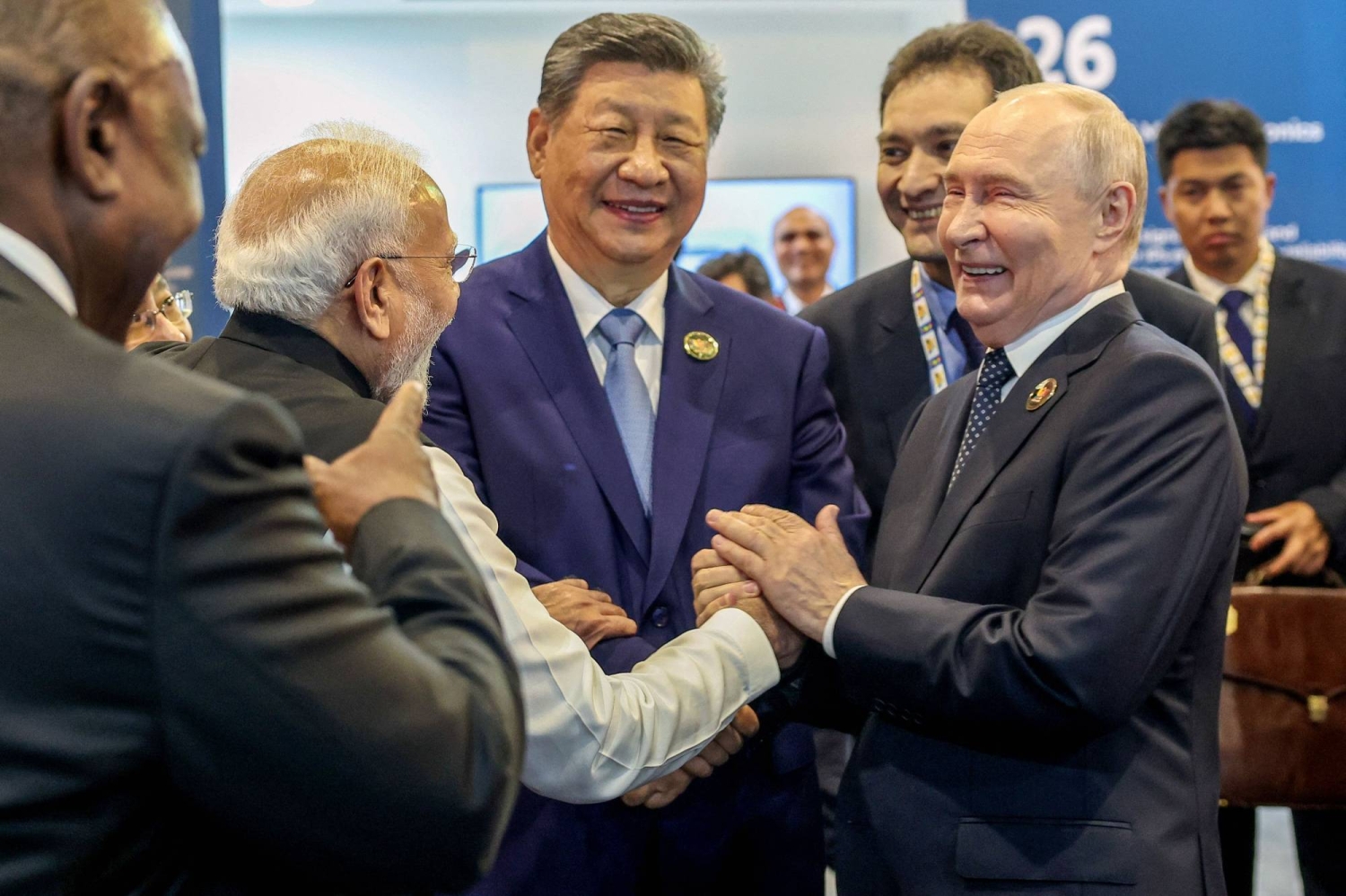
Chinese lab AllSpark released Iris-mini and Iris-pro, search agents with 35 billion and 397 billion parameters…

U.S. agencies on Tuesday accused DeepSeek, Moonshot and four other Chinese AI companies of extracting capabili…
DeepSeek launched V4.1-Flash, a 763B-parameter open-weight model with a causal encoder-decoder architecture

Dynatrace acquired Arize AI, adding AI observability, evaluation and agent monitoring to its application obser…

Y Combinator CEO Garry Tan told CNBC he would do nothing about distillation, and told TechCrunch he wants smal…


