
What happened
SpaceX's Q2 capital expenditures came in at roughly $18.4 billion, with $15.8 billion devoted to AI, versus $1.4 billion for Starlink and $1.2 billion for space and rockets.
Why it matters
AI went from one pillar among rocket launching and satellite internet to the bulk of SpaceX's quarterly spending, while orbital data centers got little focus in the Q2 report and call.
What to watch
Whether orbital data centers become a central part of the strategy appears to hinge on SpaceX first building out AI infrastructure on Earth, which Musk emphasized on the call. It is unclear how much of the $15.8 billion went to orbital work.
WHO IT HITSInvestors weighing SpaceX's AI spending against its Starlink and launch businesses, and anyone tracking whether orbital data centers move from concept to funded buildout, may want to follow the company's next quarterly disclosure on how the capex splits.
Ask the AI about this article →
Summaries like this, in your inbox every morning.
SpaceX has built its identity around reusable rockets and the Starlink satellite communications business, but the second-quarter numbers show where its money is actually going. Of roughly $18.4 billion in capital expenditures, $15.8 billion went to AI — a figure that dwarfs the $1.4 billion for Starlink and $1.2 billion for space and rockets. Within AI, the company frames orbital data centers as a potentially revolutionary performance driver, offering more direct access to solar energy and superior heat diffusion that could remove the need for water-based cooling.
The catch is that the company's own messaging does not yet match that ambition. Orbital data centers received relatively little focus in the Q2 report and conference call, and CEO Elon Musk spent the call on terrestrial data centers instead, pointing to how SpaceX's rocketry and space expertise helps engineer data centers here on Earth. It is also unclear how much of the $15.8 billion was aimed at orbital development at all.
The upshot, as the article frames it, is that investors probably should not assume SpaceX needs orbital data centers to succeed anytime soon. Even a complete failure of the project would not necessarily be an insurmountable setback, so the near-term test looks less like a verdict on orbital computing and more like whether the company's terrestrial AI buildout can justify the scale of the spending.
For example, today's edition would include:
AI-summarized, only the topics you pick — one digest a day via Email, Slack, or Discord.
Free · 30 seconds with Google · unsubscribe anytimeWhat is AIToday? →
Ask AI anything about this article. Q&As are published on this page for other readers too.
OpenAI reportedly agreed to buy smartphone camera software startup Glass Imaging for more than $300 million, p…

Aron Inc. launched with $8 million raised across two rounds

At the AI ROI in Contact Center Summit, analysts Bob Laliberte and Zeus Kerravala said contact center AI ROI w…
Pedro Andrade, Talkdesk's VP of AI and generative AI business specialist, told theCUBE that CXA is "an operati…
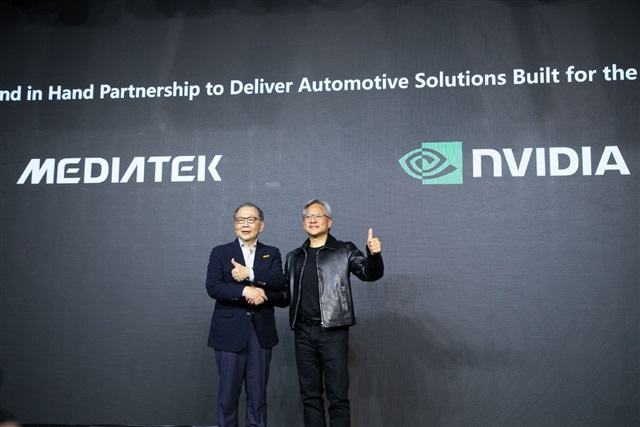
Nvidia invested US$3.5 billion in MediaTek convertible bonds, expanding cooperation into custom AI chips, AI P…
TechTouch surveyed 319 people overseeing generative AI at firms with over 1,000 employees