
What happened
Alibaba released Qwen 3.8 27B on August 16, 2026, an Apache 2 licensed 27-billion-parameter vision-capable LLM that can run on consumer hardware like a MacBook Pro or NVIDIA DGX. The model defaults to "xhigh" reasoning effort, which causes it to spend excessive computation on even simple tasks—a pelican SVG took 21 minutes with 22,276 reasoning tokens, versus 2 minutes with reasoning off.
Why it matters
The 17GB model performs sophisticated work locally—coding, image annotation with bounding boxes, and running as a coding agent—without relying on cloud APIs. However, inference speed of 15–30 tokens per second on the tested hardware lags far behind hosted models like OpenAI 5.6 Sol (74 tokens/second) and 5.6 Luna (184/second), making it impractical for many real-time use cases despite strong capability.
What to watch
Multi-Token Prediction (MTP), an architecture feature built into the model, showed a ~72% speedup in early testing when invoked via llama.cpp. The author expects further optimization innovations "over the next few weeks," which could make local deployment more competitive with API-based alternatives on speed.
Summaries like this, in your inbox every morning.
Qwen 3.8 27B arrives at a inflection point for local open-source models: capability has reached a level where a 17GB file running on consumer hardware can rival proprietary cloud APIs in versatility, yet infrastructure constraints—specifically memory bandwidth on conventional CPUs and GPUs—still impose a speed penalty that limits practical adoption as a daily-driver replacement. The model's self-reported benchmarks show improvement over its predecessor Qwen 3.6 27B and the closed-weight Qwen 3.7-Plus (which ranked among Qwen's strongest models in May 2026), but the article does not cite independent benchmark validation yet.
The xhigh reasoning default reveals a design tension: the model's reasoning capability is genuine and measurable—it produced a nearly-correct bounding-box tool on the first attempt where reasoning-off mode failed—but the default setting is counterproductive for consumer hardware. Users must actively dial down reasoning effort to achieve practical latency. The author's examples (21 minutes for a pelican SVG with reasoning, 2 minutes without) underscore that the model's capability does not automatically translate to usability at default settings.
The emerging optimization pathway via Multi-Token Prediction (MTP)—an architecture feature already embedded in the model, now being exposed by llama.cpp—suggests that speed constraints are not fundamental to the model design but rather artifacts of current serving infrastructure. A ~72% speedup from MTP alone hints that further tuning and community innovation could significantly close the gap to cloud API speeds over the coming weeks, potentially making local deployment more viable without sacrificing capability.
Pick your industry and the AI tools you use, and get news related to your work every day.
Free · 30 seconds with Google · unsubscribe anytimeWhat is AIToday? →
Ask AI anything about this article. The AI reads this article, earlier AIToday articles, and Wikipedia, and cites its sources. Q&As are published on this page for other readers too.
ElevenLabs completed a $300 million employee tender at a $22 billion valuation, and co-founder Mati Staniszews…

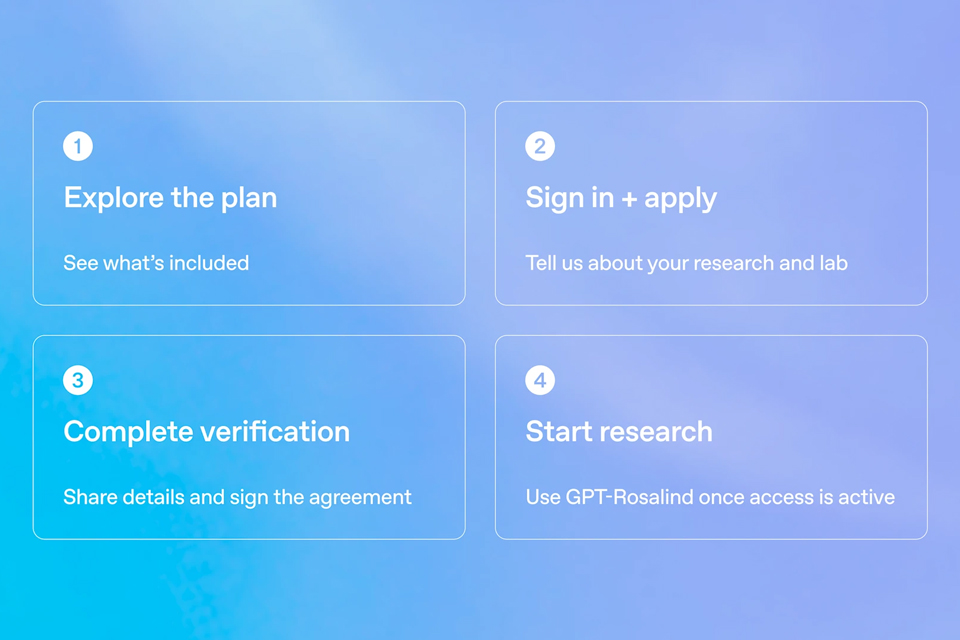
On October 15, OpenAI announced the Rosalind Academic Plan, giving approved US university labs free access to…
A Qiita article compared automated red-teaming methods for LLM apps — GCG, PAIR, and TAP — using mock implemen…

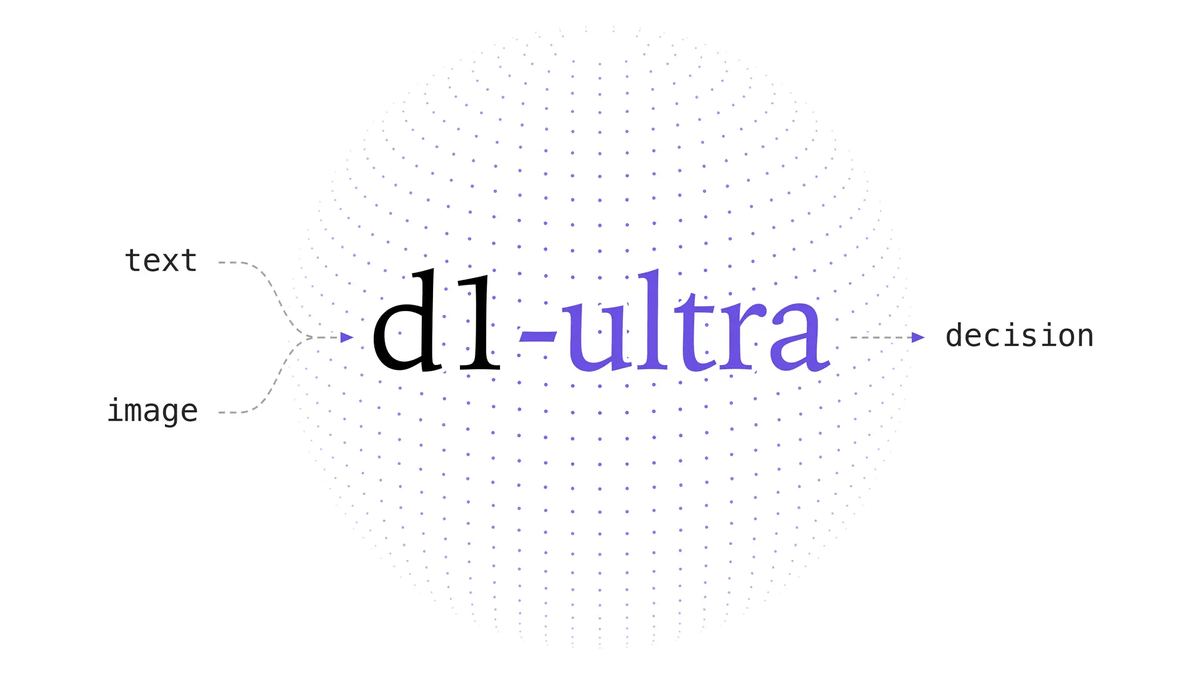
Liquid AI released d1-ultra on October 15, 2026, an upgraded open-weights decision model that averaged 76.7 ac…
Circlia started a proof-of-concept for TASTE SIGNAL: visitors to Holland Village Cafe FUKUOKA taste cookies an…

In a webinar hosted by French Mathematical Society president Isabelle Gallagher, Fields Medal winner Hugo Dumi…

