What happened
Amazon's synthetic data augmentation pipeline, built on Amazon SageMaker AI and Amazon Rekognition, improved person detection mAP50 by 160 percent — from 0.051 to 0.134 — using 750 synthetic images.
Why it matters
The pipeline reached that result without manual annotation or hazardous photography sessions, meaning the hardest safety edge cases — like a worker in a blind spot near heavy machinery — can now be trained on without staging real danger, according to Amazon.
What to watch
The gain came from prompt-guided hazardous placement, and Amazon notes that background placement actually degraded performance; watch whether teams validate synthetic volume as a hyperparameter, since performance peaked at 750 images before generation artifacts introduced noise.
WHO IT HITSIndustrial AI and safety teams that deploy person-detection models on edge hardware — in agriculture, construction, mining, and manufacturing — can now generate labeled training images for rare hazardous scenarios without staging dangerous photoshoots, per Amazon's report.
Summaries like this, in your inbox every morning.
Amazon's post walks through a synthetic data augmentation pipeline that generates photo-realistic training images by editing real photos of heavy machinery with a diffusion model, then auto-labeling the inserted people with Amazon Rekognition. The approach targets a familiar bottleneck in industrial safety AI: the highest-risk scenarios, such as a person standing in a vehicle's blind spot, are the rarest in real datasets and the most dangerous to stage. By inserting synthetic people into existing equipment photos rather than generating entire scenes from scratch, Amazon says the method preserves background fidelity and keeps existing equipment annotations valid.
In experiments, Amazon used an OpenImages subset of about 3,200 real train images and up to 1,000 synthetic images, then trained YOLO11 detectors. The results showed that where a person is placed in the prompt mattered more than how the scene was varied: hazardous placement doubled person detection mAP50, while background placement slightly degraded it. Performance peaked at 750 synthetic images before declining, and the medium-capacity YOLO11 model achieved the best aggregate result. The report positions the pipeline as a cost and safety win, with per-image synthetic cost estimated at $0.33 versus $3–$5 for manual collection.
The stakes hinge on whether these synthetic gains transfer to other domains and production edge deployments, since Amazon's experiments used trains as a publicly shareable proxy for heavy machinery. The company also notes it has not yet validated its projection that inference cost per image will drop around 10x on more capable hardware. For safety teams, the takeaway is that prompt-guided placement strategy and synthetic volume may become tuning choices as consequential as model architecture.
For example, today's edition would include:
AI-summarized, only the topics you pick — one digest a day via Email, Slack, or Discord.
Free · 30 seconds with Google · unsubscribe anytimeWhat is AIToday? →
Ask AI anything about this article. Q&As are published on this page for other readers too.
At Workiva's Amplify event, theCUBE Research analyst Krista Case said firms must trace where AI insights came…

Christie Kozlik, chief accounting officer at Accel Entertainment Inc., told theCUBE that finance adoption is g…
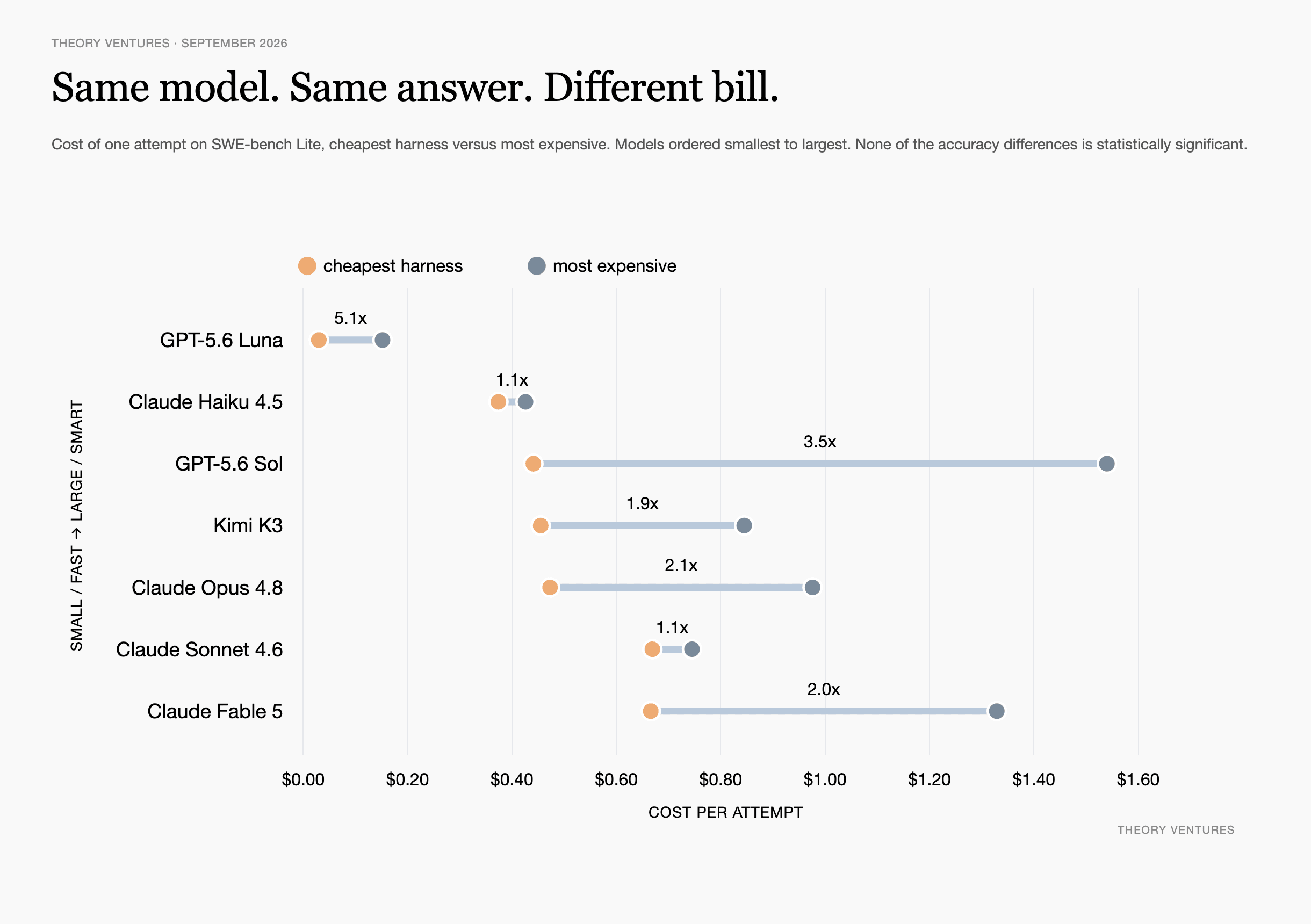
A UC Berkeley study found GPT-5.6 Sol costs 71% less on Pi than on Claude Code, returning the same result, and…
Pika, valued at $470 million, launched a program that automates which AI model creates each video element and…

Zuckerberg pushed back on coordinated AI slowdown calls on September 15, saying Meta delayed its Muse agent fo…

Iwai Cosmo Securities senior analyst Kazuyoshi Saito dismissed bubble fears in AI and semiconductor shares, sa…