What happened
Meta rolled out specialized versions of its existing models, trained using Muse Wonder, to Muse and Meta AI users. The current Muse model scores 47% on the Personal Superintelligence Index, up from 38% for the previous model.
Why it matters
The new models also show a 2.4x reduction in forgetting critical information needed to help users achieve their goals, making them better at building off past conversations.
WHO IT HITSEnd users of Meta's Muse and Meta AI products, as well as the product teams running those assistants, get models that better retain context across conversations and handle everyday tasks with unexpected issues.
Summaries like this, every morning.
Meta's move builds on the Muse Wonder series, which the company introduced a few weeks ago as its most capable models for personal and professional agentic tasks. By training specialized versions of its existing models with Muse Wonder, Meta is aiming to carry some of those frontier capabilities into the models behind Muse and Meta AI, reaching a broader set of users rather than only those with access to the top-tier Wonder models.
The reported gains are concrete: the current Muse model scores 47% on the Personal Superintelligence Index, up from 38% for the previous model, and shows a 2.4x reduction in forgetting critical information. In Muse, the models also show a 67% improvement in completing everyday tasks where unexpected issues arise. These figures suggest the specialized models are designed to be more reliable at retaining context and working through obstacles, though the body does not detail how these measurements were conducted.
Beyond the scores, Meta says the specialized models learned to be better multi-taskers, knowing when to push on goals independently or collaborate live with users, and to adapt to mid-task steers and clarifications without getting confused. In Meta AI, the same improvements are positioned to make it a better thinking partner that can break complex problems into steps and ask sharper follow-up questions. The body does not specify a release date or pricing for these specialized models.
Pick your industry and the AI tools you use, and get news related to your work every day.
Free · 30 seconds with Google · unsubscribe anytimeWhat is AIToday? →
Ask AI anything about this article. The AI reads this article, earlier AIToday articles, and Wikipedia, and cites its sources. Q&As are published on this page for other readers too.
Mastercard joined a $15m Series A round for firmly, an AI shopping agent firm, becoming a payments partner as…

Berkshire Hathaway shares rose more than 5% this week while the S&P 500 fell almost 2.7%, lifting its B shares…

Isomorphic Labs president Max Jaderberg said at Bloomberg Tech in London on Nov

Newly elected Democratic officials in Texas have publicly pledged to pause approvals for large-scale data cent…
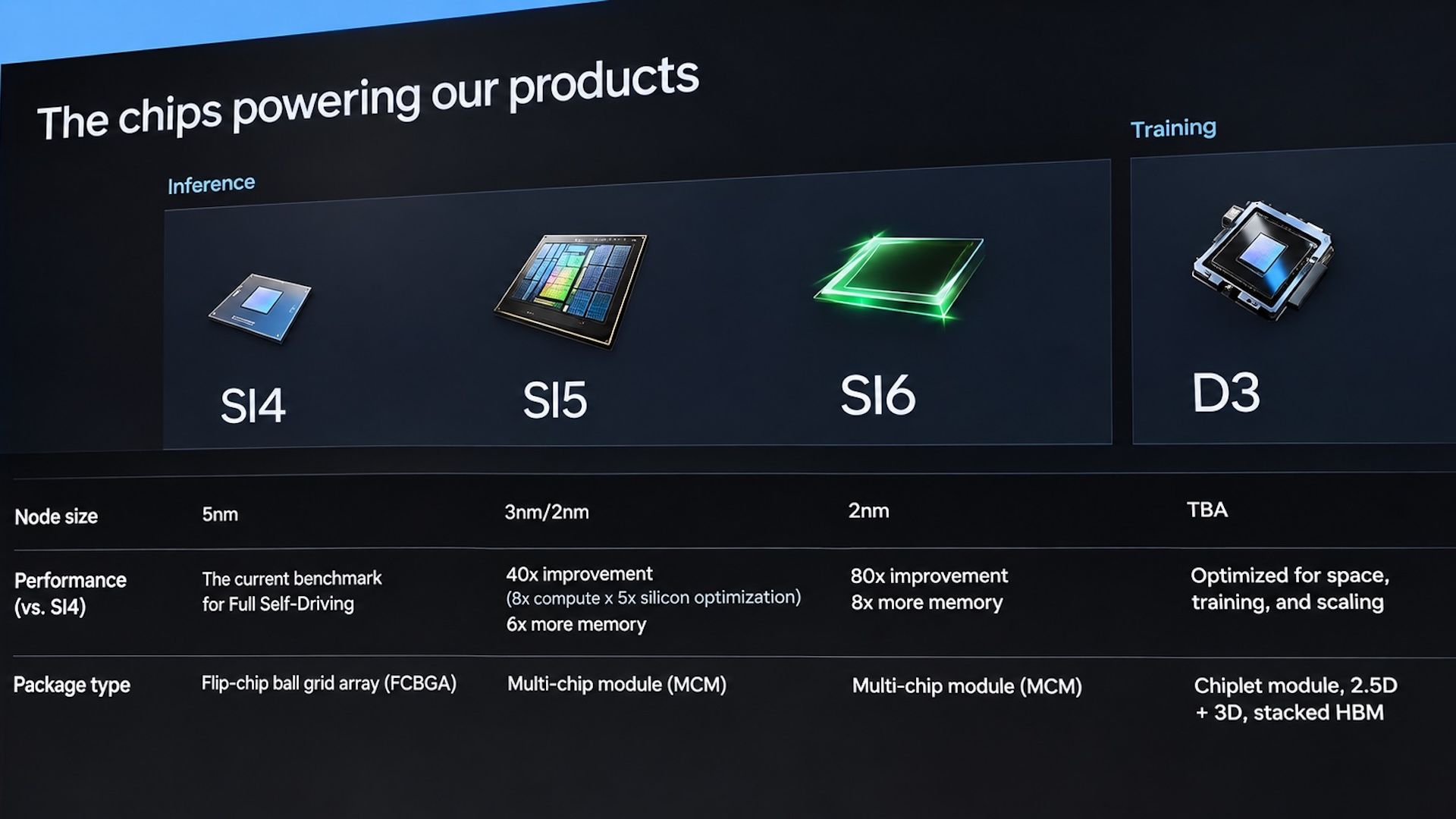
Tesla unveiled a chip roadmap under 'SI' (Super Intelligence) branding, saying its SI6 inference accelerator w…
Broadcom's AI chip sales soared 65% to $20 billion in fiscal 2025, and it expects $58 billion in fiscal 2026 a…