What happened
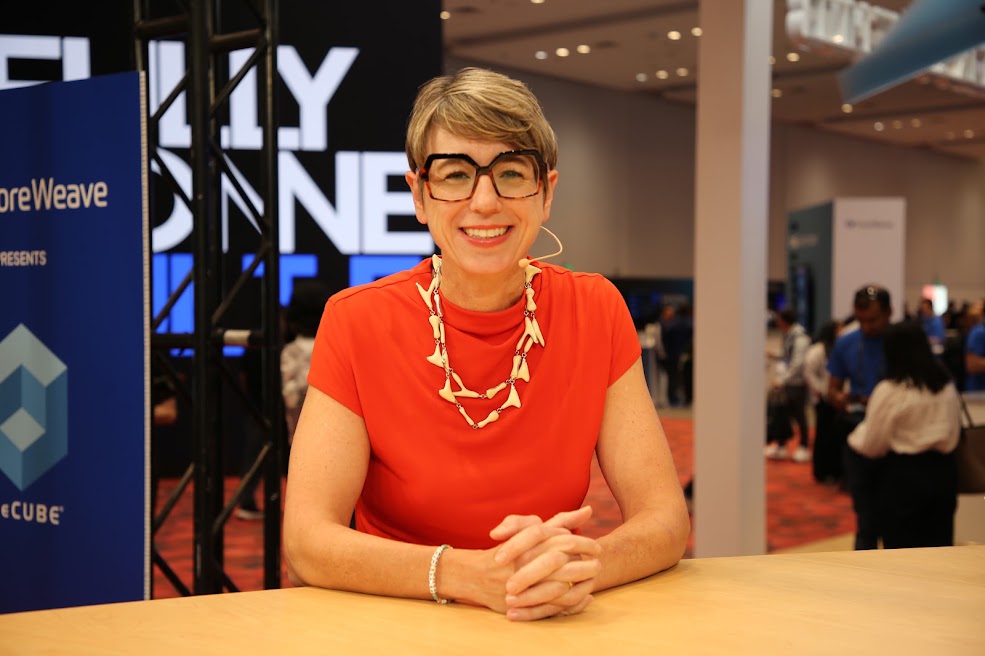
CoreWeave launched Forge, a platform built around a five-stage AI loop — run, observe, curate, improve, evaluate and repeat — with new tools including Agent Lens, Registry, RL Rollouts, model distillation and its generally available ARIA agent, VP Susanne Seitinger said.
Why it matters
Forge is meant to give business units and machine learning teams one shared workflow so they can share learnings instead of repeating them, which Seitinger frames as the platform's core advantage.
WHO IT HITSEnterprise machine learning teams and business units running agents in production are the target users, since Forge is designed to give them a shared workflow for continuously running, observing, evaluating and improving agents. Marketing and product teams at partner companies may also benefit from the new co-engineered playbooks.
Summaries like this, in your inbox every morning.
CoreWeave's Forge arrives as enterprises move agents from pilot projects into production, where the work of running, observing, evaluating and improving them does not stop. Seitinger described the platform as a way to connect disparate pieces so different teams can talk to each other more effectively. The offering is built around a repeatable cycle: run, observe, curate, improve, evaluate and repeat. Several of the new capabilities target specific pain points in that cycle. Agent Lens lets teams inspect what agents are doing, Registry checks model checkpoints and agent configurations, while RL Rollouts and model distillation handle improvement. ARIA, the company's AI Research and Iteration Agent, is now generally available and is meant to help users spot patterns. Seitinger said speed of learning is the measure that matters most, tying it to faster shipping and faster value. She also pointed to changing workload mix as a reason the timing matters, noting that Cognition AI Inc. is already running production workloads on CoreWeave's first Nvidia Corp. Vera Rubin NVL72 racks. Alongside the platform, CoreWeave introduced a partner network based on tested, co-engineered integrations, which Seitinger described as a way to give customers more recipes, playbooks and use cases so they do not have to repeat the same learnings.
Pick your industry and the AI tools you use, and get news related to your work every day.
Free · 30 seconds with Google · unsubscribe anytimeWhat is AIToday? →
Ask AI anything about this article. The AI reads this article, earlier AIToday articles, and Wikipedia, and cites its sources. Q&As are published on this page for other readers too.
CoreWeave launched CoreWeave Forge, connecting serving, observability, post-training and evaluation
Samsung Electronics' next-generation 12-layer HBM4E high-bandwidth memory has reportedly cleared customer qual…

Kelsey Kuan, general manager of HD Renewable Energy subsidiary Star Trade, told DIGITIMES that energy storage…

Stanford and Carnegie Mellon researchers tracked 1182 Character.AI users from September 2024 to August 2025, t…
A study presented at USENIX Security Symposium 2026 examined 196,682 resumes from hiring platforms and detecte…
Google Cloud announced Gemini Agent, a cloud-based multi-agent tool