What happened
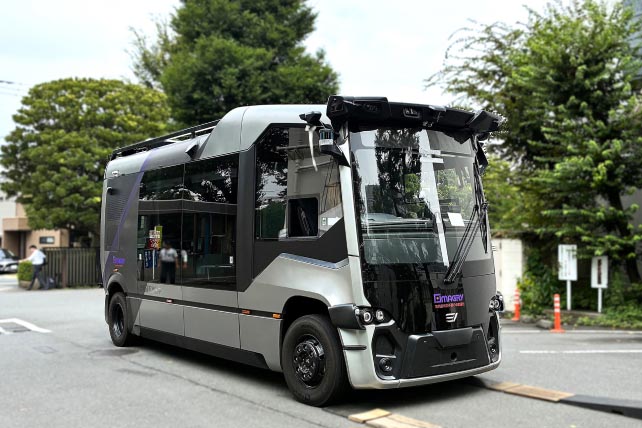
NTT Mobility will begin public-road testing of an HD-map-free autonomous bus in February 2027 at its Co-Creation Hub near the NTT Musashino Research and Development Center. It calls this Japan's first such public-road trial.
Why it matters
Skipping pre-built HD maps could make it cheaper and faster to roll out autonomous buses on new routes, which the company says is the goal.
What to watch
The vehicle is due for delivery on December 7, 2026, with road testing starting in February 2027 and evaluation results compiled from April.
WHO IT HITSTransit operators and local governments looking to add autonomous bus service without the cost of pre-mapping every route are the main audience, though the trial is only at Level 2 with a driver aboard.
Summaries like this, every morning.
The trial is built around removing a practical bottleneck: HD maps must be surveyed and maintained before an autonomous bus can run a route, which makes each new area costly to enter. NTT Mobility's approach, using Imagry's camera-based system, is meant to allow deployment on new routes without that preparation. The company says this is Japan's first public-road test of an HD-map-free autonomous bus.
The test will start at Level 2, with a driver on board, and will assess fit with Japanese conditions such as left-hand traffic and local traffic signals. Beyond driving quality and safety, it will examine whether the AI's decisions can be explained and checked, how dependent the system is on training data, and how it performs at night and in bad weather. Remote monitoring and operations management, plus operating-cost optimization, are also part of the scope, with an eye toward commercial service in cooperation with transit operators.
Pick your industry and the AI tools you use, and get news related to your work every day.
Free · 30 seconds with Google · unsubscribe anytimeWhat is AIToday? →
Ask AI anything about this article. The AI reads this article, earlier AIToday articles, and Wikipedia, and cites its sources. Q&As are published on this page for other readers too.
Joby Aviation says a Cessna Caravan flew 3,200 miles from California to North Carolina with a safety pilot abo…
XPENG announced plans to launch five new right-hand-drive models in the UK over the next 12 months, beginning…
Qvyon launched with $8 million led by MaC Venture Capital and released Mimic Core, a platform that turns real…

SAE (the Society of Automotive Engineers) set a six-level scale from Level 0 (no automation) to Level 5 (full…

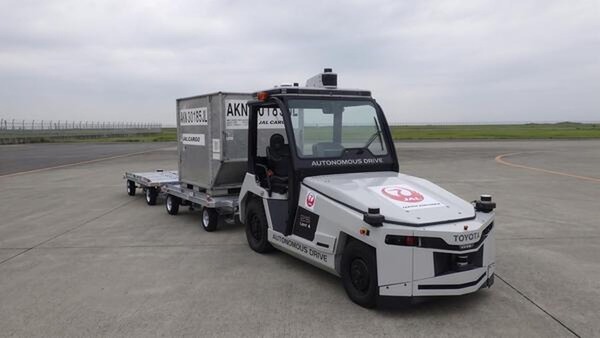
JAL and Toyota Industries are expanding their Level 4 autonomous driving verification at Haneda Airport to a n…
The explainer describes the international six-stage scale for autonomous driving, running from Level 0, where…