
What happened
A hands-on guide fine-tunes Qwen/Qwen2.5-1.5B-Instruct with LoRA (r=8, alpha=16) on a small JSONL set of Japanese Q&A pairs, masking user-input labels with -100 and running 3 epochs at a 2e-4 learning rate.
Why it matters
The author argues small datasets are better used to standardize answer format, honor in-house terminology and unify tone than to memorize broad knowledge, since a few examples can erode the base model's ability.
Summaries like this, in your inbox every morning.
The piece is written from direct experience rather than as a product announcement. In the configuration the author actually tried, the base model's weights stayed frozen and only a small set of additional parameters was trained, which the author describes as a relatively manageable procedure.
The guide is explicit about where this approach fits. Rather than loading the model with large amounts of new knowledge, it is suited to aligning responses to a specific format, matching in-house terminology, handling a limited set of FAQ-style questions, and unifying tone and honorific style. With only a few examples, the author warns, attempting to teach a broad domain can damage the original model's capabilities.
Practical caution runs through the steps: mixed polite and plain styles in the training data tend to produce wavering output, duplicate or contradictory answers hit small datasets especially hard, and answers should be checked after training because a high learning rate encourages rote memorization. Evaluation is split into identical questions, rephrased similar questions, and general questions absent from the training data — the last a check that the model has not degraded. The suggested starting point is a few dozen clean samples, with data volume and model size increased only after the output has been reviewed.
Pick your industry and the AI tools you use, and get news related to your work every day.
Free · 30 seconds with Google · unsubscribe anytimeWhat is AIToday? →
Ask AI anything about this article. The AI reads this article, earlier AIToday articles, and Wikipedia, and cites its sources. Q&As are published on this page for other readers too.
Google released TorchTPU, a version of the PyTorch framework that lets developers run existing AI apps and mod…
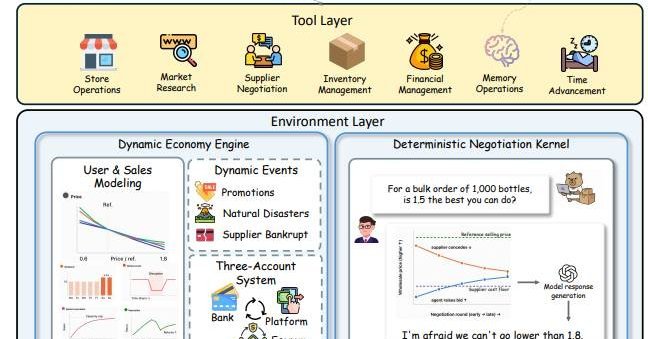
In a benchmark called E-Commerce Bench, 18 AI models ran up to four simulated shops for 365 days, using 18 too…
ITmedia's AI Plus released a 14-page booklet on using Gemini Notebook's (formerly NotebookLM) Studio feature…

IBM Research's ALTK-Evolve turns each customer-service agent trial into short action rules and injects them in…

A consultant who specializes in security recruiting says candidates should sign up for one of ChatGPT Plus or…
After six rounds of tuning TypeSafe AI's Jev for note selection, the author benchmarked it on 100 requests aga…

