What happened
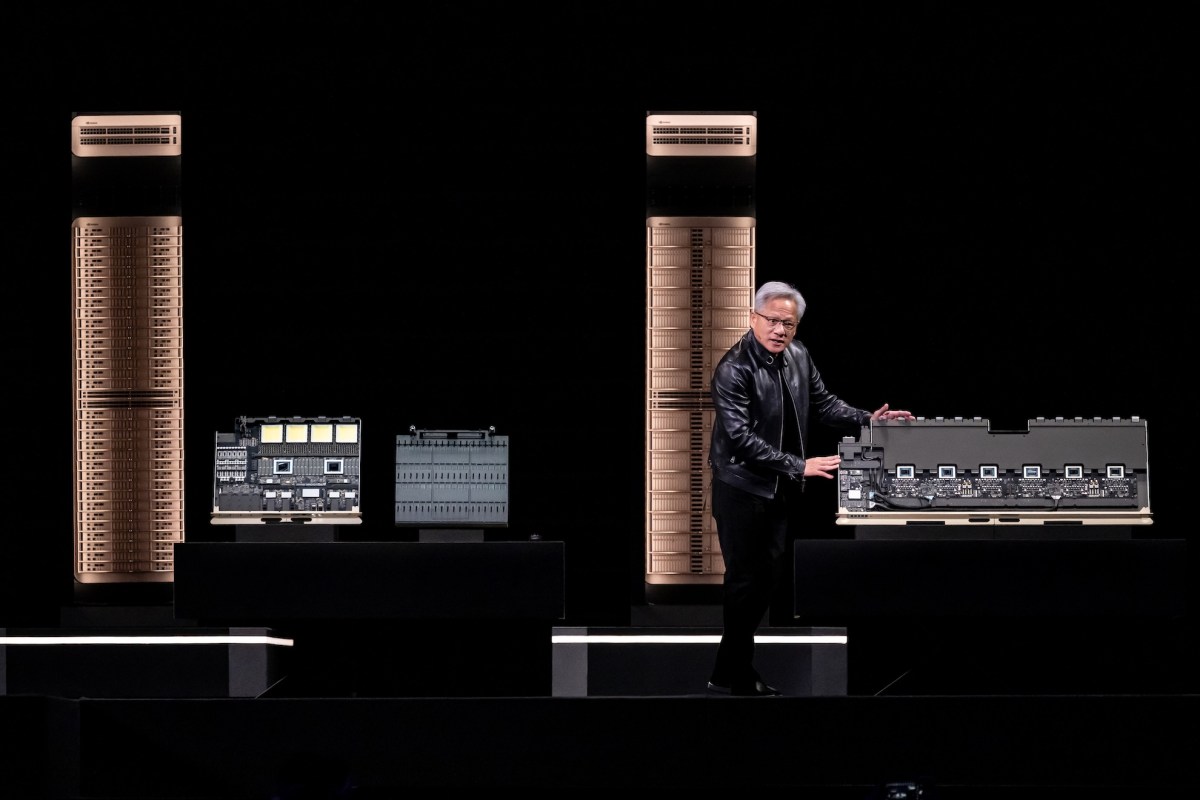
Nvidia's earnings on Wednesday shifted the narrative, with investors starting to see its advantage as extending beyond GPUs. The company is rolling out its Vera Rubin architecture, pairing the Rubin GPU with the Vera CPU, the Groq 3 LPX inference accelerator, and storage/networking racks.
Why it matters
As AI compute grows to gigawatt scale, orchestrating data efficiently across a megascale data center is increasingly complex and critical. Nvidia's VP of storage, Jason Hardy, cited a 3x improvement in operations where the Vera CPU enables acceleration, allowing flash storage to be used without bottlenecking.
What to watch
The competition has moved to a new layer where making the entire system work efficiently matters more than building a rival GPU. Early signs suggest Nvidia has a commanding lead, but it will still face competition from rival chipmakers and hyperscalers in this new area.
Summaries like this, in your inbox every morning.
For years, the Nvidia story was about its state-of-the-art GPUs, which became immensely profitable as the industry scaled out. However, with hyperscalers like Amazon and Google building their own chips, investors have wondered how durable that advantage is, especially after Nvidia's market cap grew 10x between the start of 2023 and mid-2025 before taking a more modest trajectory. The earnings call this week is presenting a new narrative: as AI compute grows into the gigawatt scale, the challenge of orchestrating a megascale data center at peak efficiency is growing, and Nvidia has built much of the state-of-the-art hardware to handle it. This shift is reflected in the Vera Rubin architecture, where components like the Vera CPU are specialized for data orchestration rather than just churning through tokens, aiming to drive tokens-per-watt lower. The common logic between Nvidia's approach and OpenAI's Jalapeño chip design is the focus on smarter traffic control instead of just more processor cycles. This opens up a new layer of infrastructure for companies to compete over, where the ability to make the entire system work efficiently is becoming more important than the GPU itself, and Nvidia appears to have an early lead.
Pick your industry and the AI tools you use, and get news related to your work every day.
Free · 30 seconds with Google · unsubscribe anytimeWhat is AIToday? →
Ask AI anything about this article. The AI reads this article, earlier AIToday articles, and Wikipedia, and cites its sources. Q&As are published on this page for other readers too.
Chunghwa Telecom president Rong-shy Lin said the shift from conversational AI to autonomous AI agents is resha…

CoreWeave fell 5% in premarket trading Friday and was on track to finish the week down 15%, after rebounding f…
Apple and Meta said they would jointly release a new open-weight AI model designed to run on high-end Macs, ai…

Investors put $38.5 billion into Asian startups in Q3, per Crunchbase data

A longtime Anthropic investor told Fortune he expects shares priced around $1.8 trillion, below the company's…

In Q2, billionaires or their funds sold six 'Magnificent Seven' AI stocks