What happened
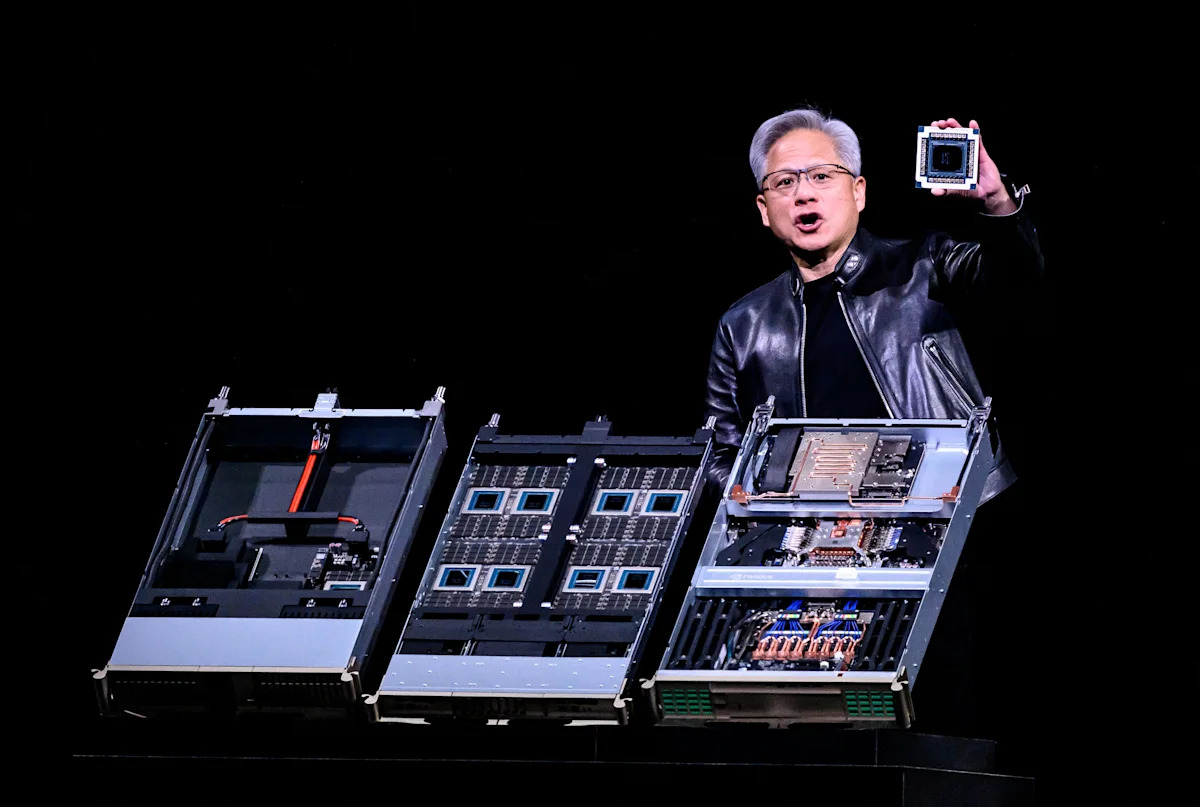
CME Group plans to launch futures on Oct. 5 tied to the hourly rental cost of Nvidia's H100 and B200 graphics processors, pending regulatory approval. The contracts would settle against benchmarks from Silicon Data, which tracks what companies pay to rent those chips.
Why it matters
Nvidia is moving beyond simply selling chips, helping to finance customers, and participating in rental revenue as Wall Street increasingly likens Nvidia to the central bank of AI. CEO Jensen Huang put the shift more simply: "Now, compute is revenue."
What to watch
Silicon Data's H100 benchmark is currently around $2.68 per GPU-hour, while its newer B200 benchmark is about $5.66. Both have moved substantially over the past year, and not always together. A futures contract does not reserve the chips themselves; it pays out based on where the benchmark price goes.
Summaries like this, in your inbox every morning.
Nvidia's forecast of roughly 70% revenue growth in fiscal 2028 underscores the scale of the AI boom, but pricing that compute remains difficult. The company is not just selling chips—it is financing customers and sharing in rental revenue, which has led Wall Street to compare Nvidia to the central bank of AI. The new futures market aims to put a tradable price on compute, much like commodities.
The challenge of standardizing such contracts is not new. Past attempts, like DRAM futures, struggled with industry agreement on what the standard chip would be, while weather futures faced issues with specificity. Bandwidth, especially during the fiber boom, serves as a cautionary tale—Enron's effort to commoditize network capacity never caught on, and excess capacity later drove prices down.
For investors, these futures could offer a way to hedge or speculate on AI infrastructure costs, but they do not guarantee access to the physical chips. The success of the market will likely hinge on how well the benchmarks reflect real-world rental dynamics, which vary by provider, location, and term.
Pick your industry and the AI tools you use, and get news related to your work every day.
Free · 30 seconds with Google · unsubscribe anytimeWhat is AIToday? →
Ask AI anything about this article. The AI reads this article, earlier AIToday articles, and Wikipedia, and cites its sources. Q&As are published on this page for other readers too.
Chunghwa Telecom president Rong-shy Lin said the shift from conversational AI to autonomous AI agents is resha…

CoreWeave fell 5% in premarket trading Friday and was on track to finish the week down 15%, after rebounding f…
Apple and Meta said they would jointly release a new open-weight AI model designed to run on high-end Macs, ai…

Investors put $38.5 billion into Asian startups in Q3, per Crunchbase data

A longtime Anthropic investor told Fortune he expects shares priced around $1.8 trillion, below the company's…
In Q2, billionaires or their funds sold six 'Magnificent Seven' AI stocks