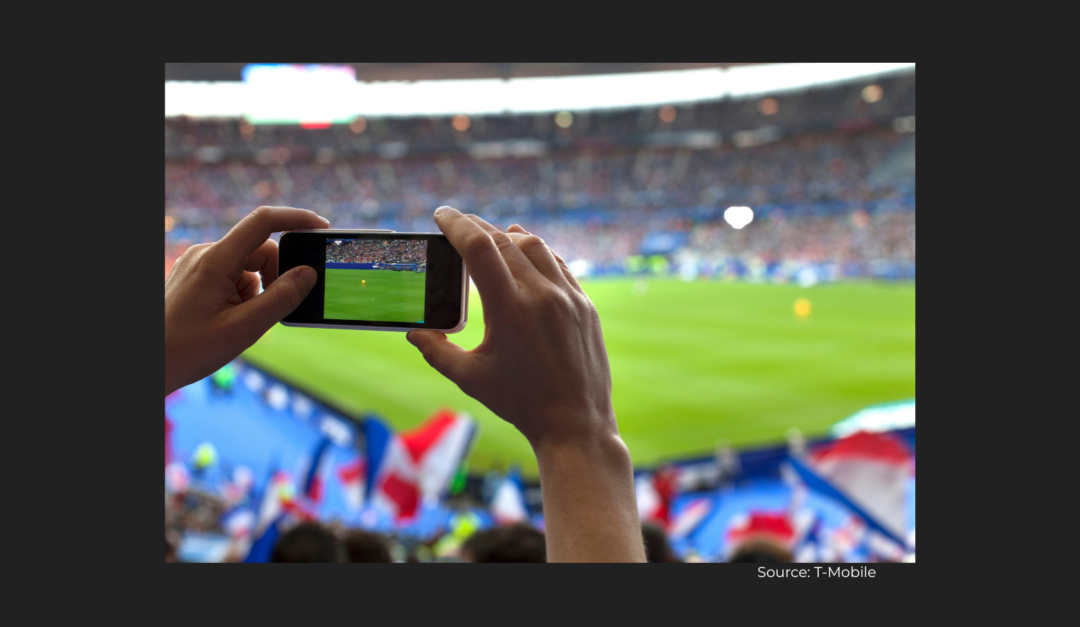
T-Mobile used AI-driven network optimization to manage its 5G network during a major international soccer tournament held in the United States this summer, expanding capacity across 57 locations in 11 host markets. The AI platform performed more than 11,000 automated network optimizations during 12 large fan events, supporting more than 2.26 million fans across 78 matches while maintaining 99.9% network availability and delivering average download speeds above 300 Mbps on match days.
Summaries like this, in your inbox every morning.
Sign up free →What happened
T-Mobile deployed AI-powered network optimization across 57 locations in 11 U.S. host markets during this summer's international soccer tournament, performing more than 11,000 automated network optimizations in near real time across 12 major fan events outside venues.
Why it matters
The deployment shows how AI automation can manage live network performance at scale during unpredictable, high-demand events—supporting more than 2.26 million fans across 78 matches while maintaining 99.9% network availability. For operators, this demonstrates a practical path to handle dynamic traffic without constant manual intervention.
What to watch
The championship match recorded the network's peak performance test, with average download speeds of 1,251 Mbps and upload speeds averaging 243 Mbps. T-Mobile also supported approximately 813,000 roaming users from 180 countries and coordinated emergency communications for first responders using T Priority and T Satellite with Starlink.
T-Mobile announced that AI network optimization helped prepare its 5G network for an international soccer tournament held in the United States this summer, supporting millions of fans, travelers, and first responders throughout the competition. The company expanded network capacity across 57 locations in 11 host markets—including stadiums, airports, transit hubs, and fan gathering areas—combining macro sites, small cells, distributed antenna systems, and portable network assets to increase capacity where demand was expected to peak.
The core of the deployment was T-Mobile's AI-powered Dynamic CX platform, which worked alongside its Self-Organizing Network and 5G Advanced capabilities to continuously analyze network conditions and automatically optimize performance as crowds moved between venues. During 12 major fan events outside tournament venues, the platform performed more than 11,000 automated network optimizations in near real time, enabling the network to adapt to shifting demand without constant manual intervention. Ankur Kapoor, T-Mobile's Chief Network Officer, stated: "Large live events aren't static; they're constantly changing. Faster speeds and greater capacity remain essential, but intelligent networks are becoming just as important. Dynamic CX and our Self Organizing Network automatically adapted to shifting demand while our engineers monitored performance nationwide."
The tournament tested the network at unprecedented scale. Across 78 matches, the network supported more than 2.26 million fans and carried around 1 PB of traffic across the 11 U.S. host stadiums on match days. Customers recorded average download speeds above 300 Mbps, while the network handled more than 700,000 high quality voice calls and tens of millions of messages, photos and videos. T-Mobile also served approximately 813,000 roaming users from 180 countries while maintaining 99.9% network availability across all stadiums. The championship match represented the network's largest performance test, with average download speeds reaching 1,251 Mbps and upload speeds averaging 243 Mbps.
Public safety was integrated into the deployment. T-Mobile supported emergency agencies by deploying portable network assets, including Cell on Wheels and Satellite Cell on Light Trucks, while coordinating with emergency operations centers and transportation hubs. Eligible first responders had access to T Priority, which prioritizes emergency communications across T-Mobile's 5G network, as well as T Satellite with Starlink when terrestrial coverage was unavailable. The company noted that as major live events continue to grow in size and complexity, AI-driven automation will play an increasingly important role in helping operators maintain network performance while supporting customers, businesses, and emergency services.
T-Mobile's deployment during the soccer tournament illustrates how AI-driven automation is shifting network management from reactive troubleshooting to proactive, real-time optimization. By combining its Dynamic CX platform with Self-Organizing Network and 5G Advanced capabilities, the operator created a system that could automatically adapt to crowd movements and shifting demand patterns without constant human oversight. The infrastructure expansion—57 sites across 11 markets, using macro cells, small cells, distributed antenna systems, and portable assets—provided the physical foundation, but the AI layer was what enabled the network to continuously monitor conditions and optimize performance during the event's most dynamic moments.
The scale of the challenge justified this approach: managing connectivity for more than 2.26 million fans across 78 matches while handling roaming traffic from 180 countries and maintaining emergency service communications required a system that could respond faster than human operators. T-Mobile's ability to maintain 99.9% availability while delivering download speeds above 300 Mbps on ordinary match days, and 1,251 Mbps during the championship match, indicates the AI automation succeeded in handling both routine and peak-demand scenarios. The deployment also signals operator confidence that intelligent networks—not just faster infrastructure—are becoming essential as live events grow in size and complexity.
AI-summarized, only the topics you pick — one digest a day via Email, Slack, or Discord.
Free · takes 30 seconds · unsubscribe anytime
No comments yet. Be the first to share your thoughts!
Log in to join the discussion
Get curated AI news from 200+ sources delivered daily to your inbox. Free to use.
Get Started FreeFree · takes 30 seconds · unsubscribe anytime
