GitHub describes how traditional testing breaks down for autonomous agents like Copilot Coding Agent when they navigate real environments (UIs, browsers, IDEs). The agent may succeed at a task while the test fails—a 'false negative'—because execution paths vary due to timing, loading screens, or environmental noise, even though the essential outcome is correct.
The proposed approach uses dominator analysis (a concept from compiler theory) to classify agent behavior into essential states (milestones required for success), optional variations (incidental states like loading spinners), and convergent paths (different sequences that reach the same outcome). Executions are modeled as graphs (Prefix Tree Acceptors) rather than linear scripts, allowing the framework to distinguish between incidental noise and critical failures.
GitHub argues that correctness for agentic systems must shift from 'did this happen in exactly this sequence?' to 'what had to happen for success to be real?' This reframing aims to reduce false negatives and move agents from experimental demos to production-grade infrastructure by validating structured behaviors rather than rigid execution paths.
Ask the AI about this article →
For example, today's edition would include:
AI-summarized, only the topics you pick — one digest a day via Email, Slack, or Discord.
Free · takes 30 seconds · unsubscribe anytimeWhat is AIToday? →
Ask AI anything about this article. Q&As are published on this page for other readers too.
CBTS Technology Solutions LLC launched Forge Agents, a platform that turns a plain-language job description in…

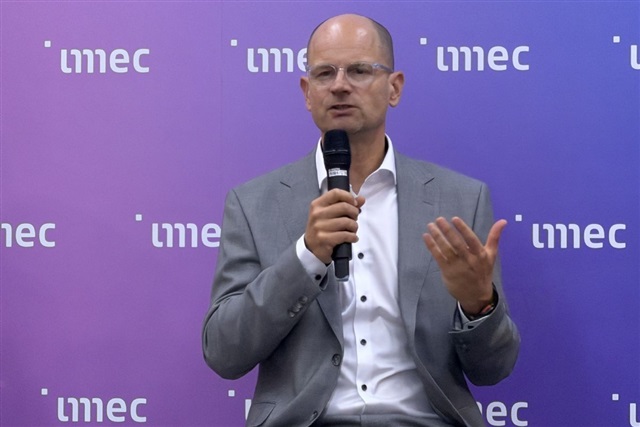
Imec CEO Patrick Vandenameele said at SEMICON Taiwan 2026 that the Belgian research center is broadening its c…
Alphabet's AI Overviews now reach over 2.5 billion monthly users through Google Search, and its ad business ge…

Visual Studio Code 1.135 now includes an experimental 'Rubber Duck' feature that lets developers request a sec…
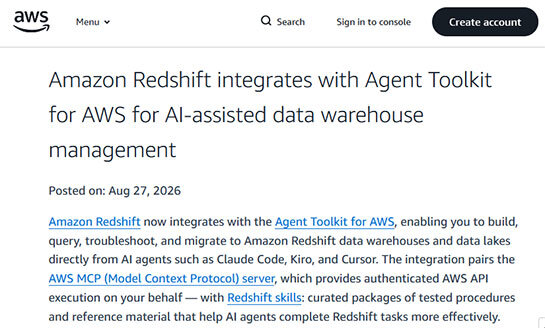
Amazon Web Services (AWS) has integrated its fully managed data warehouse service, Amazon Redshift, with Agent…
Anthropic is making a permanent 25% increase to the usage limits in Claude Code, effective after September 14