What happened
A new MCP Code Review Server tool has been released that integrates code review capabilities into Claude Code, Cursor, and other MCP-compatible AI assistants. The tool can review code snippets, git diffs, and local files for bugs, security issues, performance problems, and style violations.
Why it matters
Developers can now get automated code review feedback directly within their editor without leaving their workflow. The server uses OWASP Top 10 scanning, N+1 query detection, and race condition analysis—the same methodology as a Code Review Agent—and returns structured output with severity ratings so developers can prioritize fixes.
What to watch
Installation is available via uvx (no setup required) or pip; Python 3.11+ is required. The tool outputs results with severity levels (Critical, High, Medium, Info) and specific fix suggestions, making it actionable for immediate remediation.
Summaries like this, in your inbox every morning.
The MCP Code Review Server addresses a friction point in developer workflows by embedding code review directly into the AI assistant experience. Rather than switching between editor, review tools, and communication platforms, developers can now request code review inline and receive structured feedback without context switching. The server's methodology—OWASP Top 10 scanning, N+1 query detection, race condition analysis—mirrors established security and performance audit practices, suggesting the tool applies domain-specific heuristics rather than generic pattern matching.
The frictionless installation model (uvx requires no prior setup) and integration with popular editors (Claude Code, Cursor) lowers adoption barriers. The structured output format with severity ratings (Critical, High, Medium, Info) and specific fix suggestions transforms review feedback into an actionable task list, which may appeal to teams seeking faster remediation cycles. The MIT license and open-source model (hosted on GitHub) signal a community-first approach, though the article does not describe adoption metrics or user feedback.
Pick your industry and the AI tools you use, and get news related to your work every day.
Free · 30 seconds with Google · unsubscribe anytimeWhat is AIToday? →
Ask AI anything about this article. The AI reads this article, earlier AIToday articles, and Wikipedia, and cites its sources. Q&As are published on this page for other readers too.
NVIDIA released Nemotron 3.5 Super VL, an open-weight model with 120 billion parameters that handles text, ima…

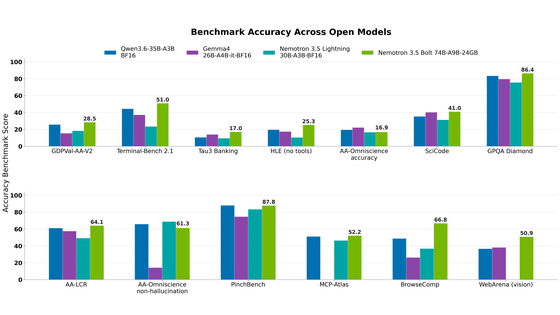
NVIDIA released Nemotron 3.5 Bolt 74B-A9B 24GB, an AI model for local agents that hits over 80 tokens per seco…
Black Forest Labs released FLUX 3 Image Klein as open weights on October 15, 2026 — a 5.6B-parameter model for…

PrismML released Ternary Bonsai 2 2B, 4B and 9B on October 15, 2026, remade from Qwen3.5 to process in three v…

In a Zenn article, EC自動化工房 laid out a pre-generation cleanup step for product masters, adding notation rules t…

Three one-line requests and three requests with written completion criteria to Claude Code produced functional…

