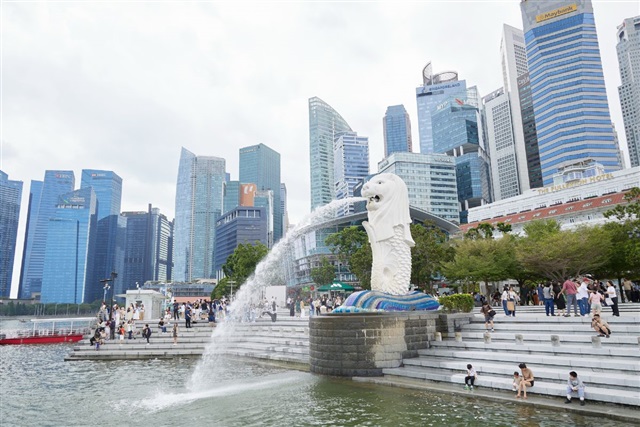
Alibaba and Huawei are expanding their presence in Singapore's AI market as SEA-LION, a regional AI initiative, switches from Meta's Llama to Alibaba's Qwen foundation model. Singapore, already Southeast Asia's AI leader, is becoming a key proving ground where US and Chinese AI business models compete directly, shaping how the region adopts AI technology.
Summaries like this, in your inbox every morning.
Sign up free →What happened
SEA-LION, a Southeast Asian AI initiative, has replaced Meta's Llama with Alibaba's Qwen as its foundation model, marking a shift toward Chinese AI technology in Singapore's AI ecosystem.
Why it matters
Singapore is a key battleground where US and Chinese AI business models compete. This move signals growing influence of Chinese AI providers in Southeast Asia and reflects the city-state's role as a testing ground for both Eastern and Western approaches to AI deployment and governance.
What to watch
The region's adoption patterns of competing foundation models, as Alibaba and Huawei expand their footprint in one of Asia's most developed AI markets.
Singapore has positioned itself as Southeast Asia's AI leader and is now emerging as a critical battleground in the global competition between US and Chinese artificial intelligence models and business approaches. The city-state's dual role as a global technology hub and financial center has made it an attractive proving ground for competing AI strategies. A significant development in this landscape is the shift by SEA-LION, a Southeast Asian AI initiative, which has moved away from Meta's Llama foundation model in favor of Alibaba's Qwen. This change represents a strategic opening for Chinese AI providers—Alibaba and Huawei among them—to expand their footprint in one of Asia's most developed and closely watched AI markets. The move underscores how Singapore's AI ecosystem is becoming a contested space where Eastern and Western technology models are tested, refined, and deployed, with outcomes likely to influence AI adoption and governance across the broader Southeast Asian region.
Singapore has emerged as Southeast Asia's leading AI market and is now serving as a testing ground where competing global AI strategies—US-led and Chinese-led—directly collide. The city-state's position as both a global technology and financial hub makes it an attractive entry point for major AI providers seeking regional influence. The SEA-LION initiative's decision to adopt Alibaba's Qwen over Meta's Llama reflects a broader strategic recalibration in the region, where Chinese technology firms like Alibaba and Huawei are muscling into markets traditionally dominated by Western AI companies. This shift is not merely a technical choice but carries implications for how Southeast Asia's AI governance, business practices, and technology partnerships will develop—the outcomes in Singapore may well shape adoption patterns across the broader region.
AI-summarized, only the topics you pick — one digest a day via Email, Slack, or Discord.
Free · takes 30 seconds · unsubscribe anytime
No comments yet. Be the first to share your thoughts!
Log in to join the discussion

Get curated AI news from 200+ sources delivered daily to your inbox. Free to use.
Get Started FreeFree · takes 30 seconds · unsubscribe anytime
1 minute a day. The AI essentials.
200+ sources · Email / LINE / Slack
