What happened
In a claude.dev blog post, Addy Osmani, Morgan Westlee Lunt and Qing Wang described how Claude Code merged more than twice as many PRs from June to September while the revert rate fell over 40%; a three-round review cap lifted single-round merges from 65% to 78%.
Why it matters
The results suggest that reviewing code through layered automated checks can absorb far more volume without a higher revert rate, which the team uses as a guardrail alongside incident rate.
Summaries like this, in your inbox every morning.
The post frames the change as a shift in what the team measures. Rather than asking whether a human read the code, it asks what could break and which check, automated or human, is right to catch it. Human time becomes the cost to minimize, but only if the revert rate and incident rate stay flat, so the team treats those as guardrails against simply moving work elsewhere.
The review process itself is organized as overlapping layers rather than one perfect gate, with rollback as the floor beneath them. Human approval is one layer among several and is assigned by the risk of the change, not by who wrote it. A separate rule keeps agent approvals from counting as human ones, and assigns responsibility to whoever directed the agent.
The most practical passage concerns convergence between AI reviewers. One CLI PR ran through more than 50 review-and-fix rounds overnight before the author stopped it, and git blame showed about 59% of the flagged issues were already present when the reviewer first saw the code. The fixes, including a three-round cap and diff-only re-review, raised single-round merges from 65% to 78% and cut the average number of review rounds from 2.08 to 1.32.
What remains with people is a narrower set of judgments: whether to build something at all, high-risk code, architecture, reading evidence, and owning the result. The team says it keeps human review for changes from outside the team specifically so someone can ask whether the work should be done at all. It also says no one holds a full mental model of Claude Code, and that people learn a slice on demand instead.
Pick your industry and the AI tools you use, and get news related to your work every day.
Free · 30 seconds with Google · unsubscribe anytimeWhat is AIToday? →
Ask AI anything about this article. The AI reads this article, earlier AIToday articles, and Wikipedia, and cites its sources. Q&As are published on this page for other readers too.
Infineon Technologies said on October 21 it is expanding work with Nvidia on 800-volt direct current power arc…
BloFin Research outlined three defensive moves for a potential 2027 AI correction: shift some S&P 500 exposure…

Shares fell 6.9% Thursday, extending the drop from the June 2 peak to 50%, with market capitalization at about…
Schneider Electric, Nvidia and HPE formed a strategic collaboration to launch Industrial AI Agents at the Edge…

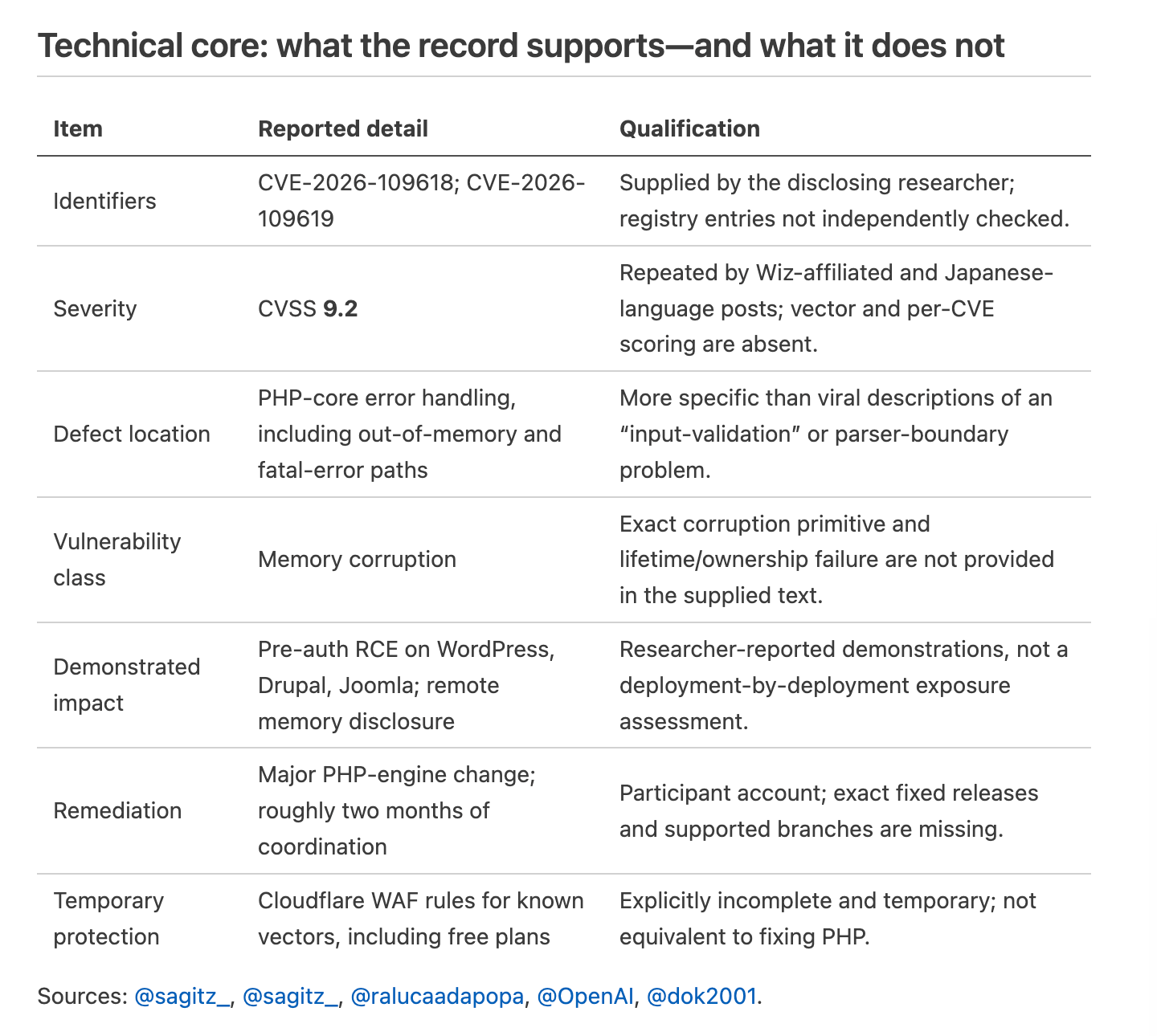
OpenAI says Calif researchers using GPT 5.6 Sol under its "Patch the Planet" project found the PHP2Shell flaws…
Anthropic released Claude Duet, built on Claude Opus 5.5