
What happened
Anthropic raised about $81.3 billion in its Nov. 19 IPO at a fully diluted valuation of roughly $1.77 trillion, while its prospectus disclosed $900.9 billion in fixed future computing commitments plus $150 billion to $175 billion in estimated payments under agreements without fixed dollar commitments.
Why it matters
That combined exposure of roughly $1.05 trillion to $1.08 trillion is more than 12 times the IPO proceeds, and $70.7 billion comes due within 12 months of September 30, 2026, so Anthropic's annualized revenue run rate of $81 billion as of Oct. 31 would have to keep climbing to service the buildout, with the risk also reaching suppliers such as Amazon, Alphabet and Broadcom.
Summaries like this, every morning.
The IPO itself broke records: the $81.3 billion raised surpassed the $75 billion SpaceX brought in during June, and the first session's close of $97.17 left the Claude developer with a fully diluted valuation of roughly $1.77 trillion. What the prospectus adds is the other side of that ledger. The $900.9 billion in fixed computing and infrastructure commitments, plus $150 billion to $175 billion in estimated payments on agreements without fixed dollar commitments, are multiyear purchasing agreements, equipment leases and arrangements stretching as far as 2045 — not conventional debt due tomorrow. Even so, $70.7 billion falls due within 12 months of September 30, 2026, and $451.6 billion before the end of 2030.
Demand is not the weak spot. Annualized revenue run rate reached $81 billion as of Oct. 31, up $10 billion in a single month, and enterprise customers generating at least $100,000 in annual revenue rose from more than 950 to more than 11,900 over the preceding year. But quarterly computing and infrastructure expenses hit $9.9 billion in September, up from $944 million in March 2025, which is why the filing frames the central question as earning sufficient returns on the infrastructure rather than finding customers.
The exposure travels down the supply chain. Amazon, Alphabet and Broadcom supply capacity needed to keep Claude running, and the filing notes that expensive data centers become less profitable if customers cut spending or equipment becomes obsolete faster than expected. CoreWeave is offered as the cautionary case, with $72.05 billion in liabilities against $5.02 billion in shareholders' equity and $640 million in quarterly interest expenses, while Nvidia's $21.34 billion in quarterly free cash flow is presented as the stronger financial foundation. The stock's 8.5% decline on Nov. 20, after a 17% first-day gain, suggests investors are already repricing that distinction.
Pick your industry and the AI tools you use, and get news related to your work every day.
Free · 30 seconds with Google · unsubscribe anytimeWhat is AIToday? →
Ask AI anything about this article. The AI reads this article, earlier AIToday articles, and Wikipedia, and cites its sources. Q&As are published on this page for other readers too.
Taiwan's Financial Regulatory Commission announced five measures to stabilize the securities market, including…

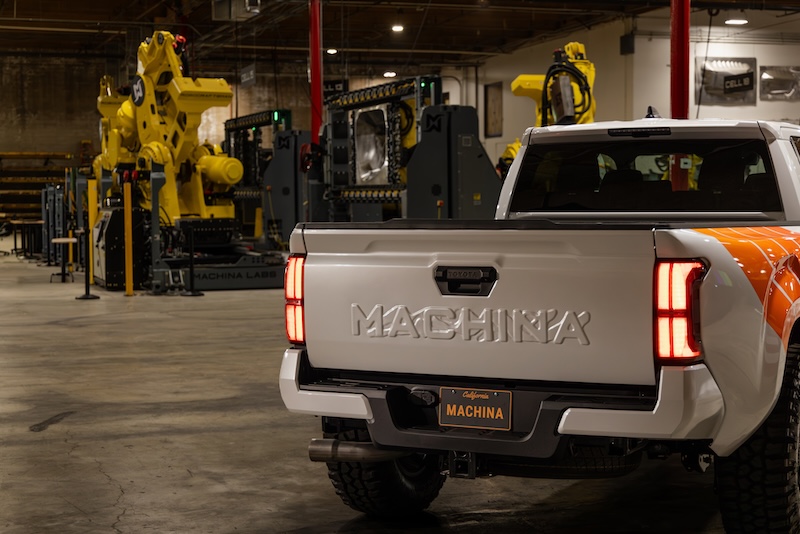
Machina Labs unveiled Machina Rebellis at its Chatsworth, California facility, using robotics, AI and digital…
Vectigo launched the Vectigo Platform, solar-powered POD sensor units installed flush with the road surface, w…

Altimeter's Brad Gerstner said applying a 10x multiple to 2028 numbers gets Anthropic to about $3 trillion in…

Following Jensen Huang's ouster as Nvidia CEO, investor Bill Birmingham of REX Financial said the successor in…
Remote CEO Job van der Voort launched aiforactualwork.com and made the first course mandatory for roughly 2,00…