AIToday

Tech CEOs warn enterprises are handing AI labs their crown jewels

Fortune AI5h ago
Tech CEOs warn enterprises are handing AI labs their crown jewels

Key takeaway

Top tech executives from Microsoft, Palantir, and other firms are publicly warning that enterprises are giving AI labs dangerous access to their most sensitive proprietary data in exchange for AI services—effectively paying twice and risking future competition. The backlash is pushing companies to consider open-weight models (publicly available AI systems they can run themselves) over closed frontier models, a shift that has already gained noticeable traction and poses a challenge to the dominance of labs like OpenAI and Anthropic.

Summaries like this, in your inbox every morning.

Sign up free →

3 Key Points

  • What happened

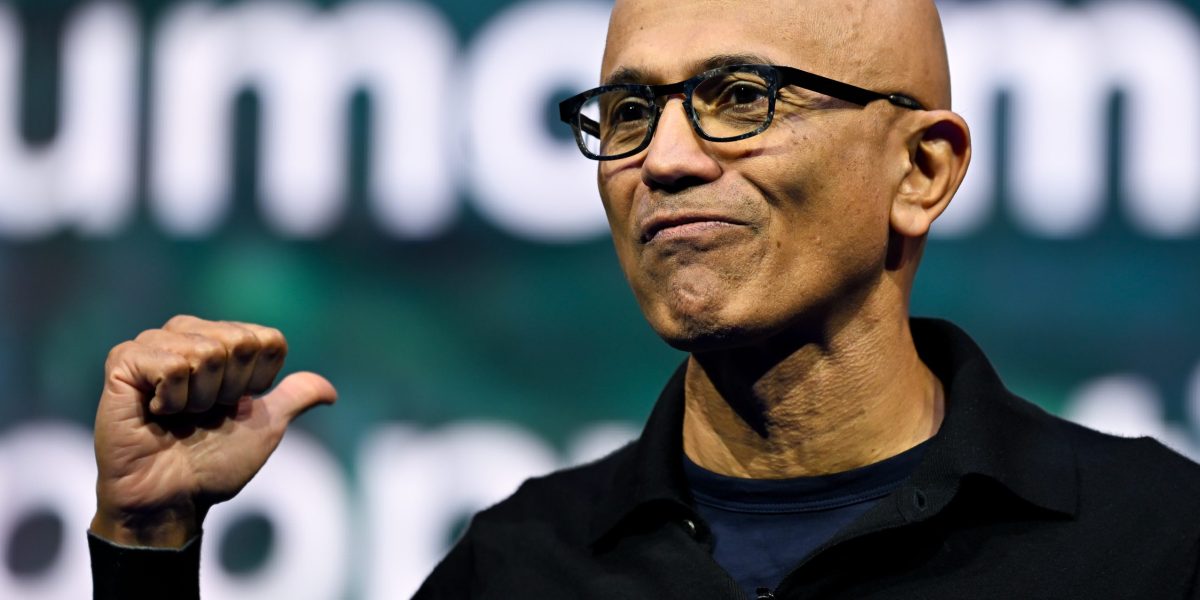
    Microsoft CEO Satya Nadella published a blog post warning that companies using frontier AI models are "paying twice"—once for token usage and again by surrendering proprietary data that trains the models. Palantir CEO Alex Karp echoed the concern on CNBC, saying enterprise clients are privately "livid" about AI vendors extracting proprietary data while charging premium prices. Both executives called for enterprises to build proprietary learning environments and retain data ownership.

  • Why it matters

    Nadella argues that by sharing their data and corrections with AI labs, enterprises are unknowingly giving those labs the ability to one day compete with them—while the labs restrict enterprises from training on data the same way. This data imbalance has some companies considering switching to open-weight models (whose parameters are published publicly), which can offer more control and transparency, often at lower cost. A U.S. government block on access to Anthropic's Fable 5 models has also prompted companies to diversify away from single vendors to avoid service disruptions.

  • What to watch

    Vercel reports open-weight models now account for 29% of traffic through its AI gateway, and Amazon's CTO Werner Vogels has observed companies shifting from frontier models to open-source options for cost control and transparency. Meanwhile, Anthropic CEO Dario Amodei personally donated $1 million(約1.6億円) to Public First, a super PAC pushing for mandatory AI safety rules, while OpenAI rank-and-file employees have donated more than $215,000 to Guardrails Alliance, a competing PAC seeking stricter AI regulation.

In Depth

Microsoft CEO Satya Nadella published a blog post this week arguing that companies using AI models from OpenAI and Anthropic are effectively "paying twice" for their services. The first payment is the token cost—the direct fee for using the model. The second, invisible payment is proprietary knowledge: the prompts employees write, the corrections they make when the model is wrong, and the tools agents use on their behalf. "Models learn from 'exhaust,' the prompts people write, the tools agents use, and especially the corrections people make when the model is wrong," Nadella wrote. "Every correction is distilled into institutional know-how." He argues this creates a dangerous asymmetry: enterprises hand over the data that trains the models and improves them, while the AI labs learn to compete with those very enterprises. Meanwhile, the labs train freely on public internet data but restrict enterprises from doing the same with their own models.

Nadella's proposed fix is for companies to build "proprietary learning environments" in the cloud and deploy "orchestration layers" that allow them to switch between AI vendors without lock-in. (It is worth noting that Microsoft sells exactly this type of platform.)

He is not alone. On CNBC earlier this month, Alex Karp, CEO of Palantir Technologies, made a similar case, arguing that enterprise clients are privately "livid" about AI vendors who extract proprietary data and competitive edge while charging premium token prices for tools that often fail to deliver commensurate value. Karp accused frontier AI labs of prioritizing "tokenmaxxing" over solving real business problems. Palantir responded with a nine-point "AI sovereignty" manifesto declaring that "data retention is your treasure." Former White House AI and Crypto Czar David Sacks called Karp "exactly right" on his All In podcast, arguing that OpenAI and Anthropic have formed a duopoly leaving enterprises with insufficient leverage over their own data and infrastructure.

The backlash is already shifting behavior. Companies are increasingly turning to open-weight models—systems whose underlying parameters are published publicly, allowing anyone to download, run, and modify them. These models offer enterprises more control and transparency, often at a fraction of the cost of frontier models. According to Vercel, open-weight models now account for 29% of traffic through its AI gateway. Amazon's CTO Werner Vogels recently told the publication that he was seeing companies shift from frontier model providers to open-source options both to control costs and gain transparency over the technology they embed in their operations. The U.S. government's recent decision to block access to Anthropic's Fable 5 models has accelerated this trend, as companies worried about workload continuity have begun diversifying away from single vendors.

Context & Analysis

The critique from Nadella, Karp, and others represents a significant shift in how established enterprise leaders are framing the relationship between Big Tech and frontier AI labs. While both Nadella (whose company has invested billions in OpenAI and Anthropic) and Karp (whose firm sells data-protection software) have obvious business incentives to push this narrative, the underlying concern taps into a genuine tension: enterprises are handing over sensitive data to train models they do not control, and those same labs are simultaneously improving their ability to compete in the enterprise software market.

The emergence of open-weight models as a credible alternative—particularly from Chinese labs that the article notes are now leading the open-weight space—has created a real option for companies wanting to reduce dependence on any single vendor. The U.S. government's block on Anthropic's Fable 5 models has reinforced this incentive: companies relying on critical AI workloads can no longer assume a vendor's models will remain available. The shift toward open models is already measurable (29% of Vercel's AI gateway traffic) and aligns with the broader push from figures like Karp and Vogels for data sovereignty and reduced vendor lock-in.

FAQ

What exactly are enterprises "paying twice" for, according to Nadella?
They pay once for tokens used, and again by handing over proprietary knowledge through the prompts they write, tools agents use, and corrections they make when models are wrong. Nadella says every correction is distilled into institutional know-how that the AI labs can learn from.
What is Nadella's proposed solution?
He calls for companies to retain ownership of their own data and build "proprietary learning environments" in the cloud, paired with "orchestration layers" that let them switch between AI providers instead of being locked into one.
How are enterprises responding—are they actually switching away from frontier models?
Yes, according to Amazon CTO Werner Vogels, companies are shifting from frontier model providers to open-source options both to reduce costs and gain more transparency. Vercel reports open-weight models now account for 29% of traffic through its AI gateway.

Get the latest AI Stocks & Markets news every morning

AI-summarized, only the topics you pick — one digest a day via Email, Slack, or Discord.

Free · takes 30 seconds · unsubscribe anytime

Discussion

No comments yet. Be the first to share your thoughts!

Log in to join the discussion

Related Articles

Stay ahead with AI news

Get curated AI news from 200+ sources delivered daily to your inbox. Free to use.

Get Started Free

Free · takes 30 seconds · unsubscribe anytime

1 minute a day. The AI essentials.

200+ sources · Email / LINE / Slack

Get it free →