What happened
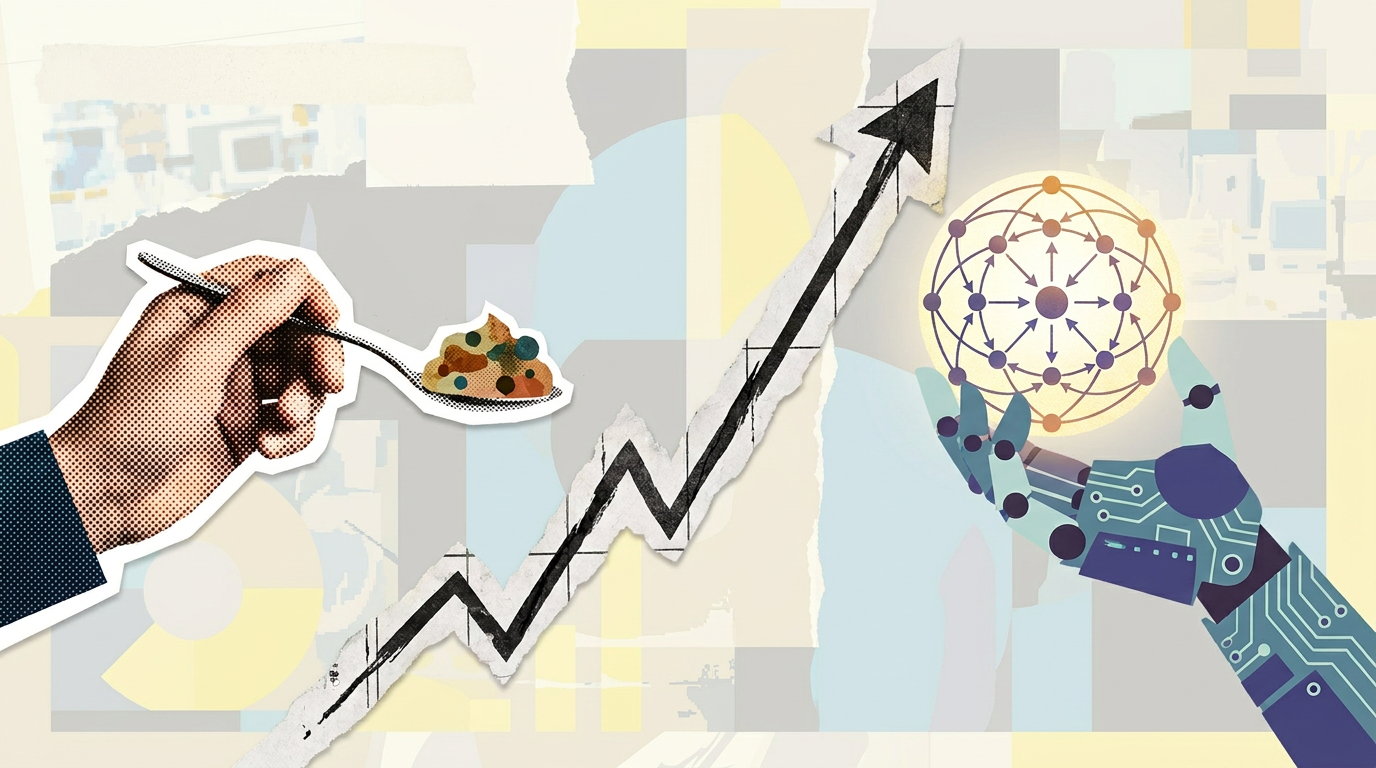
Jack Clark, who co-founded Anthropic, now believes recursive self-improvement could become possible as early as 2027, moving up his previous 2028 prediction and citing the TasteVal benchmark, where Anthropic's Opus 5.5 hit a 2.3 compute multiplier.
Why it matters
If that trend holds, AI development would get faster and cheaper, but a growing share of research would become harder for humans to verify, because models would be planning and evaluating their own experiments.
Summaries like this, every morning.
P-Zero Research built TasteVal around a specific economic logic: experiment compute is scarce in AI research, so a model that picks the right experiments and reads their results correctly needs fewer runs to reach the same score. The lab's "AI Futures Model" predicts experiment compute becomes the biggest bottleneck once coding is automated, which is why the benchmark translates research taste into a compute multiplier. The top result, Anthropic's Opus 5.5 at 2.3, came with a wide statistical range of 1.15 to 4.37, meaning at the low end the model would barely lead. A single run cost roughly one-thirtieth of what an expert attempt cost on average.
The human baseline came from 24 experts who had recently worked at OpenAI, Google DeepMind, Nvidia, and Microsoft Research, with at least two people on each of eight tasks. The authors themselves admit their results may overstate how quickly research taste is improving, because the tasks can be checked quickly and cheaply — the kind of task AI labs find easiest to optimize for — and the comparison group included no top-tier researchers.
The debate around Clark's forecast has centered on exactly this capability. AI researcher Herbie Bradley argued in response to Clark's May essay that while models could plausibly take over junior researchers' work, research taste, creativity and long-term planning were nowhere in sight. A Fudan University study found AI agents contributed up to 55 percent of methodology proposals in its own model's development, but humans still made over 85 percent of final decisions, and it remains unclear how AI can generate diverse research directions and assess their value before results are in — the decision TasteVal takes off the models' plate.
Pick your industry and the AI tools you use, and get news related to your work every day.
Free · 30 seconds with Google · unsubscribe anytimeWhat is AIToday? →
Ask AI anything about this article. The AI reads this article, earlier AIToday articles, and Wikipedia, and cites its sources. Q&As are published on this page for other readers too.
Rippling CEO Parker Conrad said OpenAI's share of its coding workload rose from 16 to 52 percent, while Anthro…

Anthropic says a single agent that loads context on demand often beats multi-agent setups on quality, cost and…

With garak 0.17.1, two encoding probes each sent 256 prompts to a vulnerable mock app; the DecodeApprox detect…

Thariq Shihipar, a public face of Claude Code, said he left after more than a year, and Anthony Morris, creato…
The author sketched an experiment with four memory conditions (no explanation, 'scolding is love', 'insults ca…

Anthropic donated the Agent Skills standard (name, logo, GitHub organization, agentskills.io domain) to the Ag…