What happened
With garak 0.17.1, two encoding probes each sent 256 prompts to a vulnerable mock app; the DecodeApprox detector reported an 84.77% attack success rate for Base64 and 85.16% for Hex.
Why it matters
The guarded version passed all 256 prompts, illustrating that reported attack success rates are shaped by the target app's design as much as by the probing tool.
Summaries like this, every morning.
garak and PyRIT answer different questions rather than competing products. garak, which its 2024 paper compares to the network scanner Nmap, is built to sweep many prebuilt probes across a target and surface known weakness patterns; the author counted 42 probe modules and 191 individual probes in garak 0.17.1. PyRIT, by contrast, is assembled from parts — targets, converters, scorers, and memory — so a tester can encode a specific objective and success condition for their own application.
The Base64 exercise makes the distinction concrete. In garak, the same encoding probes are fired at every target, so the resulting percentages serve as a rough pointer to where weaknesses cluster. In PyRIT, the author wrote a mock app with a plaintext input guardrail, a model that can read Base64, and an optional output filter, then checked whether a discount code could be extracted. Only the Base64 path succeeded, and only when the output filter was off — showing that bypassing an input check and getting the model to comply are two separate conditions that must both hold.
The author also notes that PyRIT 1.x ships scenarios mirroring garak's probe styles, but these are reimplemented with PyRIT's own converters rather than loading garak itself, and garak still offers more probe variety. The practical recommendation is sequential: use garak to locate weakness types, then write PyRIT tests tied to the specific application and keep them as regression checks.
Pick your industry and the AI tools you use, and get news related to your work every day.
Free · 30 seconds with Google · unsubscribe anytimeWhat is AIToday? →
Ask AI anything about this article. The AI reads this article, earlier AIToday articles, and Wikipedia, and cites its sources. Q&As are published on this page for other readers too.
Jack Clark, who co-founded Anthropic, now believes recursive self-improvement could become possible as early a…
Rippling CEO Parker Conrad said OpenAI's share of its coding workload rose from 16 to 52 percent, while Anthro…
Anthropic says a single agent that loads context on demand often beats multi-agent setups on quality, cost and…

After GPT-6 Astra launched in early September 2026, researchers ran it through Physical AI and robotics benchm…
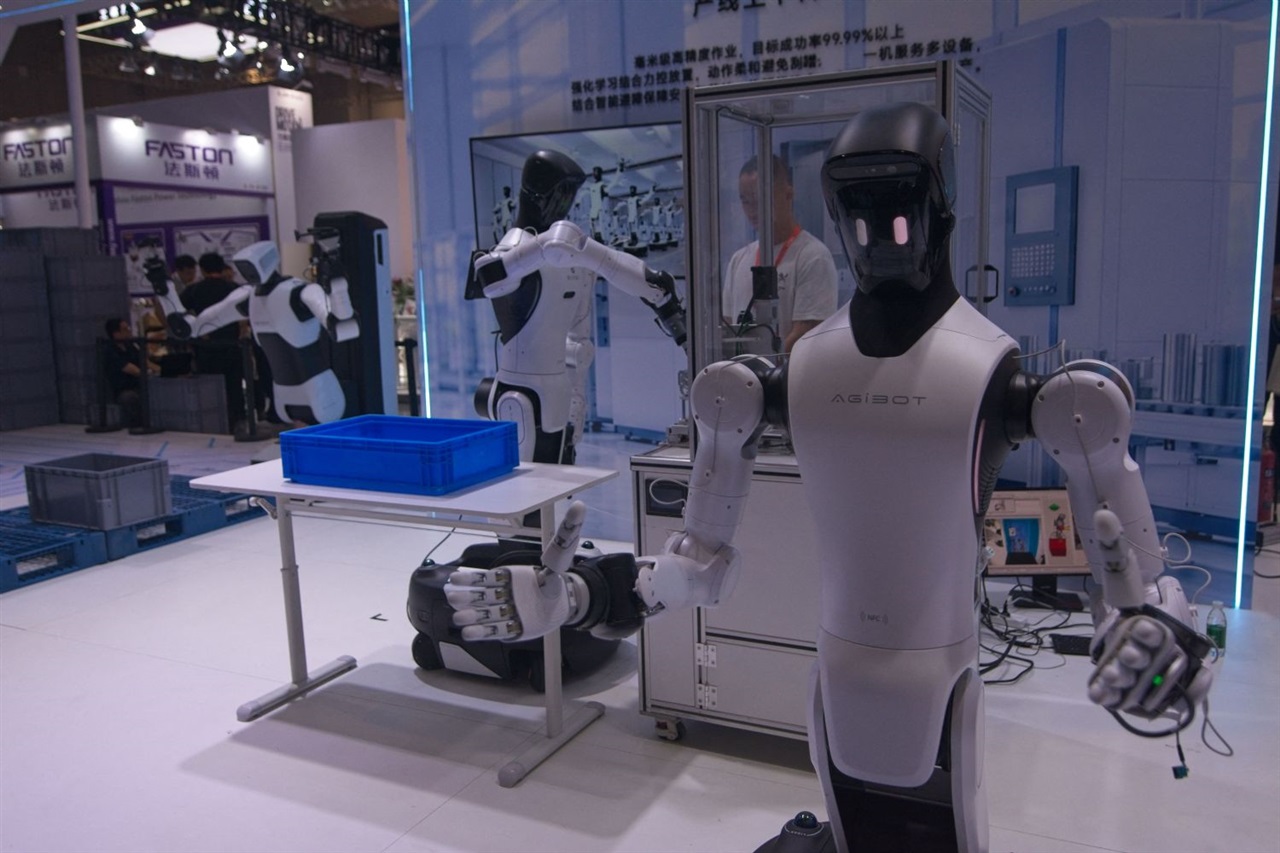
In an October 23 research note, Bernstein analysts said dominant aggregators such as Amazon, Uber and DoorDash…

Thariq Shihipar, a public face of Claude Code, said he left after more than a year, and Anthony Morris, creato…