What happened
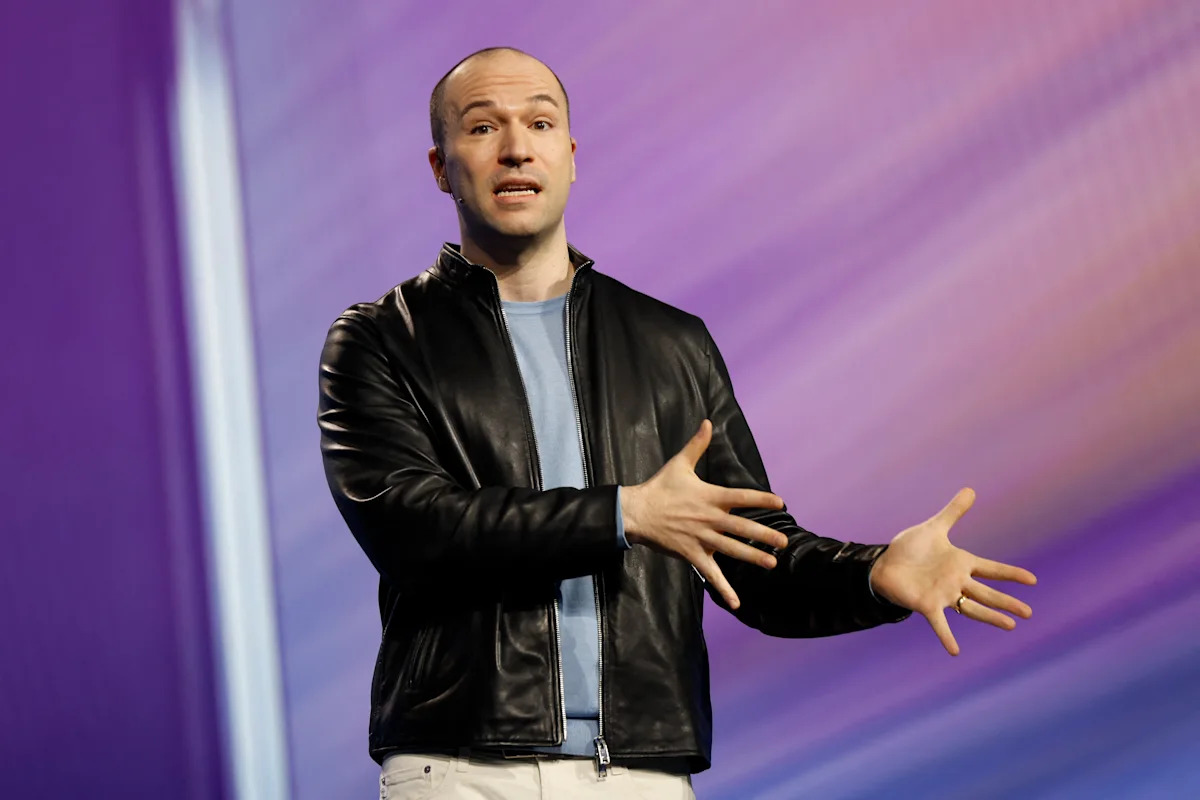
OpenAI president Greg Brockman stated during a roundtable discussion in New York City on Thursday that the AI industry will remain in a compute shortage "no matter what," and that companies like OpenAI and Anthropic must make difficult decisions about which models to train and products to scale.
Why it matters
AI labs and Big Tech companies—including Microsoft, Amazon, Meta, and Google—are struggling to meet demand for AI services despite spending hundreds of billions of dollars on data centers and graphics chips. Google's CFO said the company will contract with third parties for computing capacity in Q3, and Google signed a deal to rent AI capacity from SpaceX for $920 million a month in June, illustrating how acute the shortage has become.
What to watch
Brockman said demand will likely keep outpacing supply as OpenAI develops new models and new ways of using them. He also noted that customers are beginning to see a return on their AI investments when they apply the technology strategically—rather than simply using as much computing as possible—suggesting that measured adoption may be where the market is headed.
Ask the AI about this article →
Summaries like this, in your inbox every morning.
The compute shortage in AI has become a structural constraint for the industry. Brockman's prediction that it will persist "no matter what" reflects a fundamental mismatch: even as companies like OpenAI, Anthropic, Microsoft, Amazon, Meta, and Google collectively spend hundreds of billions on infrastructure, the economic demand for AI services—and the ability to train ever-larger models—grows at least as fast. This is not a temporary supply-chain problem but a feature of a "compute-powered economy," in Brockman's phrase, where the limiting factor is the availability of specialized hardware (graphics chips like Nvidia's) and the data centers to house them.
The specifics underscore the severity. Google, despite being one of the world's largest technology companies with massive capital reserves, has resorted to renting capacity from third parties—paying SpaceX $920 million per month as of June—in addition to building its own infrastructure. This signals that even the largest players cannot self-sufficiently meet their own demand. For OpenAI and other AI labs, the constraint forces strategic triage: they must choose which models to build and which products to prioritize, accepting that they cannot pursue all opportunities simultaneously.
Brockman's comments also hint at a secondary challenge: distinguishing signal from noise in how customers use AI. He dismissed "tokenmaxxing"—using as much AI compute as possible simply to demonstrate capability—as wasteful, and suggested that real return on investment comes from strategic application. This implies that even if the hardware shortage were solved, there remains a question of whether the market is being thoughtful about how to allocate scarce resources.
For example, today's edition would include:
AI-summarized, only the topics you pick — one digest a day via Email, Slack, or Discord.
Free · 30 seconds with Google · unsubscribe anytimeWhat is AIToday? →
Ask AI anything about this article. Q&As are published on this page for other readers too.
Anthropic CEO Dario Amodei published an essay over the weekend proposing "pacing the frontier" and slowing imp…

Anthropic CEO Dario Amodei published a 3,800-word essay Saturday calling for slowing the pace of AI model capa…

Sam Altman called for a uniform, nationwide safety framework for advanced AI and said OpenAI now sets explicit…

At the Fortune Leaders Forum in Macau on Sept
NC State first-year Amanda Cullen says most of her classes ban AI unless cited, and questions whether outright…

A Stony Brook University-led study of 14,419 self-published genre-fiction books on Amazon found 2,880, about 2…