What happened
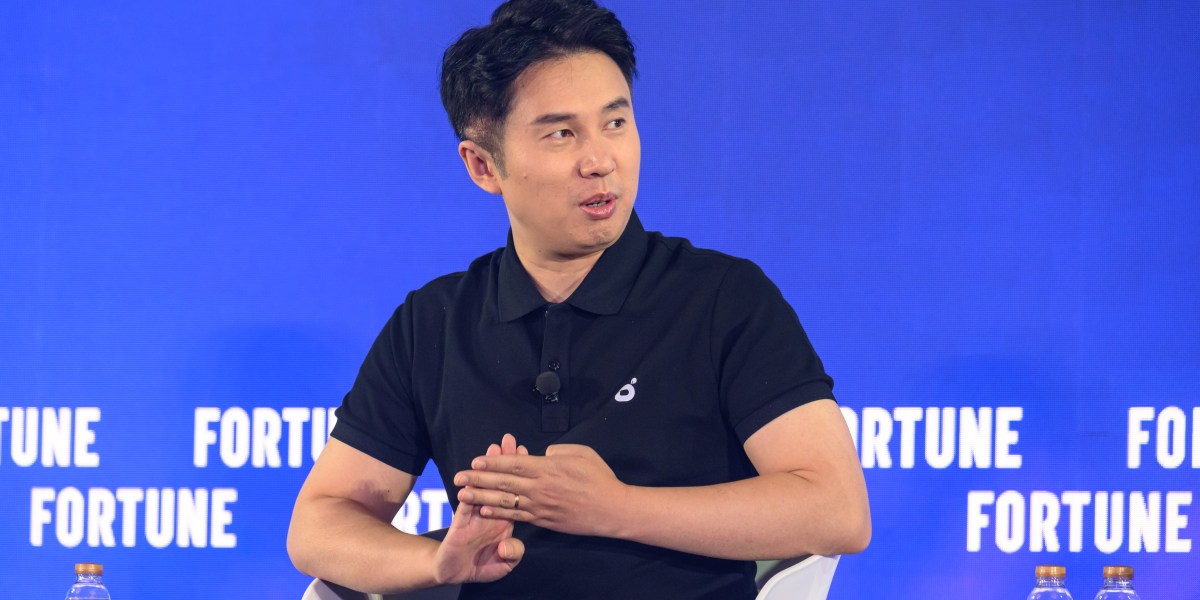
At the Fortune Leaders Forum in Macau on Sept. 8, AGIBOT co-founder Yao Maoqing said embodied AI will hit a 'GPT-3.5' moment within 3 to 5 years, when robots handle everyday tasks at an 80–90% success rate.
Why it matters
AGIBOT shipped 9,700 humanoid units in the first half of the year, making it the top seller per Counterpoint Research, and is considering a Hong Kong IPO — yet Yao says factories still demand 100% efficacy.
What to watch
The timeframe hinges on whether data volume and model size keep delivering the same step-up in intelligence seen in large language models. Watch AGIBOT's plans for a Hong Kong IPO.
WHO IT HITSThis matters most for robotics and manufacturing executives weighing whether to invest in humanoid automation now or wait, and for investors watching AGIBOT's planned Hong Kong listing.
Ask the AI about this article →
Summaries like this, in your inbox every morning.
The World Humanoid Robot Games in Beijing last August put humanoid robots in the spotlight with athletic feats like sprinting, weightlifting and kickboxing. But behind the headlines, Chinese robot makers are racing to find practical uses in hotels and factories. AGIBOT, which shipped 9,700 humanoid units in the first half of the year and is considering a Hong Kong IPO, is at the center of that push.
At the Fortune Leaders Forum in Macau on Sept. 8, AGIBOT co-founder Yao Maoqing compared where embodied AI stands to GPT-3.5, the model behind ChatGPT. He said the technology will reach that level within a 3-to-5-year window, meaning robots that can perform everyday tasks at an 80–90% success rate. That milestone would mark a shift from specialized demonstrations to general-purpose capability.
But the path to factories is steep. Yao acknowledged that humanoid firms find it genuinely difficult to build a robot that runs stably inside a factory, where industry players care about success rate, cycle time, stability and cost above all else. AGIBOT's six-day livestream in late June showed robots completing over 64,000 manufacturing tasks with a 99.99% success rate, though reaching that required eight-hour overnight sessions for a month. Whether embodied AI delivers on Yao's timeline likely hinges on whether data volume and model size keep producing the same step-up in intelligence seen in large language models — and on whether factories' demands for near-perfect reliability can be met at a cost that makes sense.
For example, today's edition would include:
AI-summarized, only the topics you pick — one digest a day via Email, Slack, or Discord.
Free · 30 seconds with Google · unsubscribe anytimeWhat is AIToday? →
Ask AI anything about this article. Q&As are published on this page for other readers too.
Anthropic CEO Dario Amodei published an essay over the weekend proposing "pacing the frontier" and slowing imp…

Anthropic CEO Dario Amodei published a 3,800-word essay Saturday calling for slowing the pace of AI model capa…

Sam Altman called for a uniform, nationwide safety framework for advanced AI and said OpenAI now sets explicit…

NC State first-year Amanda Cullen says most of her classes ban AI unless cited, and questions whether outright…

A Stony Brook University-led study of 14,419 self-published genre-fiction books on Amazon found 2,880, about 2…

Panasonic Connect reported that generative AI and AI agents cut 788,000 hours of work in fiscal 2025 — 3.4% of…