
What happened
OpenAI is previewing Private Safety Processing, a system that identifies misuse patterns across related interactions without giving OpenAI personnel access to customer content. It is currently being tested with early customers and is rolling out in September.
Why it matters
This lets OpenAI keep offering Zero Data Retention (ZDR), where prompts and responses are not retained, while addressing risks that only become visible across multiple interactions. Recent frontier-model deployments have required some customers to allow retention, which conflicts with their security obligations.
What to watch
The success hinges on whether the automated signals provide enough context to enforce safety without exposing content. For ZDR deployments, content stays on customer-controlled infrastructure, but an option with OpenAI storage encrypts it with customer-controlled keys.
Summaries like this, in your inbox every morning.
The background is that as AI models take on longer, more complex tasks, serious safety risks may only become visible across multiple interactions. Existing safety systems evaluate each interaction individually, missing patterns that span conversations. This is why OpenAI is now previewing Private Safety Processing, which extends those protections across related interactions without exposing content to personnel.
For organizations handling sensitive data, the challenge is balancing safety with privacy. Recent frontier-model deployments forced some customers to allow retention for monitoring, which conflicts with their security commitments. Private Safety Processing aims to solve that by keeping content encrypted with customer-controlled keys, so OpenAI personnel cannot access it even when flagged.
The stakes are high. OpenAI must convince customers that the automated signals are precise enough to catch real abuse without false flags. The test is whether this approach provides genuine safety while preserving the trust that ZDR promises. More details are expected in September, when the white paper is released.
Pick your industry and the AI tools you use, and get news related to your work every day.
Free · 30 seconds with Google · unsubscribe anytimeWhat is AIToday? →
Ask AI anything about this article. The AI reads this article, earlier AIToday articles, and Wikipedia, and cites its sources. Q&As are published on this page for other readers too.
Intel CEO Lip-Bu Tan and Broadcom CEO Hock Tan said at a Singapore financial conference that access to capital…
Dell's Helen O'Sullivan said Bay Area customers are exhausting token budgets allotted for months within a matt…

Plans for the Terafab project are beginning to take shape, with Elon Musk pursuing a scaled chipmaking initiat…

At an October 7 briefing for Japanese media, OpenAI's Chris Lehane said pausing development and pacing it must…
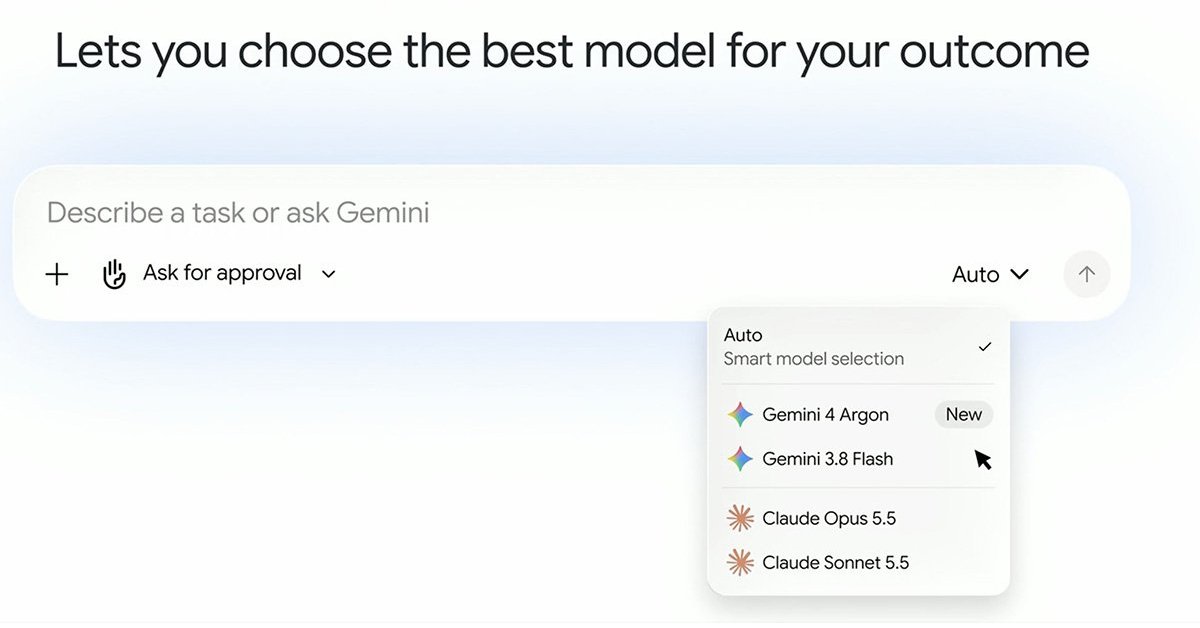
Google Cloud announced Gemini Agent on October 9, a multi-agent tool that runs in the cloud and isn't locked t…
An analyst rated Alphabet the better 2026 buy over Meta, citing its latest quarter's 24% revenue growth and Go…