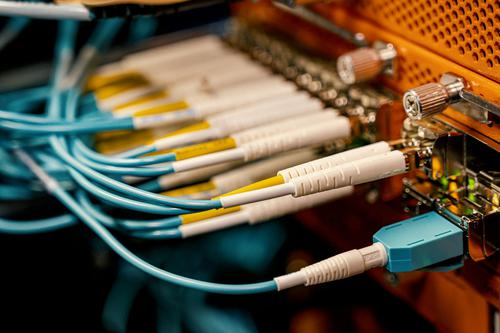
Corning, a materials science company traditionally known for glass and displays, is emerging as a critical infrastructure player in the AI boom. Its optical communications segment—supplying fiber, cables, and connectors for data centers—generated $6.3 billion(約1兆円) in 2025 revenue (up 35% year-over-year) and is backed by a $6 billion(約9600億円) agreement with Meta and partnerships with NVIDIA and other hyperscalers investing unprecedented sums in AI infrastructure. The company raised full-year growth guidance substantially, though its stock price has already outpaced most analyst targets.
Summaries like this, in your inbox every morning.
Sign up free →What happened
Corning's stock surged 7.32% on February 20, 2026, to $139.51, driven by demand for its optical communications components from hyperscalers investing heavily in AI infrastructure. The company reported Q4 2025 adjusted EPS of $0.72 (beating consensus of $0.70), with optical communications revenue up 24.3% year-over-year; the segment generated $6.3 billion(約1兆円) in full-year 2025 revenue, up 35% from 2024.
Why it matters
Corning signed a multi-year agreement with Meta valued at up to $6 billion(約9600億円) through 2030 to supply cabling and optical fiber for AI data centers, while hyperscalers (Amazon, Alphabet, Meta, Microsoft, Oracle) are collectively committing $660 billion(約110兆円) to $690 billion(約110兆円) to capital expenditure in 2026—nearly double 2025 levels. Optical fiber, long overlooked, is now recognized as essential infrastructure for AI compute.
What to watch
Corning raised its "Springboard" growth plan, now expecting $6.5 billion(約1兆円) in incremental annualized sales by end of 2026 (up from $6 billion(約9600億円) guidance) and $11 billion(約1.8兆円) by end of 2028 (up from $8 billion(約1.3兆円)). The stock trades at a P/E ratio of 75.17, well above the industry average; UBS recently raised its price target to $160.00, but the current price of $139.51 already exceeds most analyst targets.
Corning Incorporated, trading at $139.51 on February 20, 2026, has surged 7.32% in a single day, with shares climbing over 100% in the past year and 50.2% year-to-date in 2026. The rally reflects investor recognition of Corning's pivotal role in supplying optical communications infrastructure—fiber, cables, connectors, and hardware—to hyperscale AI data centers operated by Amazon, Alphabet, Meta, Microsoft, and Oracle.
The scale of capital commitment driving this demand is unprecedented. These five hyperscalers are collectively allocating $660 billion(約110兆円) to $690 billion(約110兆円) to capital expenditure in 2026, nearly double 2025 levels, with the majority directed at AI compute, data centers, and networking. This expansion creates immediate demand for Corning's optical components, which are essential for high-speed, high-efficiency data transfer in AI-powered environments. The company's 175-year history centers on consumer electronics glass and display panels, but its optical communications segment has rapidly become the core growth engine, reflecting a calculated alignment with the structural expansion of data transmission requirements.
Corning's largest strategic anchor is its multi-year agreement with Meta, valued at up to $6 billion(約9600億円) through 2030. Under the deal, Corning will supply cabling, optical fiber, and communication components for Meta's next-generation AI data centers, including gigawatt-scale facilities in Ohio and Louisiana. The company also partners with NVIDIA, supporting its silicon photonics ecosystem for AI infrastructure, and has a two-year alliance with Lumen Technologies that reserves 10% of Corning's global fiber capacity. These partnerships provide long-term demand visibility and reduce cyclical risk through customer prepayments and stringent commitments.
Financial results validate this momentum. On January 28, 2026, Corning reported Q4 2025 adjusted EPS of $0.72, surpassing the Zacks Consensus Estimate of $0.70 and the year-ago EPS of $0.57. Quarterly revenue reached $4.41 billion(約7100億円) against an estimate of $4.396 billion(約7000億円), representing 14% year-over-year growth. The company posted its fourth consecutive quarter of earnings beats in 2025, with full-year core EPS climbing 26% and operating margins expanding 390 basis points to 20.2%. The optical communications segment delivered particularly strong growth: net sales rose 24.3% year-over-year in the quarter, and full-year segment revenue hit $6.3 billion(約1兆円), up 35% from 2024, with the enterprise network business surging 61%. Free cash flow nearly doubled to $1.72 billion(約2800億円) in 2025 from $880 million(約1400億円) in 2024.
Looking forward, Corning raised guidance substantially. The company now projects Q1 2026 core sales between $4.2 billion(約6700億円) and $4.3 billion(約6900億円) with adjusted EPS of $0.66 to $0.70. More importantly, it upgraded its "Springboard" growth plan, now expecting $6.5 billion(約1兆円) in incremental annualized sales by end of 2026 (revised up from $6 billion(約9600億円)) and $11 billion(約1.8兆円) by end of 2028 (revised up from $8 billion(約1.3兆円)). Analysts consensus rates the stock "Buy" (21 Buy, 13 Hold, 2 Sell among 36 analysts), with an average price target of $118.67 and median of $120.00. UBS recently raised its target to $160.00, maintaining a "Buy" rating. However, the current stock price of $139.51 has already surpassed most targets, suggesting recent analyst models may lag the company's accelerated guidance.
Valuation metrics reflect the market's enthusiasm and uncertainty. The trailing twelve-month P/E ratio stands at 75.17, significantly above historical and industry averages. The Price-to-Book ratio is 10.16, Price-to-Sales is 7.66, and EV/EBITDA is 34.47. These figures suggest substantial growth expectations are already priced in. Yet Corning's net income growth of 215.4% and EPS growth of 219.0% in FY2025, paired with a projected long-term EPS growth rate of 18.8%, provide a potential justification if hyperscaler capex sustains. Estimates for 2026 AI capex by the top five hyperscalers reach as high as $750 billion(約120兆円), implying the current demand may be structural rather than cyclical.
Corning's transformation from a consumer-focused glass and display company into a foundational AI infrastructure supplier reflects a broader structural shift in how technology giants compete. While the spotlight typically falls on chipmakers and software developers, the data transmission infrastructure required to support AI's enormous computational demands is equally critical—and increasingly a bottleneck. Hyperscalers' $660 billion(約110兆円) to $690 billion(約110兆円) capital spending in 2026 signals that AI infrastructure investment is not a cyclical surge but a multi-year structural expansion, and optical fiber has become a recognized "must-have" component for GPU clusters and high-frequency data exchange.
Corning's strategic partnerships anchor its growth narrative. The $6 billion(約9600億円) Meta deal through 2030, combined with collaborations with NVIDIA and Lumen Technologies (which reserves 10% of Corning's global fiber capacity for two years), shift the company from transactional sales to long-term demand visibility. These agreements often include customer prepayments and stringent commitments, reducing demand fluctuation risk and enabling confident capacity expansion. The company's financial execution supports this positioning: optical communications revenue climbed 35% year-over-year in 2025, with the enterprise network business growing 61%, and full-year core EPS rose 26% while operating margins expanded 390 basis points to 20.2%.
Valuation, however, presents a nuanced picture. Corning's trailing P/E of 75.17 is substantially elevated compared to historical and industry averages, and the stock price of $139.51 has already surpassed most analyst price targets (average $118.67, UBS's recent $160.00 exception). Yet the company's projected EPS growth rate of 18.8% over 3–5 years, combined with net income growth of 215.4% and revenue growth of 19.1% in FY2025, suggests the market may be pricing in only a fraction of potential upside if hyperscaler capex sustains at current levels. The key question for investors is whether the structural demand for optical infrastructure will persist or whether a slowdown in AI capex growth could quickly compress these elevated multiples.
AI-summarized, only the topics you pick — one digest a day via Email, Slack, or Discord.
Free · takes 30 seconds · unsubscribe anytime
No comments yet. Be the first to share your thoughts!
Log in to join the discussion


Get curated AI news from 200+ sources delivered daily to your inbox. Free to use.
Get Started FreeFree · takes 30 seconds · unsubscribe anytime
