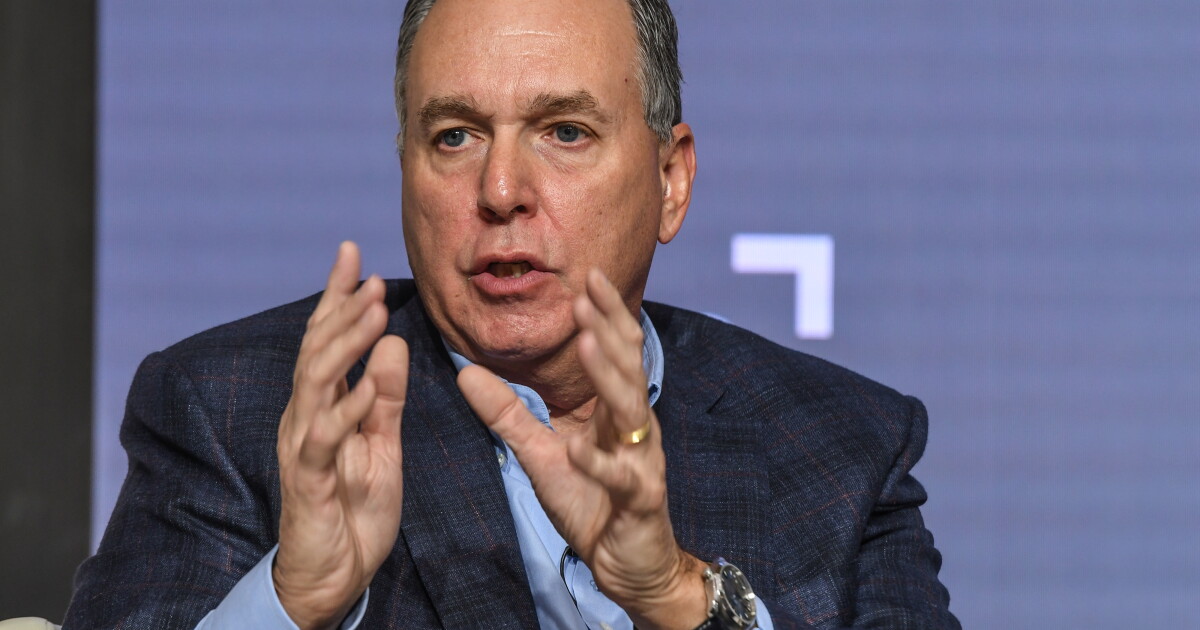
American Express reported strong Q2 earnings while announcing that AI is speeding up its technology product development and customer service operations. CEO Steve Squeri emphasized that the company views AI as reducing work volume rather than cutting jobs, expecting any workforce shrinkage only through natural attrition—a notable stance as banks grapple with automation's employment impact. Amex is also backing an industry-wide AI payment standard and plans to launch multiple AI-driven business products over the coming year.
Summaries like this, in your inbox every morning.
Sign up free →What happened
American Express CEO Steve Squeri said on Friday's earnings call that AI is helping the company process its backlog of technology products faster and boosting efficiency, though he cautioned that deeper impacts on workflows and revenue will arrive later. Amex reported Q2 net income of $3.11 billion(約5000億円) (up from $2.88 billion(約4600億円) a year ago), revenue of $19.64 billion(約3.1兆円) (up from $17.8 billion(約2.8兆円)), and billed business of $445.8 billion(約71兆円) (up from $416.3 billion(約67兆円)).
Why it matters
Squeri framed AI as accelerating work rather than replacing workers—Amex reported a lack of acceleration in customer service hiring even as business volume rose, with workforce reductions expected only through attrition over time. The approach contrasts with some fintech rivals that have directly tied AI growth to layoffs, and signals how large financial institutions are navigating public concerns about job displacement while investing in the technology.
What to watch
Amex is backing the Agent Payments Protocol (AP2), an open standard launched in late 2025 alongside Google, PayPal and more than 60 other companies, and plans to release more than a half-dozen business-focused AI-powered products over the next year—a bet that agentic AI will power the next phase of financial services.
American Express delivered strong second-quarter results on Friday, reporting net income of $3.11 billion(約5000億円), up from $2.88 billion(約4600億円) a year prior, with earnings per share of $4.53 versus $4.08. Revenue climbed to $19.64 billion(約3.1兆円) from $17.8 billion(約2.8兆円), while billed business—a measure of customer spending across all card types—reached $445.8 billion(約71兆円), up from $416.3 billion(約67兆円). The company narrowed its full-year guidance to project 10% revenue growth, a slight boost from its earlier 9–10% range, and affirmed profit guidance of $17.30 to $17.90 per share.
CEO Steve Squeri attributed part of the strength to recent premium card upgrades. Amex recently completed what he called the company's "largest investment ever" in a credit card refresh, covering both U.S. consumer and business Platinum cards with redesigned card stocks, new websites, and enhanced incentives. The refreshes are part of a deliberate push to acquire millennial and Gen Z customers, whom Amex is targeting with digital wallet features and "hyper-personalized" rewards powered by AI analysis of individual spending habits. This strategy is a direct response to fintech competition: Block's Cash App and Revolut have attracted younger users by offering integrated crypto trading and social payment capabilities, while traditional card rivals like JPMorganChase (Sapphire line) and Citi (Strata Elite) compete in the high-end segment.
On artificial intelligence, Squeri emphasized that Amex is still early in its AI journey. "It's not even early innings yet, it's the preseason," he said, noting that the company has a large backlog of technology products and is using AI to move through that backlog faster and improve efficiency. Amex is investing in new forms of AI for both internal and external uses—from streamlined marketing campaigns to credit underwriting and fraud detection. This year, the company launched an AI-powered service portal for customer service representatives designed to cut call duration. However, Squeri was careful to address job impact: "The number of reps hasn't grown. Over time it will decrease from attrition." He noted that Amex observed a "lack of acceleration in hiring" in customer service even as business volume for that group increased, signaling that AI is helping existing staff handle more work rather than triggering immediate layoffs.
Amex is also positioning itself for the emerging era of agentic AI—systems that can discover products, make decisions, and execute transactions on behalf of users. The company supports the Agent Payments Protocol (AP2), an open standard launched in late 2025 alongside Google, PayPal, and more than 60 other firms. The protocol provides a standardized framework for AI agents to securely authorize and execute payments on behalf of cardholders. Squeri emphasized Amex's advantage in this space: its closed-loop model, which maintains direct relationships with both merchants and consumers, allows the company to monitor entire transactions and combat fraud and "hallucinations"—a growing risk as AI agents take autonomous actions. "We have the data from both sides. We know what the customer wanted to buy and what the merchant delivered," he explained. To capitalize on this opportunity, Amex recently launched the Graphite Business Cash card and plans to release more than a half-dozen additional business-focused products over the next year, all powered by advances in agentic and generative AI.
Amex's earnings call reveals a carefully calibrated narrative around AI and employment at a moment when automation concerns loom large in financial services. While the company is clearly investing in AI across product development, customer service, fraud detection, and marketing, Squeri's framing—that the company is still in "the preseason" and deeper impacts will unfold over years—suggests Amex is managing both investor expectations and public anxiety about job losses. The reported lack of hiring acceleration in customer service despite rising business volume is the key data point: it shows AI is already affecting headcount dynamics, but through slowdown rather than cuts.
Amex's decision to back the Agent Payments Protocol signals its commitment to agentic AI as an industry direction. Rather than competing in isolation, the company is joining a consortium of over 60 firms to establish standards, which may reduce friction as AI agents become intermediaries in payment flows. This moves Amex into a position where it can shape how AI agents interact with its closed-loop ecosystem—an advantage given its direct relationships with both merchants and consumers, which Squeri highlighted as a safeguard against fraud and "hallucinations" in AI-powered transactions.
The timing also matters: Amex recently completed what it calls its "largest investment ever" in credit card upgrades, including premium Platinum cards targeting millennials and Gen Z. The company is using AI-driven personalization of rewards to compete with fintech rivals like Cash App and Revolut that have captured younger customers through integrated crypto and social features. Against JPMorganChase's Sapphire and Citi's Strata Elite, Amex's AI-powered differentiation in the high-end segment appears to be working—the company reported "stronger momentum than we expected" and analysts noted the high-end consumer remained resilient.
AI-summarized, only the topics you pick — one digest a day via Email, Slack, or Discord.
Free · takes 30 seconds · unsubscribe anytime
No comments yet. Be the first to share your thoughts!
Log in to join the discussion





Get curated AI news from 200+ sources delivered daily to your inbox. Free to use.
Get Started FreeFree · takes 30 seconds · unsubscribe anytime
