
Verizon reported second-quarter results that beat analyst expectations, posting adjusted earnings of $1.30 per share and mobility and broadband service revenue of approximately $23.4 billion(約3.7兆円) (against a $19.5 billion(約3.1兆円) estimate). CEO Dan Schulman's turnaround strategy—centered on simplified wireless plans and a loyalty rewards program launched in June—is starting to show results, with the company adding 184,000 postpaid phone customers and reversing years of stagnant growth. Beyond quarterly performance, Verizon is betting on artificial intelligence infrastructure as a new revenue driver: it signed a $1 billion(約1600億円) dark-fiber deal with Alphabet and expects to announce additional AI agreements by year-end that could collectively generate multiple billions of dollars in revenue over the next several years.
Summaries like this, in your inbox every morning.
Sign up free →What happened
Verizon reported second-quarter earnings of $1.30 per share (adjusted), surpassing analyst expectations, and posted mobility and broadband service revenue of approximately $23.4 billion(約3.7兆円), well above the $19.5 billion(約3.1兆円) estimate. The company added 184,000 postpaid phone customers and raised its full-year adjusted earnings outlook to between $4.99 and $5.04 per share. CEO Dan Schulman, who became CEO in late 2025, introduced a simplified wireless plan in June and launched a loyalty rewards program.
Why it matters
Verizon's beat signals early success in Schulman's turnaround—the company is reversing years of stagnant growth and market-share losses, particularly against T-Mobile, by simplifying offerings and winning new accounts including younger customers and people seeking one- or two-line plans. More strategically, Verizon is positioning itself in the AI infrastructure boom: it signed a $1 billion(約1600億円) agreement with Alphabet to provide dark fiber linking Google data centers, and Schulman expects to announce additional agreements by year-end that could collectively generate multiple billions of dollars in revenue over the next several years.
What to watch
Verizon expects positive new-account growth in the third quarter, and Schulman forecasts the second half of 2026 to be stronger than the first half, with 2027 stronger still. Verizon's board extended Schulman's contract through the end of 2028. The company's AI infrastructure deals are framed as long-duration, high-quality revenue streams that could materially reshape earnings in coming years.
Verizon Communications reported second-quarter earnings that exceeded Wall Street expectations, signaling early success in CEO Dan Schulman's turnaround plan. The company posted adjusted earnings of $1.30 per share, above analyst projections, and recorded mobility and broadband service revenue of approximately $23.4 billion(約3.7兆円)—a 2.8% year-over-year increase that far surpassed the analyst consensus estimate of $19.5 billion(約3.1兆円). The strong performance was driven in part by customer additions: Verizon added 184,000 postpaid phone customers during the quarter. Schulman, who became CEO in late 2025, has focused on rebuilding Verizon's brand by simplifying its service offerings and refocusing on customer retention and acquisition. In June, the company introduced a simplified wireless plan and launched a loyalty rewards program offering discounts and giveaways to existing subscribers. According to Schulman, Verizon is seeing strong demand for new accounts, particularly from younger customers and consumers seeking one- or two-line plans. Management expects this momentum to continue, with positive new-account growth projected for the third quarter.
Not all metrics improved: operating revenue declined 0.7% year-over-year to $34.3 billion(約5.5兆円), falling short of analyst estimates of approximately $35 billion(約5.6兆円), and net income fell 23% to $3.9 billion(約6200億円) after Verizon recorded $1.8 billion(約2900億円) in pretax charges—including a $746 million(約1200億円) loss connected to its agreement with BT Group, a UK telecommunications company, to combine their international operations. However, the company's outlook remained constructive, and Verizon raised its adjusted full-year earnings guidance to between $4.99 and $5.04 per share, compared with its previous forecast of as much as $4.99. Schulman signaled that growth will accelerate in the second half of 2026 and continue into 2027.
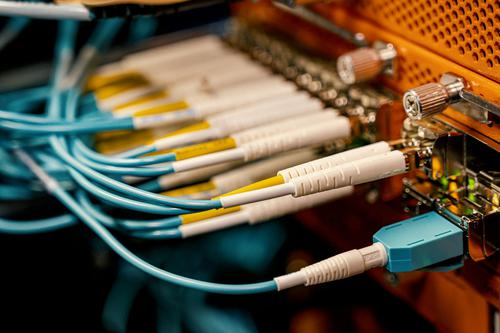
Beyond near-term customer metrics, Verizon is positioning itself to benefit from artificial intelligence infrastructure demand. The company signed a $1 billion(約1600億円) agreement with Alphabet (Google's parent company) to provide dark fiber—direct, dedicated fiber-optic cables—linking Google data centers. This deal exemplifies Verizon's strategy of leveraging its network assets to connect businesses and data centers as AI computing scales rapidly. Schulman said Verizon expects to announce additional agreements by year-end that could collectively generate multiple billions of dollars in revenue over the next several years, describing these contracts as long-duration, high-quality revenue streams. Schulman also addressed investor concerns about satellite broadband competition, stating that satellite providers have not affected Verizon's broadband penetration or capabilities. In response to Verizon's strong quarter, the company's shares gained 2.9% on Friday morning in New York, bringing the year-to-date gain to 11%—a performance that stands in contrast to declines at competitors T-Mobile US and AT&T. Following the earnings announcement, Verizon's board extended Schulman's contract through the end of 2028, signaling confidence in his leadership and long-term strategy.
Verizon's second-quarter results represent a turning point under CEO Dan Schulman, who took the helm in late 2025 and has pursued a deliberate strategy to rebuild the company's market position. For years, Verizon has struggled with stagnant growth and losses to competitors like T-Mobile in the wireless market. Schulman's turnaround rests on two pillars: simplifying the customer experience (a streamlined wireless plan rolled out in June, plus a new loyalty rewards program) and identifying new revenue streams beyond traditional telecom services. The company's decision to pivot toward artificial intelligence infrastructure reflects a broader industry recognition that network operators can serve as critical connectors between businesses and the computing resources needed to power AI systems. The $1 billion(約1600億円) dark-fiber agreement with Alphabet is framed by management not as a one-time transaction but as the leading edge of a longer-term infrastructure partnership—Schulman explicitly expects multiple additional agreements by year-end, each structured as a long-duration, high-quality revenue stream.
Even as Verizon beat on earnings and revenue, the company faced headwinds: operating revenue fell 0.7% year-over-year to $34.3 billion(約5.5兆円), and net income dropped 23% to $3.9 billion(約6200億円), weighed down by $1.8 billion(約2900億円) in pretax charges (including a $746 million(約1200億円) loss tied to its international operations combining with BT Group). Yet management's raised full-year guidance and Schulman's contract extension through 2028 signal confidence that the turnaround has momentum. The stock's 2.9% gain on the earnings day and 11% year-to-date performance, against declines for T-Mobile and AT&T, suggests investors are betting that the AI infrastructure opportunity, combined with renewed customer acquisition, can reignite earnings growth in the back half of 2026 and into 2027.
AI-summarized, only the topics you pick — one digest a day via Email, Slack, or Discord.
Free · takes 30 seconds · unsubscribe anytime
No comments yet. Be the first to share your thoughts!
Log in to join the discussion



Get curated AI news from 200+ sources delivered daily to your inbox. Free to use.
Get Started FreeFree · takes 30 seconds · unsubscribe anytime
