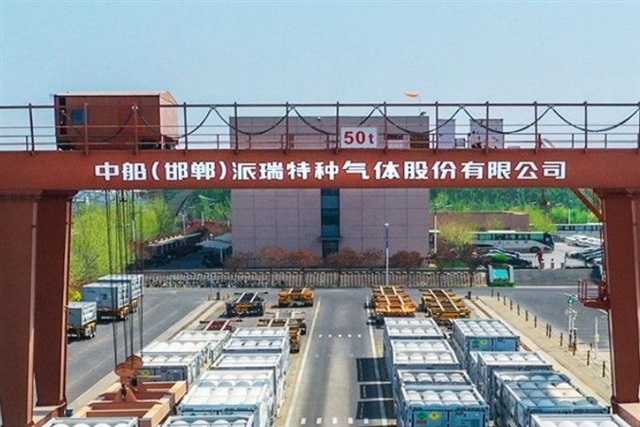
Surging demand for AI servers and advanced memory devices is tightening the global supply of tungsten hexafluoride (WF6), a specialty gas critical to semiconductor manufacturing. PERIC Special Gases has moved to market-based pricing, reflecting the constrained supply of one of the industry's most important inputs for chip production.
Summaries like this, in your inbox every morning.
Sign up free →What happened
Global demand for AI servers and advanced memory devices is tightening supplies of tungsten hexafluoride (WF6), a specialty gas critical to semiconductor manufacturing. PERIC Special Gases has adopted market-based pricing in response to the supply pressure.
Why it matters
WF6 is one of the semiconductor industry's most important specialty gases. Tightening supplies and rising prices affect the cost of producing the memory chips and processors that power AI systems, potentially cascading to device makers and end users.
What to watch
The article does not specify future pricing targets, supply timelines, or production capacity expansions in the WF6 market.
Global demand for AI servers and advanced memory devices is putting pressure on the supply of tungsten hexafluoride (WF6), a specialty gas that plays a central role in semiconductor manufacturing. The tightening market has drawn increased attention to WF6 as one of the semiconductor industry's most important specialty gases. In response to the supply pressure, PERIC Special Gases has adopted market-based pricing. The shift reflects the broader constraint on a critical input as chipmakers race to increase production capacity to meet surging demand for AI infrastructure.
The article connects two concurrent trends: explosive growth in AI infrastructure (servers and memory) and a narrowing supply bottleneck in a foundational semiconductor input. Tungsten hexafluoride, though often overlooked in public discourse about chip shortages, is identified as one of the industry's most critical specialty gases. PERIC Special Gases' shift to market-based pricing is a direct signal of supply constraint — a standard economic response when demand outpaces supply. This suggests that AI's appetite for memory and compute capacity is now reaching into the granular supply chains that support chip fabrication, not just the chips themselves.
AI-summarized, only the topics you pick — one digest a day via Email, Slack, or Discord.
Free · takes 30 seconds · unsubscribe anytime
No comments yet. Be the first to share your thoughts!
Log in to join the discussion




Get curated AI news from 200+ sources delivered daily to your inbox. Free to use.
Get Started FreeFree · takes 30 seconds · unsubscribe anytime
