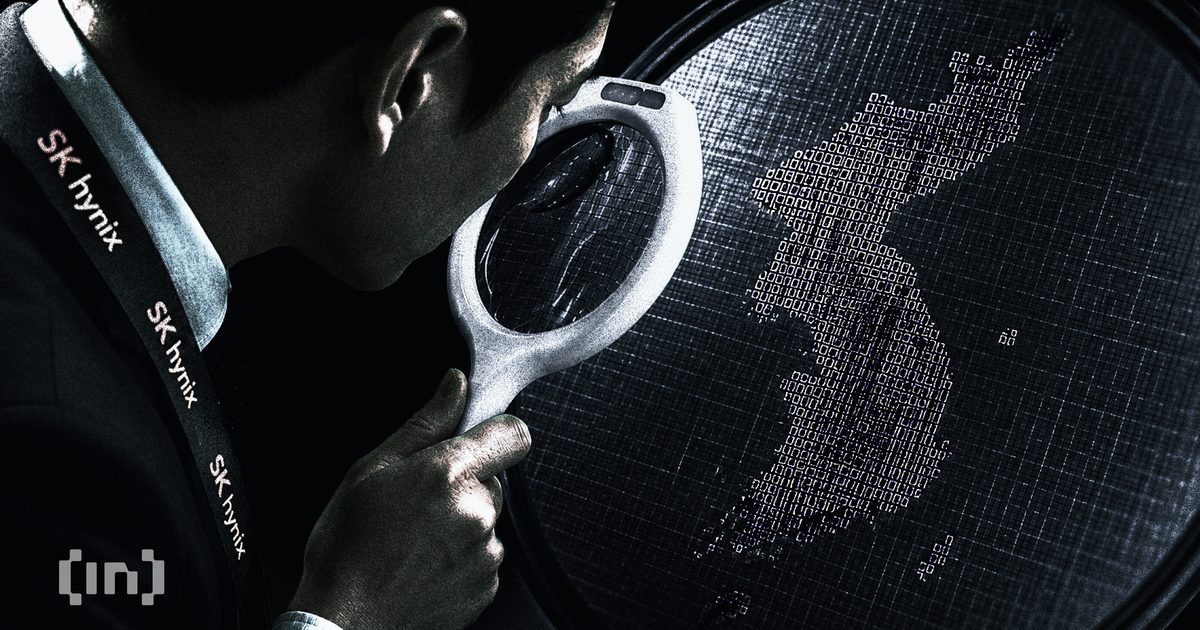
SK Hynix and Samsung Electronics fell sharply on July 28 as investors grew concerned that Nvidia's large financing commitments to OpenAI—a $250 billion(約40兆円) guarantee plus up to $350 billion(約56兆円) more for chip purchases—signal weakness in AI demand rather than strength. The sell-off was compounded by China's CXMT debut in Shanghai, which valued the state-backed memory chipmaker near $515 billion(約82兆円) and narrowed its technological gap with Korean leaders to just three years, threatening lucrative AI chip contracts that SK Hynix and Samsung have with U.S. hyperscalers.
Summaries like this, in your inbox every morning.
Sign up free →What happened
SK Hynix dropped near 13% on Tuesday, July 28, in early trading, with Samsung Electronics falling over 12% as a sell-off spread across Asian memory chipmakers. The decline followed weakness in U.S. chip stocks and a Wall Street Journal report that Nvidia is negotiating a $250 billion(約40兆円) guarantee to help OpenAI lease a data center campus in Ohio, with discussions also underway for up to $350 billion(約56兆円) more in financing for OpenAI's chip purchases.
Why it matters
Investors fear Nvidia's large financial backing of OpenAI signals fragility in AI-linked demand rather than strength, raising questions about whether the massive spending will actually deliver returns. Competition is also sharpening: Chinese memory maker CXMT's Shanghai debut valued it near $515 billion(約82兆円) and sparked a 500% rally from its IPO price, while analysts at Seoul Economic Daily say the high-bandwidth memory gap between CXMT and Korean leaders has narrowed to three years from over five years in earlier estimates—potentially threatening the AI chip deals SK Hynix and Samsung have signed with U.S. hyperscalers (large cloud providers).
What to watch
SK Hynix's quarterly earnings, due later this week, will reveal whether AI-linked demand still justifies the current volatility. Owen Lamont, senior vice president at Acadian Asset Management, noted the uncertainty runs deep: "No one has any idea how this AI process is going to affect our economy, and so I think it's going to be rocky no matter what." However, Sundeep Gantori, chief investment officer for equities at Standard Chartered, argues the long-term opportunity for memory makers remains intact, pointing to broker forecasts of a 2027 price peak.
On Tuesday, July 28, SK Hynix tumbled near 13% in early trading, followed closely by Samsung Electronics, which dropped over 12%. The sell-off rippled across Asian memory chipmakers and erased billions in market value across Korea, Japan, and Taiwan in a single session, extending a broader pullback in AI-linked chip stocks that had begun after weakness in U.S. chip equities.
The immediate spark came from a Wall Street Journal report on Nvidia's financing arrangements with OpenAI. According to the article, Nvidia is negotiating a $250 billion(約40兆円) guarantee to help OpenAI lease a 10-gigawatt data center campus in Ohio—a project that could cost more than $500 billion(約80兆円) in total. Nvidia is also discussing separate financing for OpenAI's chip purchases worth up to $350 billion(約56兆円) more. The concern among investors is that Nvidia's willingness to provide such large financial backing signals not strength in AI-linked demand but fragility, since OpenAI lacks an investment-grade credit rating and may struggle to secure traditional financing. This interpretation has unsettled the broader chip sector: U.S. chip stocks fell again overnight, with losses reported at AMD, Teradyne, and Micron.
A second source of pressure emerged from China's competitive advance. CXMT, a state-backed Chinese memory maker, made its Shanghai trading debut on Monday, and its shares surged as much as 500% from the IPO price, ultimately valuing the company near $515 billion(約82兆円). More significantly, analysts at Seoul Economic Daily reported that the high-bandwidth memory technology gap between CXMT and Korean leaders has narrowed to three years, compared with over five years in earlier estimates. This compression directly threatens the AI chip deals SK Hynix and Samsung have signed with U.S. hyperscalers. The threat is reinforced by China's progress in domestic semiconductor production: a state-backed Chinese firm has begun mass-producing homegrown deep ultraviolet lithography machines for CXMT, SMIC, and Hua Hong, reducing Beijing's reliance on Dutch equipment maker ASML for advanced chipmaking tools.
The uncertainty underlying the sell-off runs deeper than any single announcement. Owen Lamont, senior vice president at Acadian Asset Management, told CNBC: "Right now we're facing an incredible uncertainty. No one has any idea how this AI process is going to affect our economy, and so I think it's going to be rocky no matter what." Lamont also noted that leveraged exchange-traded products may be magnifying price swings in Korea, Hong Kong, and the United States. However, not all observers are bearish. Sundeep Gantori, chief investment officer for equities at Standard Chartered, argued that the long-term opportunity for memory makers remains intact, pointing to broker forecasts of a 2027 price peak. Investors will be watching SK Hynix's quarterly earnings report, due later this week, to gauge whether AI-linked demand continues to justify the volatility.
The sharp decline in SK Hynix and Samsung on July 28 reflects a confluence of concerns about the sustainability of AI spending. The immediate trigger was U.S. chip stock weakness, but the deeper worry stems from Nvidia's reported $250 billion(約40兆円) guarantee and additional $350 billion(約56兆円) in financing discussions for OpenAI. Investors interpreted these large backstops not as evidence of robust AI demand, but as a sign that OpenAI—which lacks an investment-grade credit rating—may face fragility, suggesting the AI investment thesis itself is shakier than believed.
Compounding this anxiety is the competitive threat from China. CXMT's $515 billion(約82兆円) valuation and 500% IPO rally, combined with Seoul Economic Daily estimates that the high-bandwidth memory gap has shrunk from five-plus years to just three years, directly undermines the technological moat on which SK Hynix and Samsung have built their AI chip contracts with U.S. hyperscalers. The body notes that state-backed Chinese firms are also mass-producing domestic lithography machines, reducing Beijing's reliance on Dutch supplier ASML—a structural shift that poses a longer-term threat to Korean dominance.
The broader context is deepening uncertainty about how AI spending translates into economic returns. Owen Lamont of Acadian Asset Management captured this sentiment plainly: "No one has any idea how this AI process is going to affect our economy." Not all analysts share this pessimism—Standard Chartered's Sundeep Gantori points to 2027 price forecasts as evidence the long-term opportunity endures—but the weight of near-term sentiment has clearly shifted toward caution, making SK Hynix's earnings report this week a critical test of whether current valuations remain justified.
AI-summarized, only the topics you pick — one digest a day via Email, Slack, or Discord.
Free · takes 30 seconds · unsubscribe anytime
No comments yet. Be the first to share your thoughts!
Log in to join the discussion
Get curated AI news from 200+ sources delivered daily to your inbox. Free to use.
Get Started FreeFree · takes 30 seconds · unsubscribe anytime
