What happened
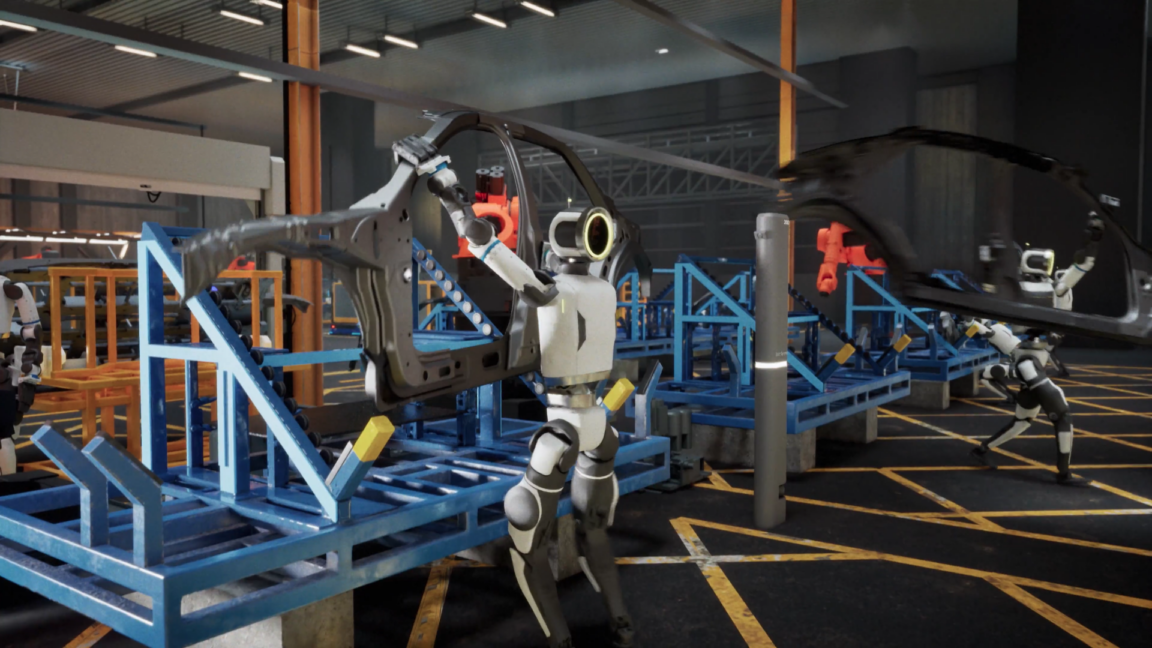
Hyundai plans to deploy Boston Dynamics' Atlas humanoid robots at its Metaplant America factory in Georgia starting in 2028, initially to sort and organize automotive parts. The facility, already the most heavily automated automotive factory in the U.S. with more than 850 robots and 300 automated guided vehicles, also uses Boston Dynamics' Spot robots for quality inspection.
Why it matters
Labor unions in the U.S. and South Korea are pushing back against automation at a time when automakers are laying off workers. The UAW recently criticized General Motors for installing about 50 new robot arms at its Detroit electric vehicle factory after laying off more than 1,300 workers. Hyundai has committed to employing 8,100 human workers in full-time roles at Metaplant America by 2031 under a Georgia economic development deal, but unions worry humanoid robots will erode both job numbers and worker compensation.
What to watch
Whether humanoid robots prove cost-effective compared to specialized industrial robots and human workers over the coming years. Hyundai's Metaplant already employed more than 3,800 workers by the end of 2025.
Summaries like this, in your inbox every morning.
Metaplant America represents the leading edge of automotive manufacturing automation in the United States. The facility's existing deployment of more than 850 robots and 300 automated guided vehicles, combined with Boston Dynamics' Spot robots for quality control, has already positioned it as exceptionally lean in human labor. The planned introduction of Atlas humanoid robots in 2028 signals Hyundai's confidence that the technology can handle broader assembly tasks, though the company maintains through its executives that human workers remain essential for delicate work on soft components like hoses and trim.
Yet the labor movement sees humanoid robotics as an existential threat to job security and compensation. The UAW's recent friction with General Motors over the installation of 50 new robot arms—which followed the layoff of more than 1,300 workers—demonstrates that unions view incremental automation as part of a broader erosion of worker power. Hyundai's binding commitment to 8,100 full-time employees by 2031 provides a floor, but unions are skeptical that such commitments will hold if humanoid robots and other automation prove cheaper and more flexible than the labor force.
Pick your industry and the AI tools you use, and get news related to your work every day.
Free · 30 seconds with Google · unsubscribe anytimeWhat is AIToday? →
Ask AI anything about this article. The AI reads this article, earlier AIToday articles, and Wikipedia, and cites its sources. Q&As are published on this page for other readers too.
Vinci4D provides chip-design simulation software that trains on physics equations instead of customer data, an…

SEMI President and CEO Ajit Manocha told DIGITIMES that the semiconductor industry reached the US$1 trillion r…
CoreWeave fell more than 25% this week, its debt yield briefly rose above 16% on Thursday, and SK Hynix droppe…

Nvidia's AI Enterprise lists at $4,500 per GPU annually, and paid subscriptions add supported software, securi…

Anthropic told investors this week that it is making 85% gross margins, a figure the columnist calls a cash co…
Modal Labs, an AI infrastructure provider, raised $750 million in a Series D led by Accel at a $15.75 billion…