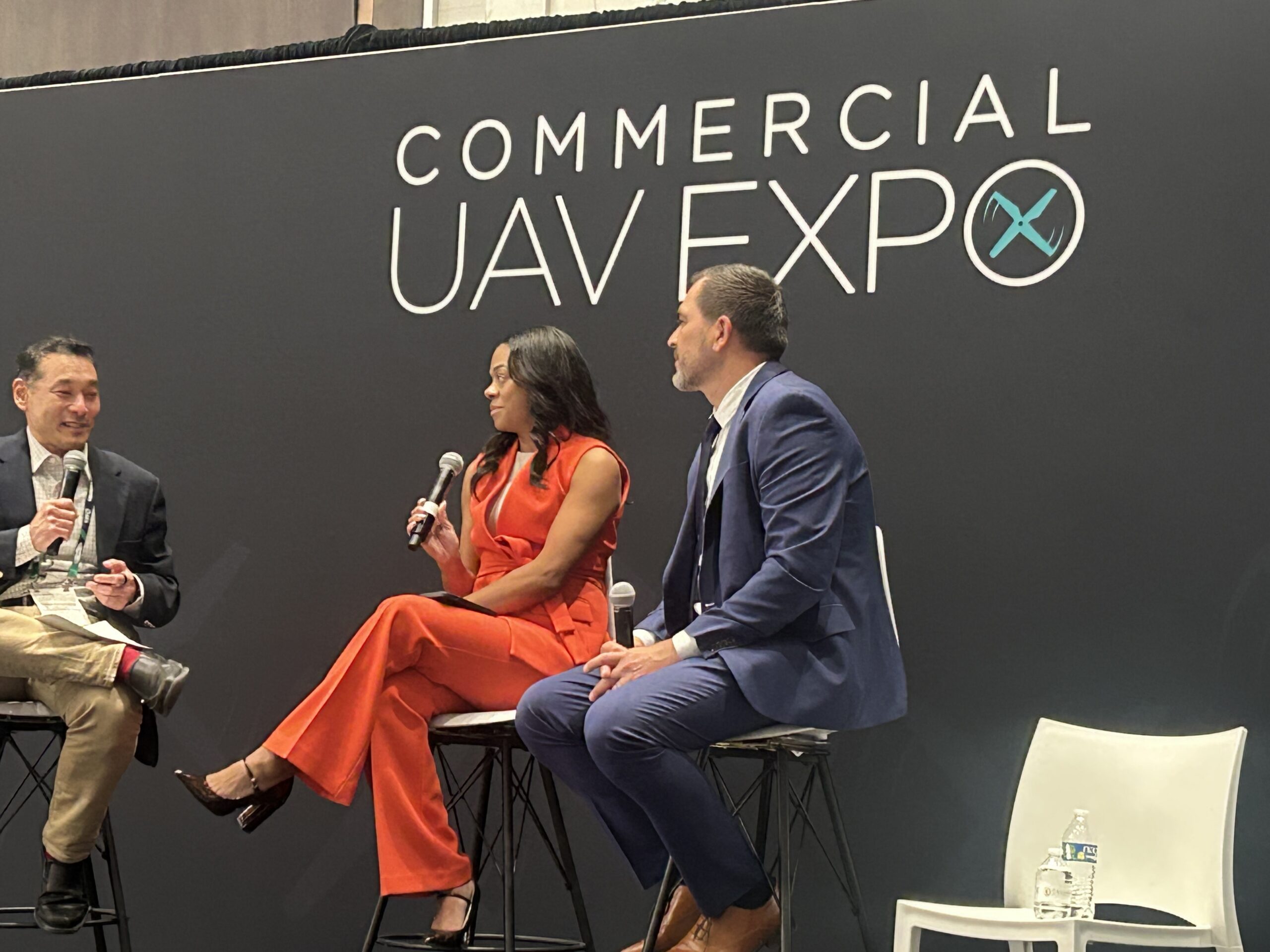
What happened
At Commercial UAV Expo in Las Vegas, FAA officials said routine BVLOS (beyond visual line of sight) drone operations require not just the proposed Part 108 rule but also airspace modernization, information sharing, and security measures. Jessica Jones and Ben Supko spoke; Kenji Sugahara moderated.
Why it matters
Part 108 would replace one-off approvals with a scalable, predictable framework, but Jones said the FAA must also modernize the NAS (National Airspace System) and share information. Supko noted that more operations could make security easier, as more data helps identify drones acting outside normal parameters.
What to watch
Jones said UTM systems have already deconflicted 1.5 million BVLOS operations, with that number expected to grow. The FAA's proposed Part 108 rule is central, but the discussion stressed that connecting regulation, data, security, research, and testing will be key to scaling operations.
Summaries like this, in your inbox every morning.
The FAA's next step for drone integration goes beyond writing rules. Jones framed Part 108 as solving one major problem—replacing case-by-case approvals with a predictable framework—but she placed that within a broader push to modernize the National Airspace System (NAS). This suggests the agency sees regulation as one pillar, with airspace modernization and information sharing as equally necessary pieces.
Supko's point adds a counterintuitive twist: more routine operations could actually make security easier. With more data on what normal drone activity looks like, authorities may more readily spot deviations. That view ties security to data collection, but also to context—Supko mentioned an operator's previous history as potentially useful information for evaluating an operation.
The 'info-centric NAS' idea reflects the challenge of connecting different organizations and technology providers that hold different pieces of information. The discussion concluded that managing large numbers of legitimate operations safely will depend on linking regulation, operational data, security tools, research, and testing—not on any single rule or technology.
Pick your industry and the AI tools you use, and get news related to your work every day.
Free · 30 seconds with Google · unsubscribe anytimeWhat is AIToday? →
Ask AI anything about this article. The AI reads this article, earlier AIToday articles, and Wikipedia, and cites its sources. Q&As are published on this page for other readers too.
Judge Debra Brown ruled that nothing in the Clean Air Act lets the EPA Administrator unilaterally dismiss a ci…
OpenAI published a blueprint for governments and industry with proposals in three areas: clearer security resp…
China set up National Data Group, a state-owned enterprise headquartered in Xiong'an, Hebei province, with Vic…

OpenAI and Anthropic both listed antitrust protections for AI security information-sharing on their third-quar…

The Department of Homeland Security ordered civilian federal agencies to remove Deepseek products, including s…

HD Hyundai Robotics unveiled a dual-arm robot under development at FIX 2026 in Daegu, South Korea, on October…