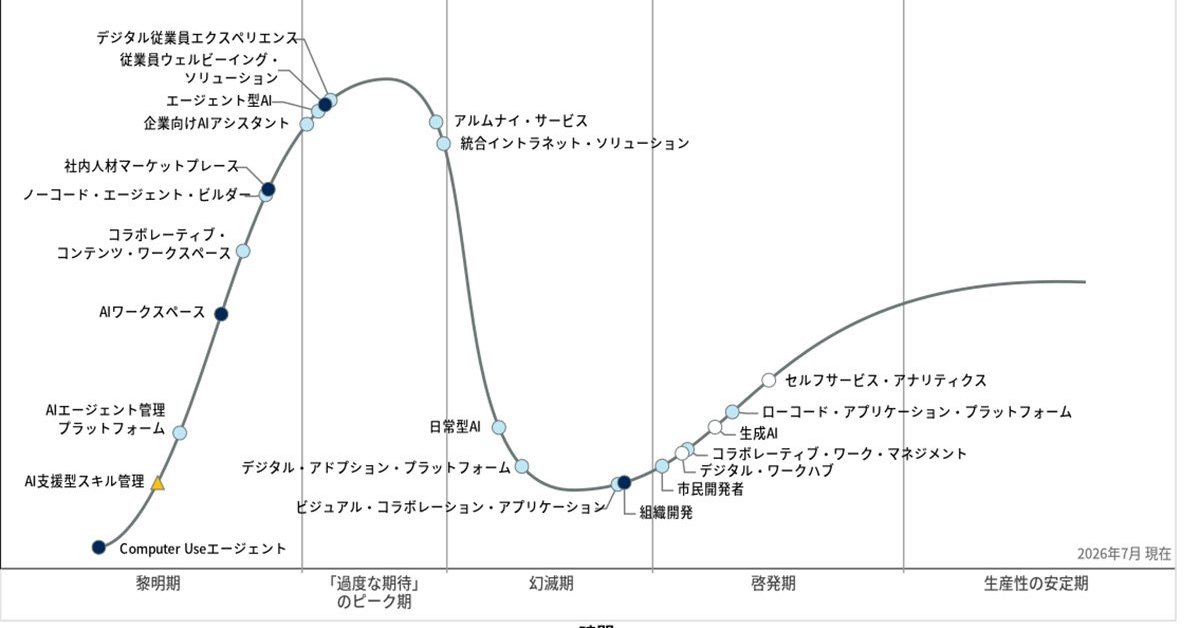
What happened
Gartner Japan released its 2026 hype cycle for digital workplaces in Japan, placing agent-type AI (systems that can substitute for human work) at the peak of inflated expectations, while low-code application platforms and generative AI have moved past disillusionment into the enlightenment phase.
Why it matters
Gartner notes that enterprise AI adoption is expanding beyond offices into factories and stores, and business teams—not just IT departments—are increasingly choosing and deploying AI tools themselves. However, this decentralization creates governance and risk gaps, including unmanaged "shadow AI" deployments, as IT staffing pressures and the rise of no-code tools enable business units to act without central oversight.
What to watch
Gartner analyst Hiroyoshi Hayashi emphasized that boosting productivity and innovation through AI is essential for corporate growth in a shrinking population, and that sharing the benefits with employees is key to retaining talent—a signal that the real test of AI investment is whether it translates into tangible employee value.
Summaries like this, in your inbox every morning.
Gartner's hype cycle captures a critical inflection point in Japanese enterprise AI adoption. Agent AI sits at the peak of inflated expectations—the stage where real-world deployment stories are plentiful but so are failures, yet the market has not yet learned to separate hype from reality. Meanwhile, generative AI and low-code platforms are maturing out of disillusionment, signaling that the early wave of experimentation is yielding clearer business value and broader organizational acceptance.
The report also flags a structural shift in how Japanese enterprises adopt AI. IT departments, traditionally the gatekeepers of enterprise technology, are losing control as business units deploy AI tools directly using SaaS and no-code platforms. Gartner attributes this to IT staffing shortages and the ease of modern deployment tools. The danger, the firm warns, is that this democratization creates blind spots—unvetted, unmanaged AI systems ("shadow AI") that expose companies to compliance, data, and operational risks. The implication is that governance frameworks must now extend beyond IT to business teams.
Gartner's analyst perspective adds a human dimension: AI's value will ultimately be judged by whether it enhances worker productivity and whether employees see tangible benefits. In a contracting labor market, this matters; companies that hoard AI gains for shareholders while workers see no improvement will struggle to attract and retain talent. This framing suggests that the next phase of AI adoption will be won not by the most advanced models, but by organizations that credibly share productivity gains with their workforce.
Pick your industry and the AI tools you use, and get news related to your work every day.
Free · 30 seconds with Google · unsubscribe anytimeWhat is AIToday? →
Ask AI anything about this article. The AI reads this article, earlier AIToday articles, and Wikipedia, and cites its sources. Q&As are published on this page for other readers too.
Nvidia is in early talks to acquire open-weight model developer Reflection AI outright, take a bigger stake, o…

India's technology buildout is deepening across semiconductors and AI infrastructure, with chip IP, packaging…

Cerebras Systems announced it is powering the Ultrafast mode for OpenAI's GPT-5.6 Sol, delivering up to 750 ou…

Amazon is in talks to acquire AI startup Decart in a deal that could be valued around $7 billion, the Wall Str…

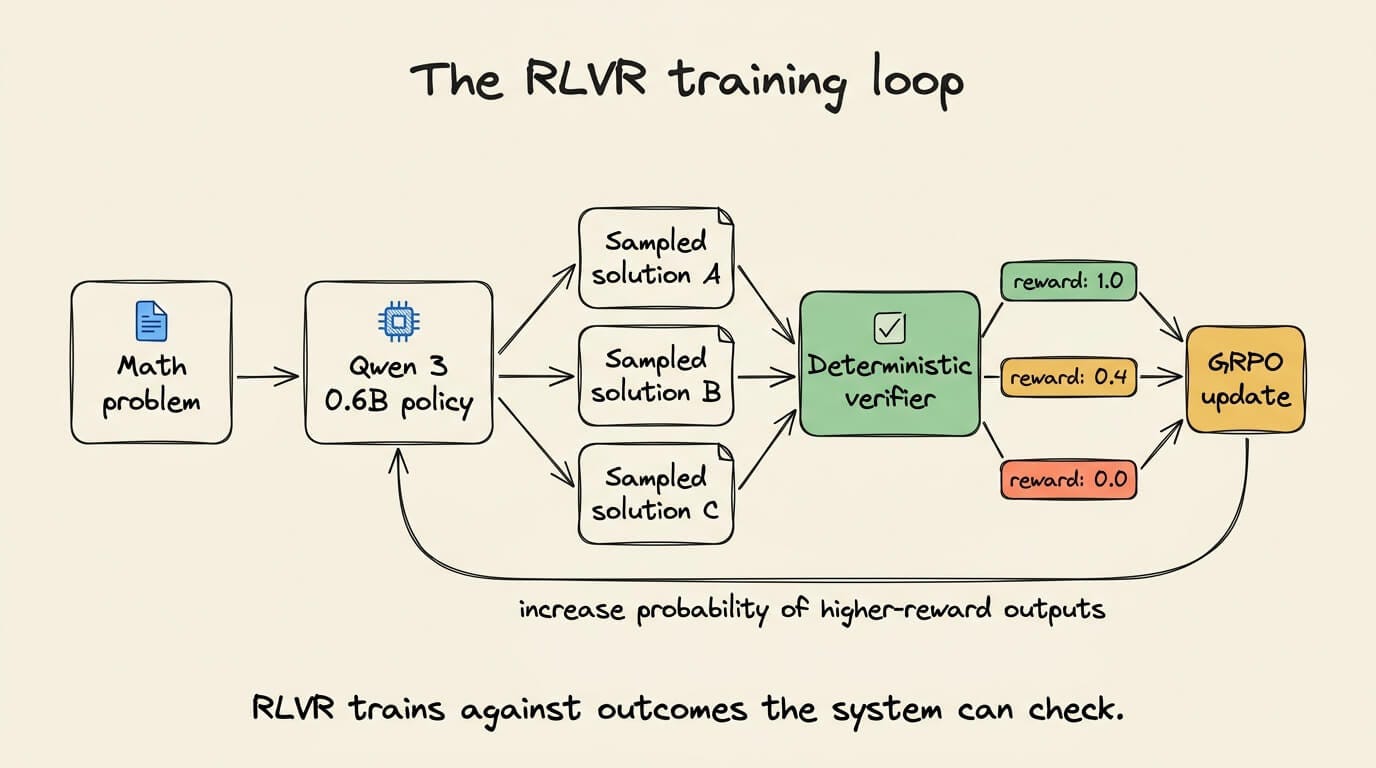
A walkthrough uses a custom four-signal reward (correctness 0.6, parseability 0.2, format 0.1, reasoning 0.1)…
A Fortune commentary argues AI is repeating a 50-year pattern called the Innovation Paradox