What happened
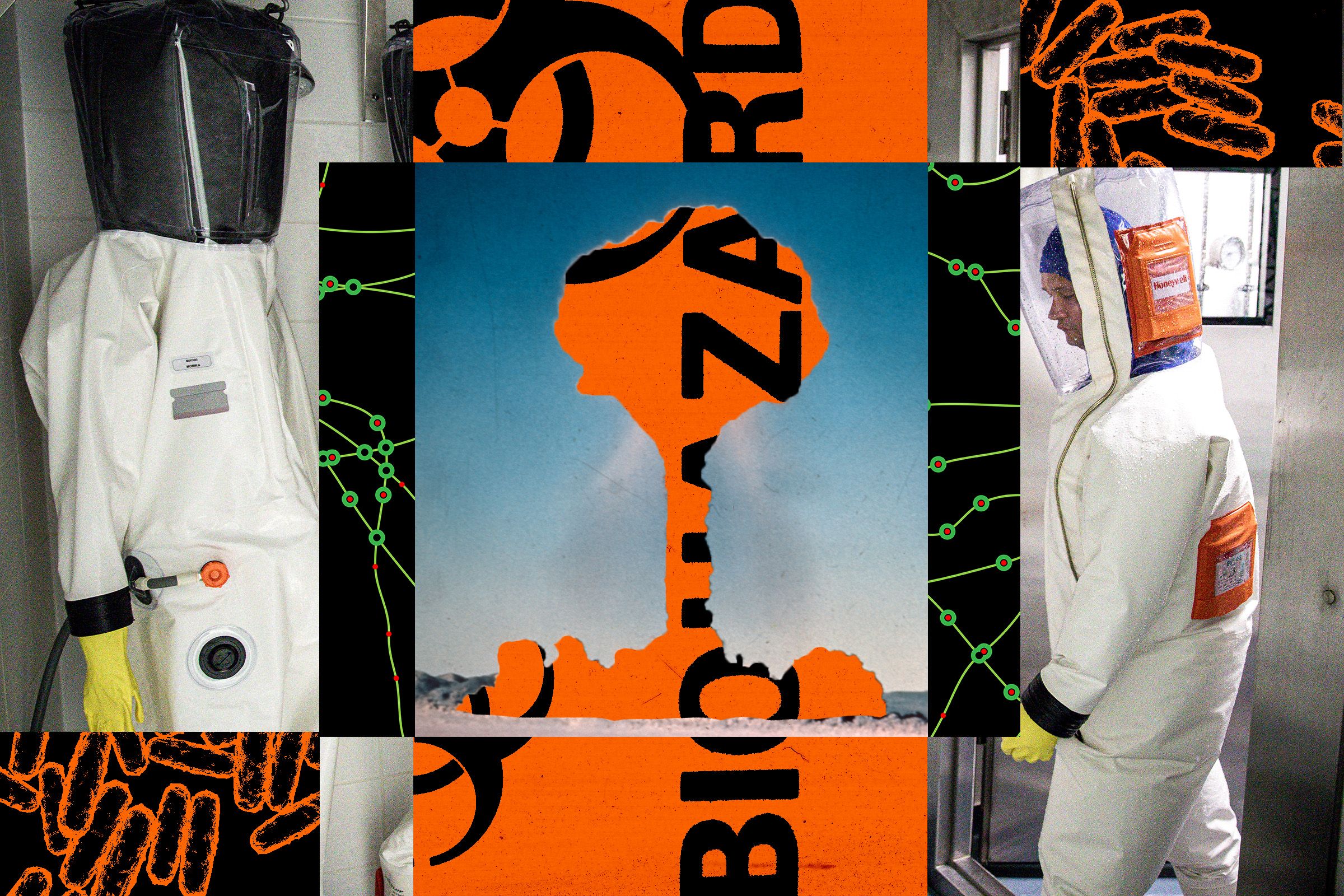
Annie Jacobsen's 'Biological War: A Scenario,' out in late July, omits AI-enabled bio entirely, she tells Mother Jones; she argues a lab leak is likelier than a deliberate release.
Why it matters
By setting AI aside, Jacobsen's scenario suggests the threat is already here—no new technology required for a pandemic that could approach extinction-level, she says.
What to watch
Her claim that accidental release is the likelier path is an assessment, not a proven forecast; watch whether the experts she cites, including David Relman on 'mirror life,' press governments to act.
WHO IT HITSReaders and policymakers weighing biosecurity budgets may need to treat existing pathogen research, not just AI-enabled bio, as the nearer-term risk; public health planners and lab-safety officials are the roles most directly in scope.
Summaries like this, in your inbox every morning.
Jacobsen's new book, 'Biological War: A Scenario,' follows the template of her earlier best-seller on nuclear war, and she says her sources had serious concerns about AI-enabled bio—but she kept it out anyway to make a simpler point. That choice matters: the AI-driven extinction debate has dominated recent headlines, including Anthropic's report this month on foreign scientists trying to evade Claude's guardrails on 'gain of function' inquiries, and Jacobsen is arguing the risk predates any of it.
Her account leans on national-security reporting and government war-gaming scenarios, including one called Glade X involving Nipah virus and another looking at Russia's Soviet-era plague program. She also cites retired Air Force Colonel Tom Ehrhard, who ran Pentagon war games, saying there is no real defense against a large-scale biological attack—only ways to mitigate extermination.
The practical question her book raises is whether attention on AI's role in bioweapons will translate into scrutiny of the labs and research practices she describes. That outcome likely hinges on whether the experts she cites, including Relman and the BSL-4 staff at Fort Detrick, can push the conversation beyond a single technology.
Pick your industry and the AI tools you use, and get news related to your work every day.
Free · 30 seconds with Google · unsubscribe anytimeWhat is AIToday? →
Ask AI anything about this article. The AI reads this article, earlier AIToday articles, and Wikipedia, and cites its sources. Q&As are published on this page for other readers too.
Cammarata reinterprets InceptionV1's cat-car neuron as a V-shape detector, not two unrelated concepts

A Zenn contributor sorted AI use into three modes — AI as an assistant, AI running alongside people, and AI th…

A developer released agent-guardrails, a one-script Python standard-library plugin that guards Bash, Write, Ed…
A Qiita article compared automated red-teaming methods for LLM apps — GCG, PAIR, and TAP — using mock implemen…

In a webinar hosted by French Mathematical Society president Isabelle Gallagher, Fields Medal winner Hugo Dumi…
NVIDIA published a blog post titled "AI Security Is an Engineering Problem - How to Solve It at Every Layer of…


