What happened
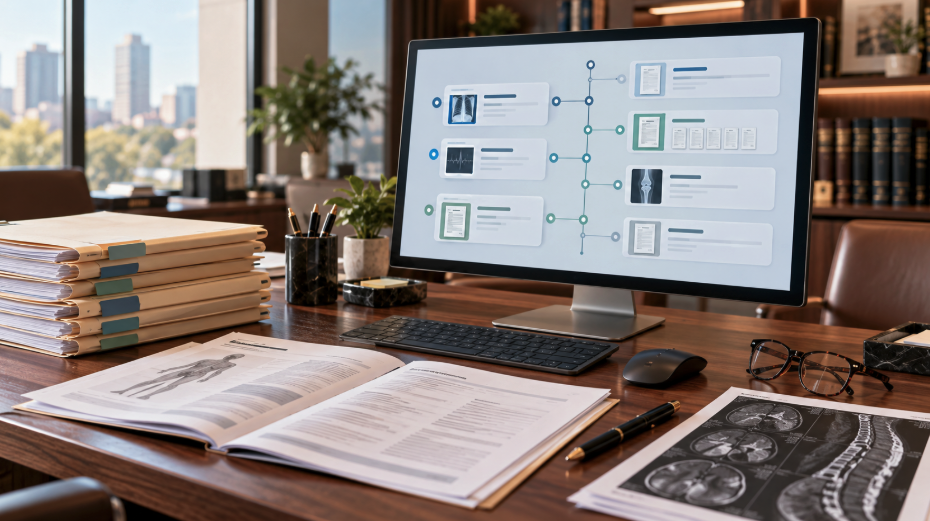
AI can now pull provider visits, diagnoses, procedures and treatment dates from typed or handwritten records into a date-ordered timeline that links back to the source page, with ProPlaintiff, EvenUp, Supio, Anytime AI, Tavrn and CaseMark competing on different strengths.
Why it matters
Firms handling records from hospitals, specialists, imaging centers and therapy providers can start from an organized timeline instead of a blank spreadsheet, and Tavrn extends that to requesting records from providers and tracking outstanding requests, though legal teams still review key entries before use.
Summaries like this, in your inbox every morning.
The comparison spread across ProPlaintiff, EvenUp, Supio, Anytime AI, Tavrn and CaseMark reflects a shift in where the work actually sits. Personal-injury files arrive as records from hospitals, imaging centers, specialists and therapists, and the delay has two parts: assembling those records and then converting them into a usable treatment history. Most of the tools here begin with files the firm already holds, but Tavrn also requests records from providers and tracks outstanding requests, which addresses the stage before generation.
The tools also split over review responsibility, which has staffing implications. EvenUp gives firms a choice between AI + You, where the firm's own team reviews and finalizes, and AI + Professional Review with an optional nurse review. ProPlaintiff leans toward editable documents matched to an existing firm template, while Supio and Anytime AI emphasize searching, filtering and following patterns of care over a fixed output. CaseMark offers several formats, including a comprehensive chronology and an injury-focused medical analysis.
What none of them replace is the legal team's check on material entries. A flagged interval, an unfulfilled referral and a gap between appointments are different problems, and the chronology is expected to preserve those distinctions while keeping source pages close to each entry.
Pick your industry and the AI tools you use, and get news related to your work every day.
Free · 30 seconds with Google · unsubscribe anytimeWhat is AIToday? →
Ask AI anything about this article. The AI reads this article, earlier AIToday articles, and Wikipedia, and cites its sources. Q&As are published on this page for other readers too.
A UK AI small-cap screen highlighted Beeks Financial Cloud Group, whose Market Edge Intelligence platform appl…
A Columbia University estimate puts cumulative AI infrastructure investment and spending at around $9 trillion…
After Character.AI filed for bankruptcy this week, a legal filing shows Disney agreed to offer jobs to at leas…

The Telegraph reported that Microsoft withdrew from a UK data center build with British AI cloud startup Nscal…

Anthropic has onboarded six METR employees, giving them company hardware, office space and internal tools roug…

Anthropic's internal study shows junior new hires in technical departments fell from 27 percent to 9 percent s…