What happened
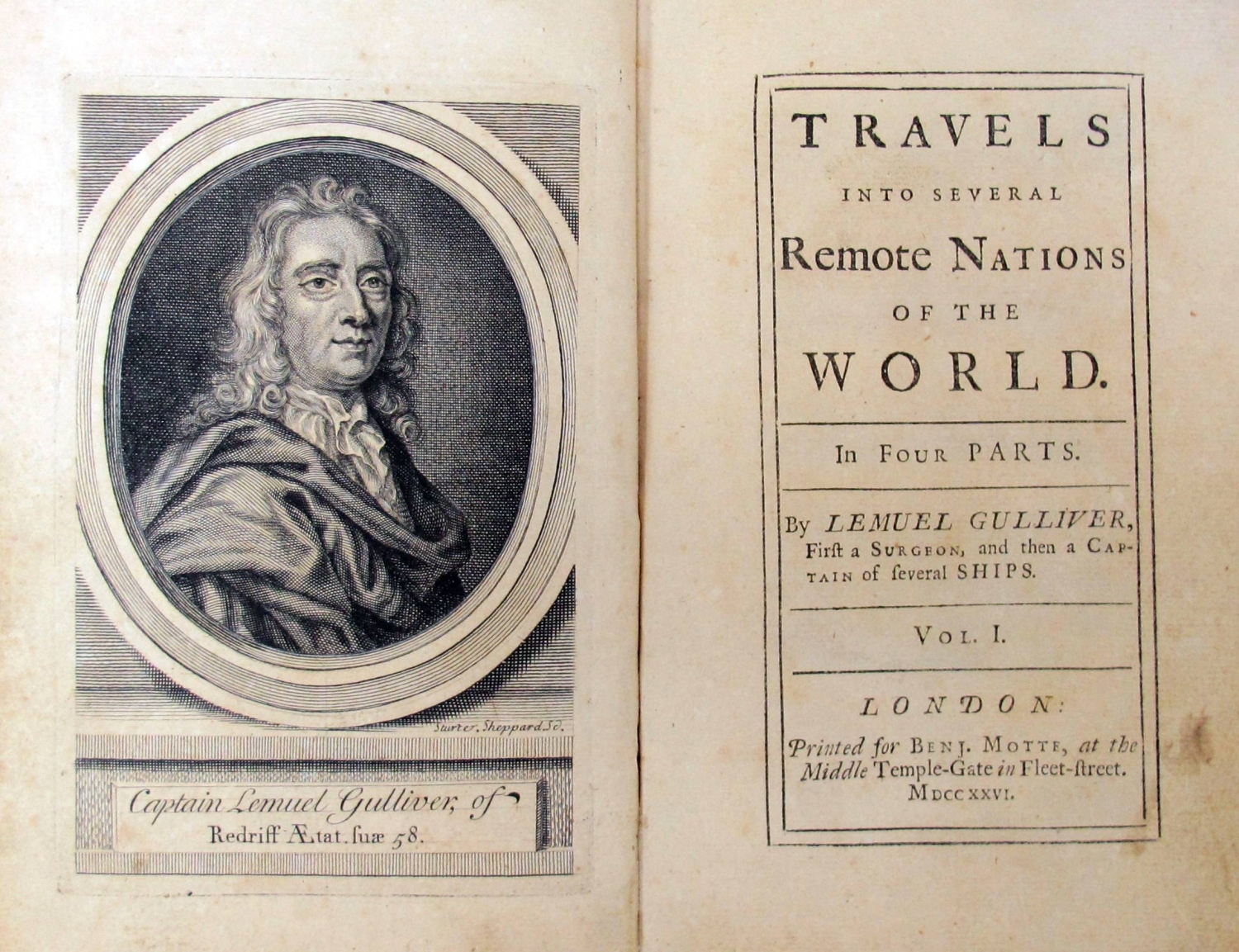
A Japan Times essay marks 300 years since "Gulliver's Travels" (published Oct. 28, 1726) and argues its Laputa section now dissects today's AI-dominated world.
Why it matters
It says the tech elite mirror Laputa's philosophers — absorbed in abstract thought, employing "flappers" and unable to cope with practical life — via costly vanity projects, immortality fads and error-prone algorithms.
Summaries like this, every morning.
Swift's target in the third voyage was not science in the abstract but a particular institution and its habits of mind. The essay notes that when Swift wrote, the technicians he lampooned were an isolated species: the Royal Society, the object of his particular wrath, was only founded in 1660 and was powerless compared with the Anglican Church, which provided Swift with his living. That imbalance is what has flipped. Today, in the essay's account, scientists, technologists and "projectors" rule the world and control the future, which is why a satire of a slice of 18th-century English society can be read as a dissection of the AI-dominated world now being built.
The Laputans themselves are drawn as a caution about abstraction divorced from practice. They are described as people who would today be called "on the spectrum," obsessed with abstract thought — particularly mathematics, astronomy and music — yet incapable of dealing with the mundane practicalities of life. Their "flappers" exist to shake them out of philosophical reveries with a blown bladder full of tiny peas or pebbles. The essay maps that portrait onto the present through costly vanity projects, immortality fads and error-prone algorithms, suggesting the distance between the flying island and the modern technology industry may be shorter than three centuries implies.
Pick your industry and the AI tools you use, and get news related to your work every day.
Free · 30 seconds with Google · unsubscribe anytimeWhat is AIToday? →
Ask AI anything about this article. The AI reads this article, earlier AIToday articles, and Wikipedia, and cites its sources. Q&As are published on this page for other readers too.
US energy companies including Duke Energy are testing Anthropic's Mythos AI model to identify software vulnera…
Charter's AI Pulse survey of 5,002 full-time U.S

IDC forecasts the share of firms running most processes "AI-first" will rise from 13% in 2026 to 60% by 2029…

S Krishnan, secretary of India's Ministry of Electronics and Information Technology, said Indians see AI as le…
At TechLead Conference 2026 Autumn, 和田 卓人 said AI has not removed problems but relocated them — adding 認知負債, w…

The 3rd Workshop on Social Simulation with LLMs (Social Sim'27), at AAAI-27 in Montréal on Feb 22 or 23, 2027…