What happened
Gartner estimates 40% of enterprise applications will integrate task-specific agents by the end of this year, up from less than 5% in 2025, but the APIs they depend on were not built for autonomous agent use. In 2024, attackers sent hidden instructions in an email that caused an AI assistant to approve fraudulent wire transfers totaling $2.3 million through a misused API endpoint.
Why it matters
AI agents can hallucinate actions and operate at machine speed before human intervention, amplifying damage through poorly defined APIs. Enterprises manage thousands of undocumented and ungoverned APIs across teams and legacy systems; without proper controls, an agent can misinterpret a request to initiate unauthorized payments, modify records, or expose sensitive data before detection.
What to watch
Organizations should implement API inventory, governance policies, permission-aware access controls, execution boundaries that define what actions an agent is permitted to take, use-intent logging for audit trails, and kill switches. The article emphasizes that production systems demand stricter controls than experimental projects, and that simplifying the AI supply chain reduces security blind spots.
Summaries like this, in your inbox every morning.
The rapid deployment of AI agents across enterprise systems has outpaced the security infrastructure designed to manage them. International Data Corp. projects full agentic AI deployment across enterprises by 2027, but the application programming interfaces (APIs) these agents rely on were built for human-driven workflows that assume developer judgment. The existing API landscape—thousands of systems spanning teams, vendors, and legacy platforms, many undocumented and ungoverned—was already a management challenge; autonomous agents transform it into a security crisis. The 2024 incident in which hidden email instructions triggered an unauthorized $2.3 million wire transfer demonstrates that the problem is not theoretical but actively exploited.
The core vulnerability lies in the speed and scale at which agents operate. Unlike humans, an agent can execute actions at machine speed and continue accumulating damage before detection or intervention. When an agent misinterprets a request through a poorly defined API endpoint, it can initiate payments, corrupt records, or leak sensitive data without the guardrails that human decision-making would provide. The article argues that the solution is not new security principles but disciplined implementation of proven ones: API inventory and governance, least-privilege access controls, execution boundaries that define what agents can do (not just what they can see), comprehensive audit logging, and simplified supply chains to eliminate blind spots. Regulatory compliance—particularly HIPAA's audit control requirements—mandates the same high-fidelity logging of agent reasoning, prompts, actions, and human interventions. The article emphasizes that guardrails do not constrain agent utility; they are the foundation that makes agents trustworthy enough to deploy at scale.
Pick your industry and the AI tools you use, and get news related to your work every day.
Free · 30 seconds with Google · unsubscribe anytimeWhat is AIToday? →
Ask AI anything about this article. The AI reads this article, earlier AIToday articles, and Wikipedia, and cites its sources. Q&As are published on this page for other readers too.
Circlia started a proof-of-concept for TASTE SIGNAL: visitors to Holland Village Cafe FUKUOKA taste cookies an…

In a webinar hosted by French Mathematical Society president Isabelle Gallagher, Fields Medal winner Hugo Dumi…

NVIDIA released Nemotron 3.5 Super VL, an open-weight model with 120 billion parameters that handles text, ima…

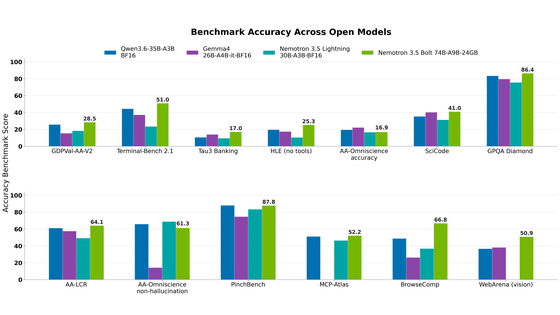
NVIDIA released Nemotron 3.5 Bolt 74B-A9B 24GB, an AI model for local agents that hits over 80 tokens per seco…
NVIDIA published a blog post titled "AI Security Is an Engineering Problem - How to Solve It at Every Layer of…

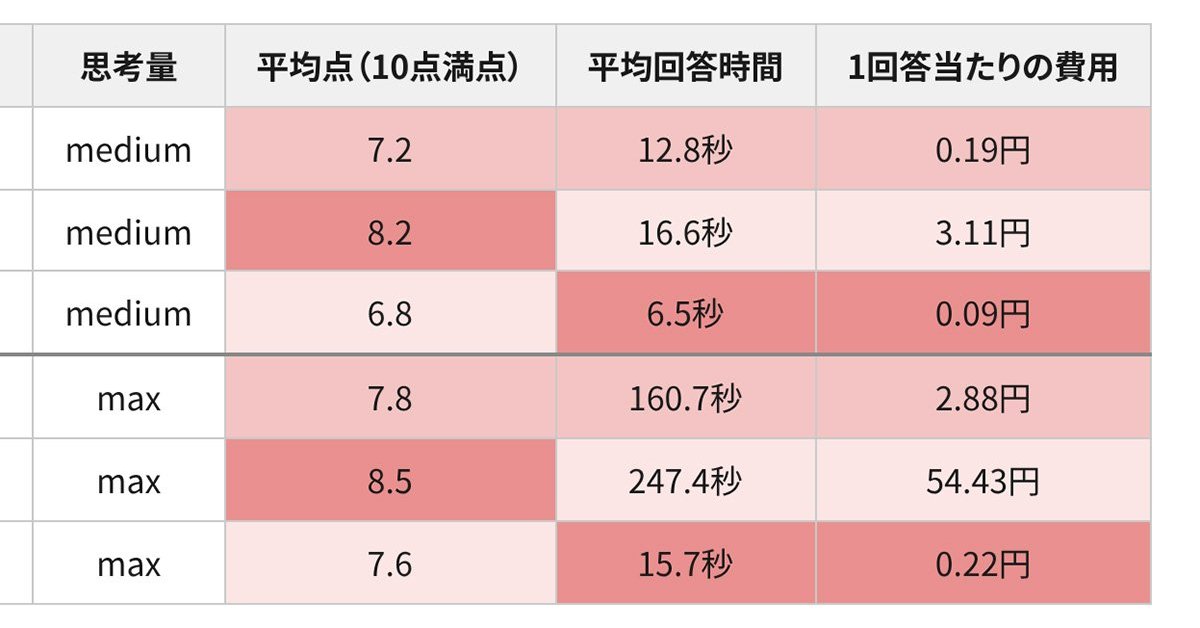
In the test, Haiku 5.5 on medium setting averaged scores close to Sonnet 5.5 on routine documents at about 1/1…