What happened
Tokyo-based Sakana AI is integrating Nvidia's open Nemotron models into its Fugu orchestrator system, which dynamically combines multiple LLMs to solve tasks. Nemotron will fill specialist roles in coding, tool calling, and instruction following within Fugu's agent pool. The integration will ship in an upcoming Fugu release, with ongoing performance optimization to follow.
Why it matters
Sakana AI argues that the most capable AI will come not from single frontier models but from orchestrated systems that combine specialized open models—a strategy that could reduce dependence on any single AI provider and hedge against regulatory or geopolitical restrictions. Fugu's modular design means new models can be swapped in without service disruption, and the company has already claimed performance on par with Anthropic's Claude 3.5 Sonnet and similar frontier systems in its own benchmarks, though independent tests have raised questions about speed and cost.
What to watch
Nvidia's Nemotron 3 Ultra (roughly 550 billion parameters, 55 billion active) ranks as the most capable open US model to date according to benchmark platform Artificial Analysis, ahead of Gemma 4 31B and others, though trailing Chinese models like Kimi K2.6. Sakana AI has not announced specific benchmark improvements from the Nemotron integration yet.
Summaries like this, in your inbox every morning.
Sakana AI's decision to integrate Nemotron reflects a strategic shift in how open-source AI systems are being positioned. Rather than competing head-to-head with frontier closed models like OpenAI's GPT or Anthropic's Claude, the startup is betting that orchestration—dynamically routing tasks to specialized models and synthesizing results—can deliver competitive performance while preserving modularity and reducing vendor lock-in. This approach addresses real constraints: independent evaluation of Fugu has highlighted speed and cost concerns, which suggests that a single monolithic open model may not yet match frontier systems in both quality and efficiency. By adding Nvidia's Nemotron family, which covers coding, tool calling, multimodal reasoning, and parameter-efficient inference, Sakana AI broadens the range of specialist agents available to Fugu's orchestrator.
The partnership also reflects Nvidia's strategy to expand Nemotron as a competitive open alternative to closed models, complete with tooling and recipes. Nvidia's willingness to provide technical guidance and collect performance data from Fugu's production use cases suggests both companies see value in understanding how open models perform in multi-agent workflows—a signal that agentic systems and orchestration are becoming a central axis of AI development. Sakana AI frames this move in geopolitical and risk-management terms: open, orchestrable models reduce dependence on any single provider and offer a hedge against regulatory or foreign-policy barriers to access. This framing is particularly resonant for international companies and developers seeking alternatives to closed US-headquartered AI providers.
Pick your industry and the AI tools you use, and get news related to your work every day.
Free · 30 seconds with Google · unsubscribe anytimeWhat is AIToday? →
Ask AI anything about this article. The AI reads this article, earlier AIToday articles, and Wikipedia, and cites its sources. Q&As are published on this page for other readers too.
The Motley Fool argues Amazon is the AI company of the two, since AWS was just 21% of first-half 2026 revenue…

Hewlett Packard Enterprise stock is down 5% at $55.87

Cammarata reinterprets InceptionV1's cat-car neuron as a V-shape detector, not two unrelated concepts

Google Deepmind's Gemini 4 Argon scored 97.5 percent on ARC-AGI-3 at a cost of $4,800, second only to GPT-6 As…
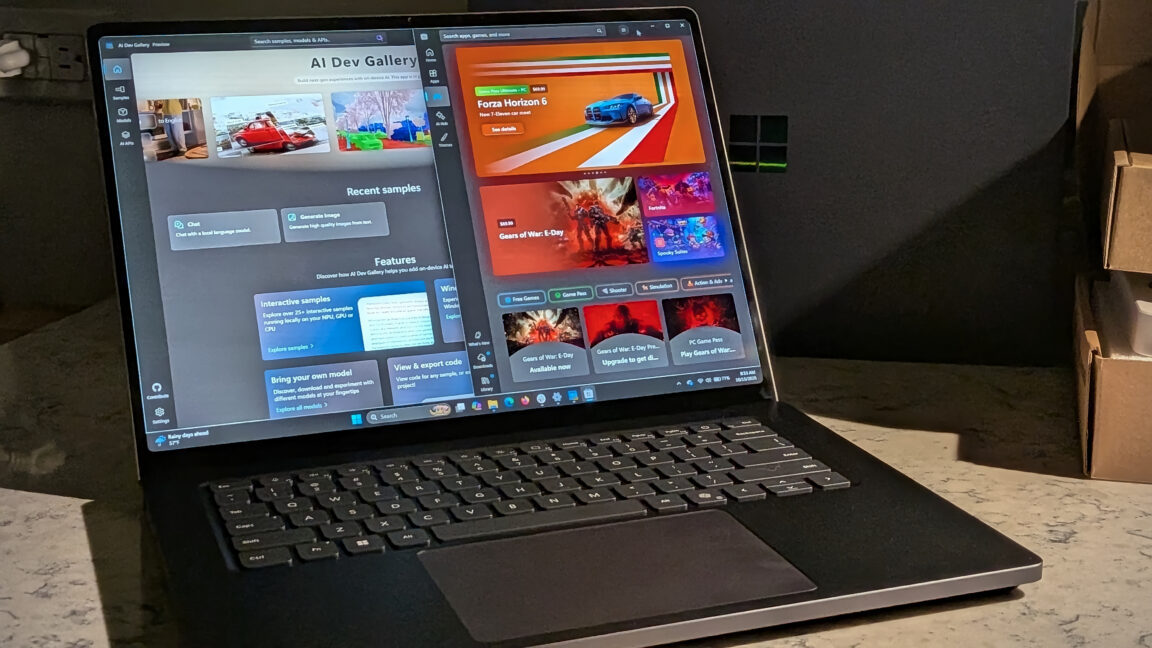
Microsoft's Surface Laptop Ultra, using Nvidia's RTX Spark platform, starts at $2,599 (up to $5,899)
Meta's new commercial terms, effective October 30th, appear to let it crawl and train AI on content from websi…