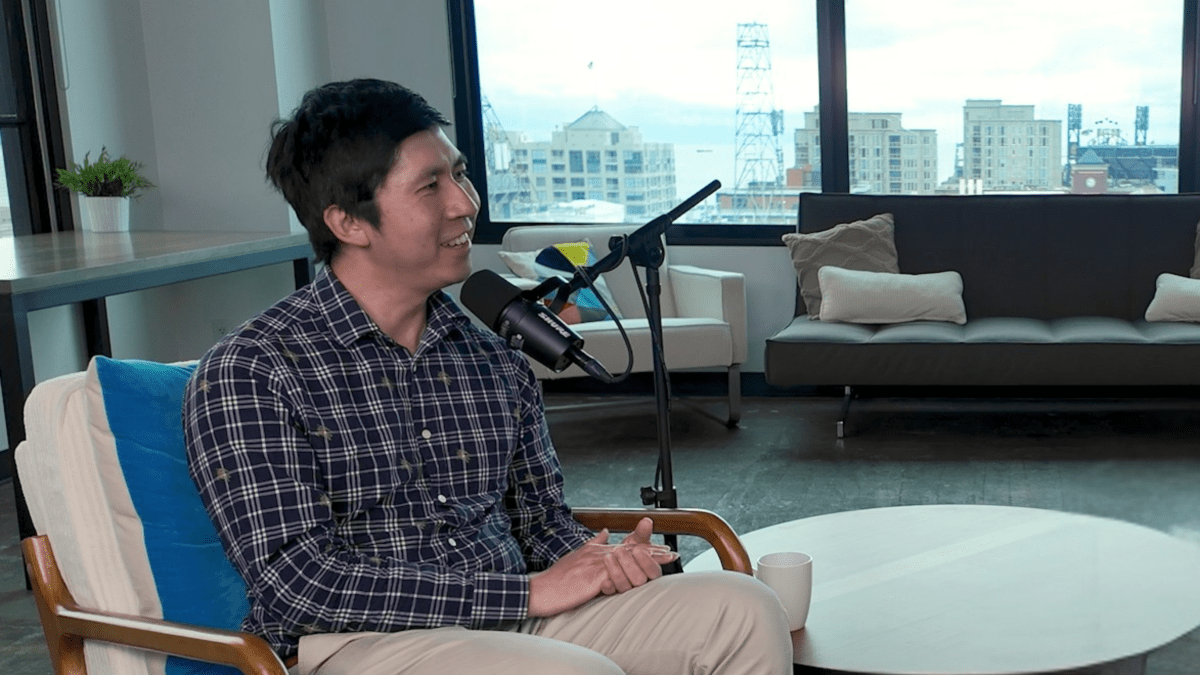
Andrew Dai, a former Google DeepMind researcher who contributed to research that informed ChatGPT's development, founded Elorian and raised $55 million(約88億円) at a $300 million(約480億円) pre-seed valuation. Dai believes visual AI—the ability of AI models to understand and reason about images—is the next major frontier, pointing out that while models excel at math, physics, and coding, visual understanding has seen uneven progress. He chose strategic investors like Nvidia and Menlo Ventures over higher valuations, emphasizing that investor quality and understanding of frontier AI matters more than maximizing company valuation.
Summaries like this, in your inbox every morning.
Sign up free →What happened
Andrew Dai, a former Google DeepMind researcher, founded Elorian and raised a $55 million(約88億円) seed round at a $300 million(約480億円) valuation shortly after leaving Google. The fundraise achieved what the article describes as a more aggressive valuation-to-capital ratio than Thinking Machines, which raised one of the largest rounds in U.S. history.
Why it matters
Dai argues that visual AI—the ability for models to understand and reason about images—remains an uneven frontier compared to progress in math, physics, and coding. He positioned Elorian to build models that advance toward visual AGI (artificial general intelligence), an area where major progress lags behind other AI capabilities. For investors and businesses following AI, this signals where frontier research talent is betting capital and attention.
What to watch
Dai prioritized strategic partners like Nvidia and Menlo Ventures over higher valuation offers, signaling that investor quality and industry alignment matter more than valuation alone to founders building frontier AI. The company has not yet launched a product; the article centers on the fundraise and Dai's vision for the space.
Andrew Dai left Google DeepMind with a clear mission: to build visual AI systems that advance toward artificial general intelligence. During more than a decade at DeepMind, Dai contributed to research that would later inform the development of ChatGPT, establishing his credibility as a researcher at one of the world's most influential AI labs.
Dai launched Elorian and executed a swift fundraise, raising $55 million(約88億円) at a $300 million(約480億円) valuation. The article notes this capital-to-valuation ratio was more aggressive than Thinking Machines, which itself raised one of the largest rounds in U.S. history. Despite interest from higher-valuation offers, Dai chose to partner with strategic investors Nvidia and Menlo Ventures, deciding that investor quality and understanding of frontier AI challenges mattered more than maximizing valuation.
Dai's rationale for visual AI stems from a gap he perceives in current AI progress. "You have models that are doing really great at math, really great at new physics ideas, and of course coding is very popular now … But one area where progress has been extremely uneven is visual understanding and visual reasoning," he explained. At Elorian, the goal is to "build models that will advance us toward visual AGI."
Beyond the funding announcement, Dai emphasized several lessons for founders in today's AI landscape: the importance of translating highly technical visions into compelling stories investors can understand without jargon; the value of speed as a competitive advantage in AI; and the challenge of recruiting world-class researchers away from major tech companies. The company has not yet launched a product; the focus remains on execution of the visual AI vision and assembling the talent to pursue it.
Andrew Dai's exit from Google DeepMind and rapid fundraise at a $300 million(約480億円) valuation on $55 million(約88億円) capital reflects the current investor appetite for AI founders with credible track records at major labs, paired with a specific technical vision. The article positions visual AI as the underexplored frontier—models have demonstrably excelled at math, physics, and coding in recent years, but visual understanding and reasoning remain a lagging area. This framing may appeal to investors seeking a defensible market niche within AI, where major progress claims can be measured against prior benchmarks.
The fundraise structure—favoring strategic alignment with Nvidia and Menlo Ventures over higher bids—suggests a pattern in frontier AI startups: capital abundance means that founder choice of investor has shifted from desperation toward partner quality. Dai's emphasis on recruiting world-class researchers away from Big Tech and the importance of speed as a competitive advantage underscores the talent and velocity dynamics now driving AI startup success. The fact that no product has launched yet, but the company achieved a substantial valuation, points to the premium placed on founder credibility and technical vision in today's AI funding environment.
AI-summarized, only the topics you pick — one digest a day via Email, Slack, or Discord.
Free · takes 30 seconds · unsubscribe anytime
No comments yet. Be the first to share your thoughts!
Log in to join the discussion




Get curated AI news from 200+ sources delivered daily to your inbox. Free to use.
Get Started FreeFree · takes 30 seconds · unsubscribe anytime
1 minute a day. The AI essentials.
200+ sources · Email / LINE / Slack
