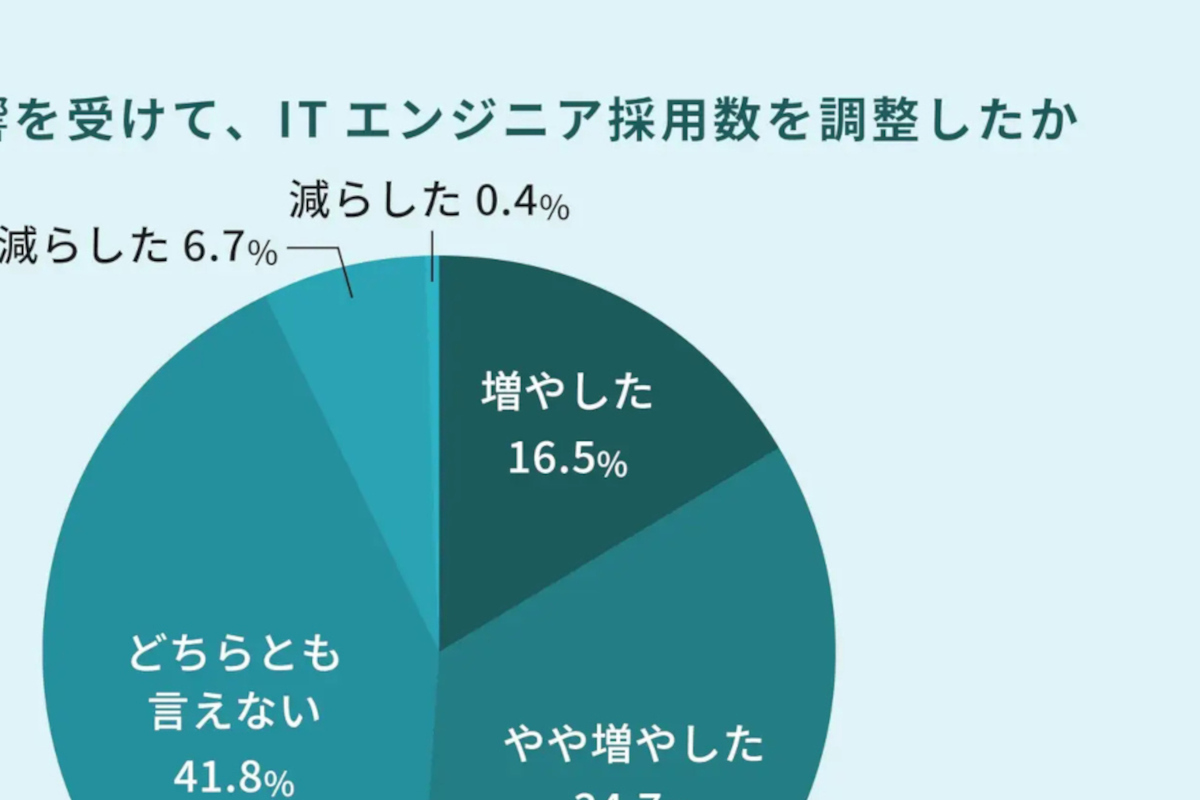
What happened
CloudWorks reported that generative-AI contract projects pay roughly 1.8 times the rate of other projects, with 5,832 such contracts between December 2022 and November 2023 and November 2023 volumes up 8.4-fold year on year.
Why it matters
This gap means AI-agent work that designs business flows can command higher fees than content-delivery tasks, so freelancers who position themselves on workflow design may earn more per project.
What to watch
Whether this premium holds depends on clients valuing workflow design over output volume; a key figure is the 55.6% of companies now accepting side jobs, which shapes how easily employees can take on such contracts.
WHO IT HITSFreelancers and side-job workers with domain expertise in areas like accounting, HR, or sales, who can design automation workflows for small and mid-sized companies lacking in-house AI talent.
Summaries like this, every morning.
The article draws its data from CloudWorks, which analyzed contracts on its own platform between December 2022 and November 2023. That window captures the early surge in generative-AI demand, and the reported 8.4-fold year-on-year increase in contract numbers as of November 2023 suggests clients were moving quickly from experimentation to paid work. The 1.8× rate premium for generative-AI projects over other categories is the article's central evidence that this is not just a volume story but a pricing story.
The piece also cites a 2025 survey by Persol Research and Consulting showing side-job hourly pay averaged ¥3,617 with a median of ¥2,083, putting most side earners around ¥50,000 per month. Against that background, the article argues the gap comes from how AI-agent work is priced: by the labor hours saved at the client, not by output volume. It cites a government white paper finding that 86.4% of Japanese companies use generative AI in some form, while 27.0% report no organizational efforts on business transformation—a combination that suggests tool adoption has outrun workflow design capability.
The stakes for readers hinge on whether they can sell workflow design rather than task execution. The article's caveat is that the pricing data reflects December 2023, and it frames the high end of ranges as likely occupied by projects involving system integration and permission design. For employees considering side work, the practical test appears to be whether their day-job domain knowledge can be turned into an automation proposal that a client will pay for.
Pick your industry and the AI tools you use, and get news related to your work every day.
Free · 30 seconds with Google · unsubscribe anytimeWhat is AIToday? →
Ask AI anything about this article. The AI reads this article, earlier AIToday articles, and Wikipedia, and cites its sources. Q&As are published on this page for other readers too.
Gomumari will start offering its Master Data Management AI Agent on November 2, 2026, at an initial build cost…

South Korean AI chip startup FuriosaAI raised US$620 million in its latest funding round, quadrupling its valu…

Apple outlined plans to charge for heavier use of certain Apple Intelligence features from 2027, with usage ca…
Dave Kovaleski picked the Invesco AI and Next Gen Software ETF over Anthropic's IPO, citing the fund's 53% yea…

OpenAI's Chris Lehane told Axios the company is preparing a "PR blitz" after Tuesday's midterm elections, incl…
A Dell Technologies survey of 2,950 business and IT decision-makers in 35 countries found 58% of Japanese comp…