What happened
Michael Burry criticized Nvidia's memorandum of understanding with six major asset managers—Apollo Global Management, BlackRock, Blackstone, Brookfield Asset Management, Goldman Sachs, and KKR—to create compute financing platforms. Burry flagged that the deal involves Nvidia taking 25% stakes and providing residual value guarantees on chip purchases, structured through private equity and private credit arrangements.
Why it matters
The $500 billion initiative aims to help hyperscalers and enterprises finance data centers through institutional credit rather than balance sheets alone. Burry's skepticism highlights concerns about opacity and risk concentration in the deal structure, while market strategist Ed Yardeni warned that investors must be 'pretty selective' because capital markets will create 'winners and losers.' Goldman Sachs Research estimates AI-related debt issuance has reached nearly $500 billion in 2026, with credit sales desks noting investor 'indigestion' over rising duration and issuer concentration.
What to watch
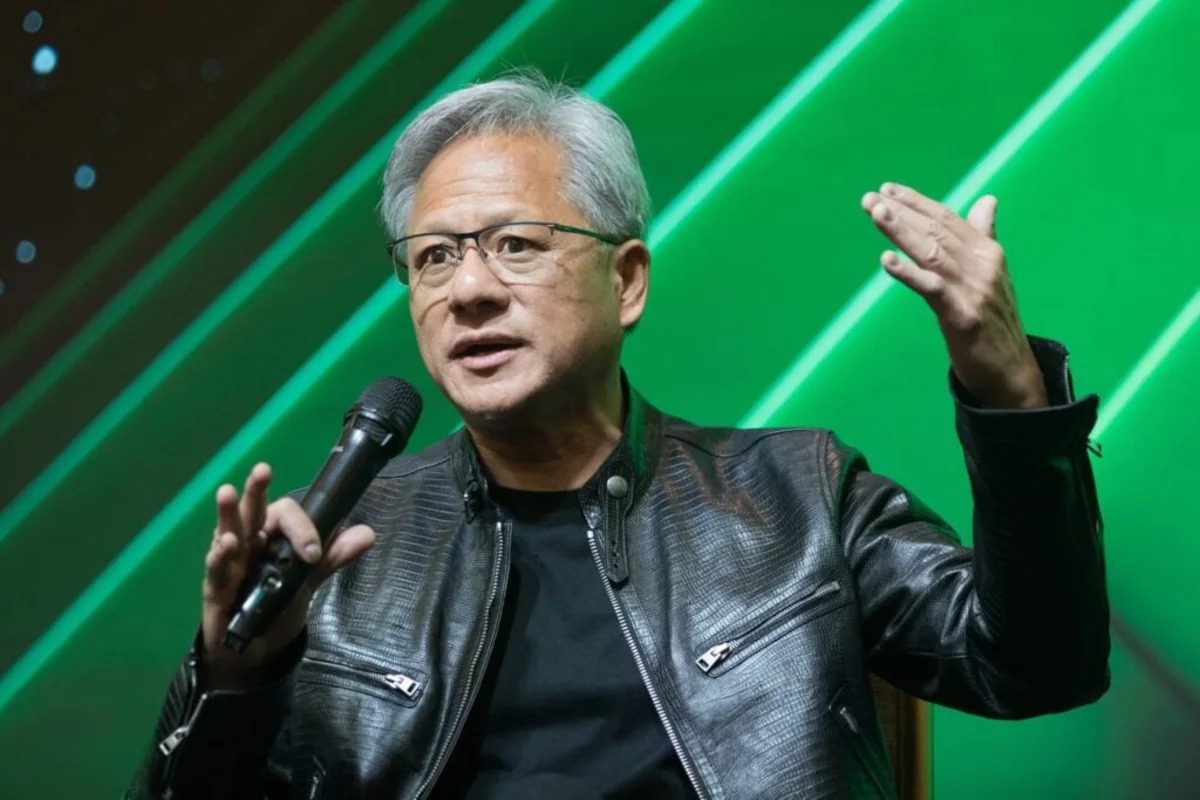
The non-binding agreements between Nvidia and the six financial institutions are not yet binding deals. Nvidia CEO Jensen Huang framed the effort as the 'first time that technology chips have become an investable asset class,' functioning like productive 'infrastructure'—a characterization Burry disputed.
Summaries like this, in your inbox every morning.
Nvidia's $500 billion compute financing initiative represents an attempt to unlock capital for AI infrastructure expansion by reframing computer chips as an investable asset class akin to productive infrastructure. CEO Jensen Huang positioned the deal as groundbreaking in this regard, partnering with six major financial institutions to channel institutional credit toward data center financing. However, the structure introduces complications: Nvidia's 25% equity stakes and residual value guarantees on its own chips create potential conflicts of interest and opacity that have drawn scrutiny from experienced observers.
Michael Burry's critique cuts to the heart of the risk concentration concern. By filtering the arrangement through private credit structures controlled by private equity, the deal consolidates leverage and concentration in ways that may obscure true risk to institutional investors. Market strategist Ed Yardeni echoed this caution, noting that while Wall Street has generated hype around the non-binding agreements, the underlying capital markets dynamics will ultimately create "winners and losers"—an observation underscored by Goldman Sachs Research data showing nearly $500 billion in AI-related debt issuance in 2026 alone, with credit desks already reporting investor fatigue over mounting duration and issuer concentration. The skepticism suggests that enthusiasm for AI financing infrastructure may be outpacing prudent due diligence.
Pick your industry and the AI tools you use, and get news related to your work every day.
Free · 30 seconds with Google · unsubscribe anytimeWhat is AIToday? →
Ask AI anything about this article. The AI reads this article, earlier AIToday articles, and Wikipedia, and cites its sources. Q&As are published on this page for other readers too.
Vinci4D provides chip-design simulation software that trains on physics equations instead of customer data, an…
SEMI President and CEO Ajit Manocha told DIGITIMES that the semiconductor industry reached the US$1 trillion r…
Nvidia's AI Enterprise lists at $4,500 per GPU annually, and paid subscriptions add supported software, securi…

CoreWeave fell more than 25% this week, its debt yield briefly rose above 16% on Thursday, and SK Hynix droppe…

Anthropic told investors this week that it is making 85% gross margins, a figure the columnist calls a cash co…
Modal Labs, an AI infrastructure provider, raised $750 million in a Series D led by Accel at a $15.75 billion…