
What happened
A security researcher working with Zcash used Anthropic's Claude Opus 4.8 to discover a critical vulnerability that had gone undetected for more than four years. After Zcash disclosed the flaw on June 4, the token tumbled about 50%.
Why it matters
The flaw was capable of creating an unlimited supply of tokens—striking at the core of Zcash's value as a privacy-focused cryptocurrency whose security rests on advanced cryptography. That an AI tool found what years of expert human judgment missed signals that machine intelligence is lowering barriers for attackers across the crypto industry, potentially creating an arms race between those securing networks and those trying to hack them.
What to watch
The incident demonstrates that the same AI tools helping developers audit code are also accessible to those seeking to exploit it. Investors reassessed Zcash's security foundation after learning that a flaw capable of undermining the entire token supply had persisted undetected since before the AI vulnerability discovery.
Summaries like this, in your inbox every morning.
Pick your industry and the AI tools you use, and get news related to your work every day.
Free · 30 seconds with Google · unsubscribe anytimeWhat is AIToday? →
Ask AI anything about this article. The AI reads this article, earlier AIToday articles, and Wikipedia, and cites its sources. Q&As are published on this page for other readers too.
A follow-up agent using TrueForge and Jev matched Opus accuracy on 40 requests at 150x lower decision cost
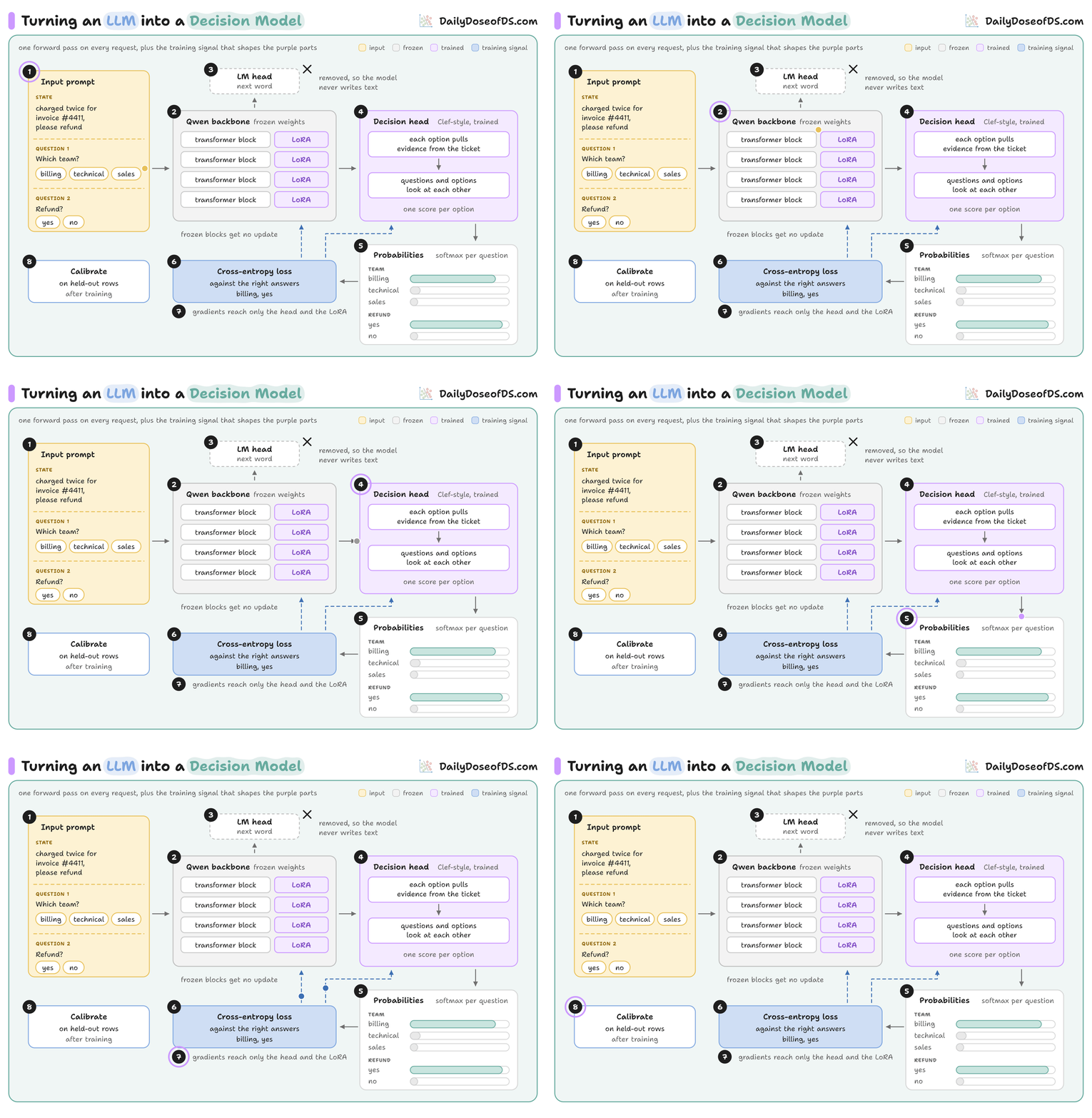
An FA engineer described running spec drafts, test procedures, and reports through Claude Desktop, feeding rou…

Aparna Nair, IBM's chief talent, leadership, and culture officer, said generalists alone "will cut it" in the…

Vinci4D provides chip-design simulation software that trains on physics equations instead of customer data, an…

Reflection AI introduced Beam, an open-weight model for agentic coding and long-horizon tasks, with 501 billio…
A developer released agent-guardrails, a one-script Python standard-library plugin that guards Bash, Write, Ed…

