What happened
AWS and Keyfactor published a reference architecture binding AI agents to short-lived X.509 certificates issued by Keyfactor EJBCA, with signed request envelopes, user-signed delegation assertions, RFC 8693 audience-scoped tokens, and real-time OCSP revocation checks across three authentication layers.
Why it matters
This gives enterprises a deployable template for proving which agent made each call and cutting off all agent authority at once by revoking a single user certificate. That addresses the credential-sharing and replay gaps the post says zero-trust deployments demand.
WHO IT HITSEnterprise security and platform teams running multi-agent AI systems now have a concrete PKI pattern to replace shared API keys and pass-through tokens, and Keyfactor's 1,500 enterprise customers are the most immediate candidates.
Summaries like this, every morning.
The post frames the problem as a gap in the Model Context Protocol (MCP), the emerging standard for connecting AI agents to external tools. MCP is transport-agnostic by design and has no built-in authentication standard, so any component could impersonate an agent, replay intercepted credentials, or invoke tools without authorization. Traditional approaches such as sharing API keys between components or passing OAuth tokens through agent chains fall short of the zero-trust requirements that enterprise deployments demand.
The architecture answers that gap with three authentication layers and four mechanisms. User authentication uses OAuth plus an X.509 certificate plus delegation minting. Agent-to-agent calls use signed envelopes with proof-of-possession, a nonce, and a timestamp. MCP authentication combines a scoped token, an envelope, and a delegation assertion. Across all three, private keys are generated client-side and never sent to EJBCA, which operates purely as a certificate authority. The post states that the same authentication pattern applies to any MCP-compatible tool server, not just the database example shown.
Keyfactor EJBCA is described as an enterprise product available on-premises, in containers, or on Amazon EC2, and Keyfactor's machine identity platform is used by more than 1,500 enterprise customers worldwide, according to Keyfactor. The post positions AWS as providing compute, storage, and AI inference through Amazon Bedrock, while Keyfactor provides the cryptographic identity layer. It also notes that production deployments should add Amazon Bedrock Guardrails for content filtering and grounding checks alongside the PKI-based access controls.
Pick your industry and the AI tools you use, and get news related to your work every day.
Free · 30 seconds with Google · unsubscribe anytimeWhat is AIToday? →
Ask AI anything about this article. The AI reads this article, earlier AIToday articles, and Wikipedia, and cites its sources. Q&As are published on this page for other readers too.
Verra, founded by Kashyap Nathan and Christopher Farrington, raised $5 million in seed funding led by Kearny J…

Education Minister Sarah Al Amiri said Mira will launch in March for parents in UAE public schools, letting th…

A Zenn writer asked Claude Code to build a small Japanese library-lending Copilot Studio agent using PAC CLI…

Levent Alpöge published a 17-million-line Lean proof of the Riemann hypothesis, made with Claude; the Lean Foc…

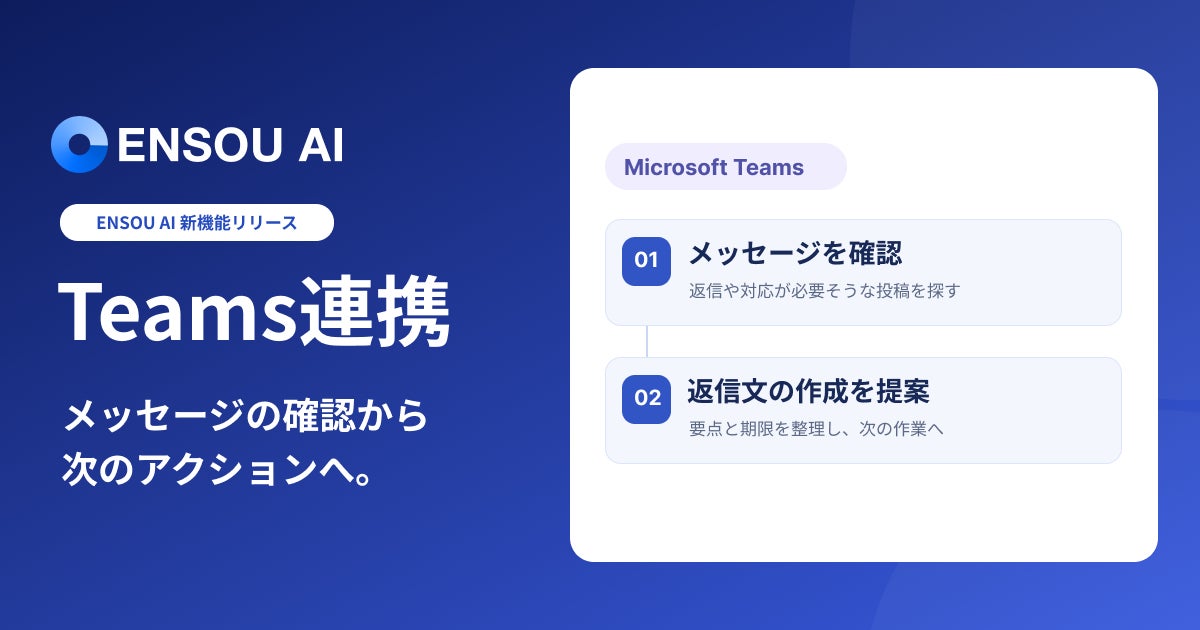
Digeon released a Microsoft Teams integration for its ENSOU AI enterprise generative AI service, so users can…
Anthropic released the /ship skill for Claude Code in beta, covering commit, push, PR creation, review and fix…