What happened
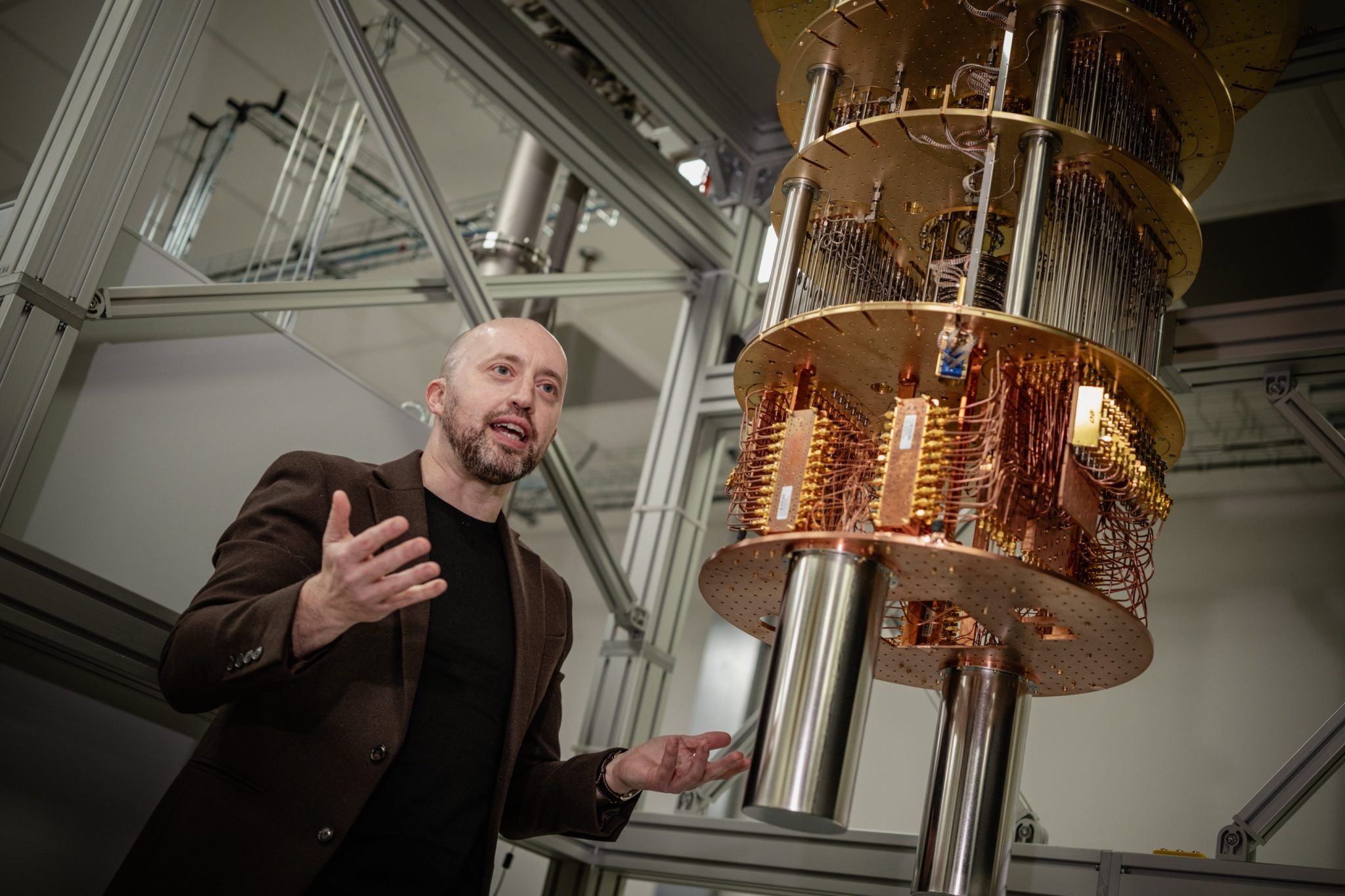
Gerald Mullally, CEO of Oxford Quantum Circuits, said quantum machines will hit millions of steps before an error overtakes them in 2028 to 2031, passing classical compute in narrow areas like anomaly detection. OQC raised £260 million ($345 million) in June, Europe's biggest C-series for a quantum company.
Why it matters
Early quantum use cases he cited are vulnerability analysis and spotting rogue agents, fraud detection and anti-money laundering, so security and financial-crime teams may gain a new detection tool. The capability is still error-prone, and Mullally frames commercial advantage as arriving with that step-count milestone.
Summaries like this, every morning.
Mullally's framing places quantum where large language models sat a decade ago: a fledgling technology with a wide range of plausible applications that boards are now being asked to see around the corner. The technical difference he draws is that classical bits hold only 0 or 1, while qubits can hold a mixture of both, called superposition, which lets them run many more tasks at high speed. The catch is reliability. Qubits can be erratic, and small shifts in temperature or atmospheric pressure can cause malfunctions, which is why expensive isolation chambers are standard.
The commercial path he describes runs through pattern-spotting rather than general-purpose speed. Classical compute can struggle to identify relationships between data, whereas quantum moves that data to a higher dimensional plane—like a sphere rather than two points—making relationships easier to see. That is why anomaly detection, fraud detection and anti-money laundering come first in financial services, alongside vulnerability analysis and threat detection on networks. OQC already has applications helping data centers operate more efficiently.
The milestone Mullally points to is step count: average quantum algorithms can regularly execute a thousand steps before errors overwhelm them, and he expects that to reach millions in 2028 to 2031, then billions and trillions of quantum operations. He also raises the encryption risk, noting a scenario where quantum could eat through classical encryption defenses is not outside the realms of possibility, possibly in as little as five years—which is why he argues the good guys need to get there first. Against a backdrop of executives who have spent heavily on AI experiments with flat bottom lines, his pitch is that quantum is a different kind of problem-solving mechanism, one that could also help identify the anomalous behavior of rogue agents.
Pick your industry and the AI tools you use, and get news related to your work every day.
Free · 30 seconds with Google · unsubscribe anytimeWhat is AIToday? →
Ask AI anything about this article. The AI reads this article, earlier AIToday articles, and Wikipedia, and cites its sources. Q&As are published on this page for other readers too.
Qvyon launched with $8 million led by MaC Venture Capital and released Mimic Core, a platform that turns real…

AMD's Data Center revenue hit $8.546 billion as total revenue rose 44.7% to $13.377 billion, and Alphabet's Cl…
millionways launched Thorsten-4, an AI model built from a German research project in which dozens of psycholog…

Databricks released the Genie app for Slack to General Availability, so users can @mention Genie or DM it and…

The author, writing on day 42 of what he calls the "Black October" wave of AI-discovered security flaws, says…
Nvidia's board announced Thursday that Colette Kress, who joined the chipmaker in 2013, will serve as interim…