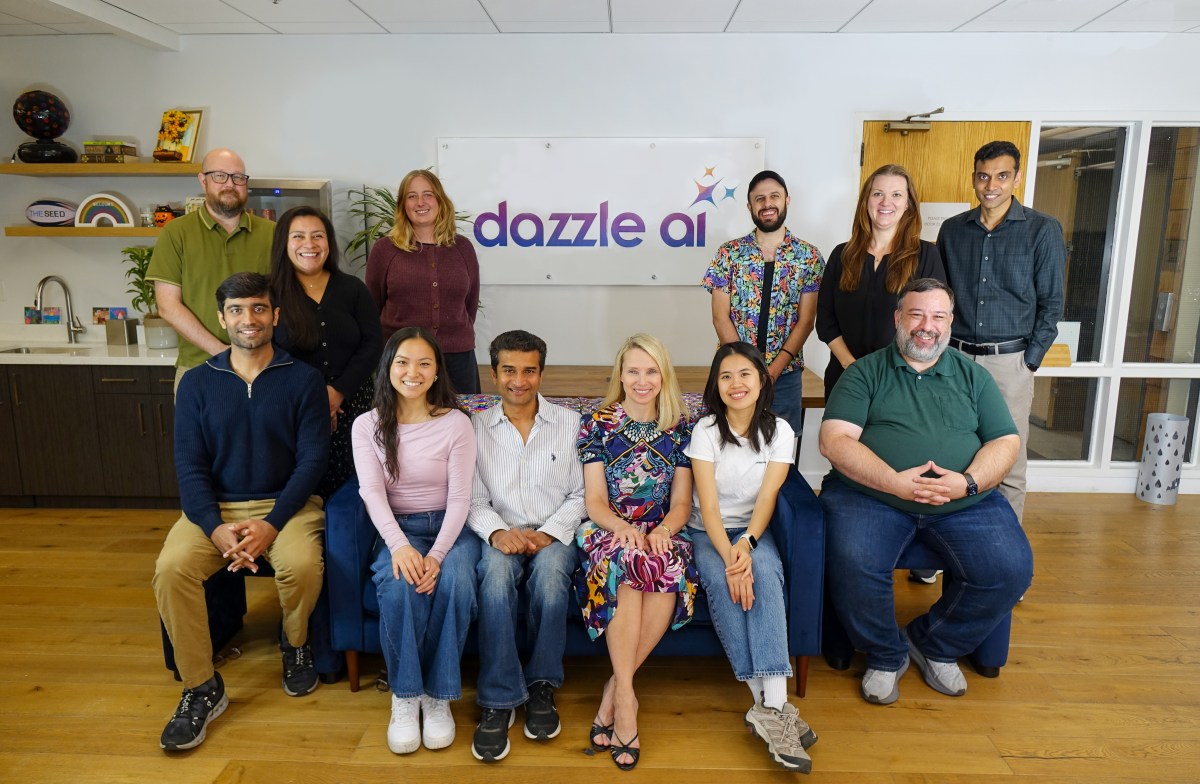
What happened
Former Yahoo CEO Marissa Mayer unveiled Dazzle, a personal AI assistant that raised an $8 million seed round last December and draws all its context from your phone's photos.
Why it matters
Mayer argues photos are an underappreciated source of information, and the assistant claims to learn your hobbies, food and style preferences, and who you spend time with.
What to watch
The test is accuracy — in a demo it suggested Sicily from a four-year-old trip and forgot a daughter already skates — while Mayer says Dazzle discards anything the AI flags as sensitive.
WHO IT HITSConsumers choosing among a wave of new AI assistants, and product teams at rivals like Meta's Muse and Instinct, are the audience here. Mayer's bet is that users may prefer handing over photo libraries rather than email and message access — an inference she makes from security concerns about those other tools.
Summaries like this, in your inbox every morning.
Dazzle arrives into a crowded field. Over the past month, Meta's Muse, Instinct, and a wave of similar assistants have flooded the market, which is why the question of copycatting came up before Mayer's demo. Her answer is a difference in source material: most assistants build context from text-heavy apps like email, calendars and shopping histories, while Dazzle takes everything from a single place — the pictures already sitting on your phone.
Mayer is not new to photos. Her previous startup, Sunshine, launched an AI-powered photo-sharing tool called Shine in 2024; it was widely criticized for its outdated design, failed to attract widespread usage, and eventually shut down. Mayer says it nevertheless built "interesting IP," and Dazzle reads as a second pass at the same raw material with a different product shape.
The demo showed both promise and blind spots. It surfaced Mediterranean suggestions that seemed to track past trips to Spain and Greece, but also proposed Sicily from a trip four years ago, and it failed to remember a daughter already knows how to roller skate. Mayer's privacy pitch — that Dazzle discards any personal information the AI flags as sensitive — is likely to be the deciding factor for users weighing whether to hand over their photo libraries instead of granting access to emails and messages. Whether Dazzle closes its accuracy gaps while keeping those libraries private is the open question.
Pick your industry and the AI tools you use, and get news related to your work every day.
Free · 30 seconds with Google · unsubscribe anytimeWhat is AIToday? →
Ask AI anything about this article. The AI reads this article, earlier AIToday articles, and Wikipedia, and cites its sources. Q&As are published on this page for other readers too.
Ascerta Inc. raised $18 million in a Series A led by Dell Technologies Capital, with Hitachi Ventures, BGV and…
Netlist has begun legal proceedings against Micron and downstream customers Nvidia, Broadcom, and Google over…
Anthropic filed a confidential draft prospectus with a 2025 revenue of $4.6 billion, up from $400 million in 2…

On Anthropic's ExploitBench, GLM-5.3 built a working Chrome V8 exploit in 50 of 410 attempts versus Mythos Pre…
Google is paying about 100 digital publishers for content used in AI Overviews, AI Mode, and Gemini, with paym…
A Qiita walkthrough trained a five-label car-damage classifier on Gemini Enterprise Agent Platform AutoML usin…