Keyence has launched the IV4 Series image sensor with AI for both image creation and detection.
It automatically finds optimal imaging conditions and removes backgrounds for stable detection.
The sensor handles up to 250 units per second, with compact and waterproof models available.
What happened
Keyence has released the IV4 Series image sensor, featuring new AI algorithms for both image creation and detection. The 'image-creation AI' automatically extracts up to 9 recommended images from over 10,000 shooting conditions with one click, suppressing halation and ambient light interference.
Why it matters
The new 'AI targeting' feature automatically removes unwanted backgrounds to isolate the detection target, enabling stable detection that is unaffected by changes in the surrounding environment. This reduces the need for manual setup of imaging conditions, potentially lowering the skill barrier for factory automation.
What to watch
The sensor supports high-speed detection at up to 250 units per second thanks to a high-speed AI accelerator. Lineup includes a compact model (smallest in its class) and an amplifier-integrated model with IP67 waterproofing and PoE support, facilitating space-saving and reduced wiring installation.
Ask the AI about this article →
Summaries like this, in your inbox every morning.
Keyence's IV4 Series marks a step toward automating the setup of industrial vision sensors. By embedding AI that handles both image tuning and detection, the product reduces the need for users to manually adjust lighting or angles. The 'image-creation AI' evaluates over 10,000 conditions and presents up to nine recommended images, while the 'AI targeting' feature ignores background noise. These capabilities could make the sensor more accessible to factories without specialized machine-vision expertise.
The series also emphasizes speed and flexibility. With a high-speed AI accelerator, it reaches up to 250 detections per second, which suits inline production. The inclusion of tools like 'learning search' (stable detection from one registered image), numeric output for position deviation, 'learning OCR' for text and dates, and 'learning count' for inline quantity counting broadens its application range. The compact and waterproof (IP67) models with PoE support address space and cabling constraints on factory floors.
For business readers, the practical implication is that Keyence is positioning AI-driven sensors as a way to maintain consistent quality control even as production environments change. The automated imaging setup and background suppression could reduce downtime and manual adjustment, but actual performance and integration benefits would need to be evaluated in a live production setting.
For example, today's edition would include:
AI-summarized, only the topics you pick — one digest a day via Email, Slack, or Discord.
Free · 30 seconds with Google · unsubscribe anytimeWhat is AIToday? →
Ask AI anything about this article. Q&As are published on this page for other readers too.
Tesla Japan will show the Cybercab, its dedicated Robotaxi vehicle, in Japan for the first time
Palantir Technologies Inc
Researchers in Bengaluru, India, are using AI to train rescue dogs like Chloe to sniff human breath for cancer…
JM-Applied, a Taiwanese semiconductor gas equipment maker and supply chain member for Micron and TSMC, said on…
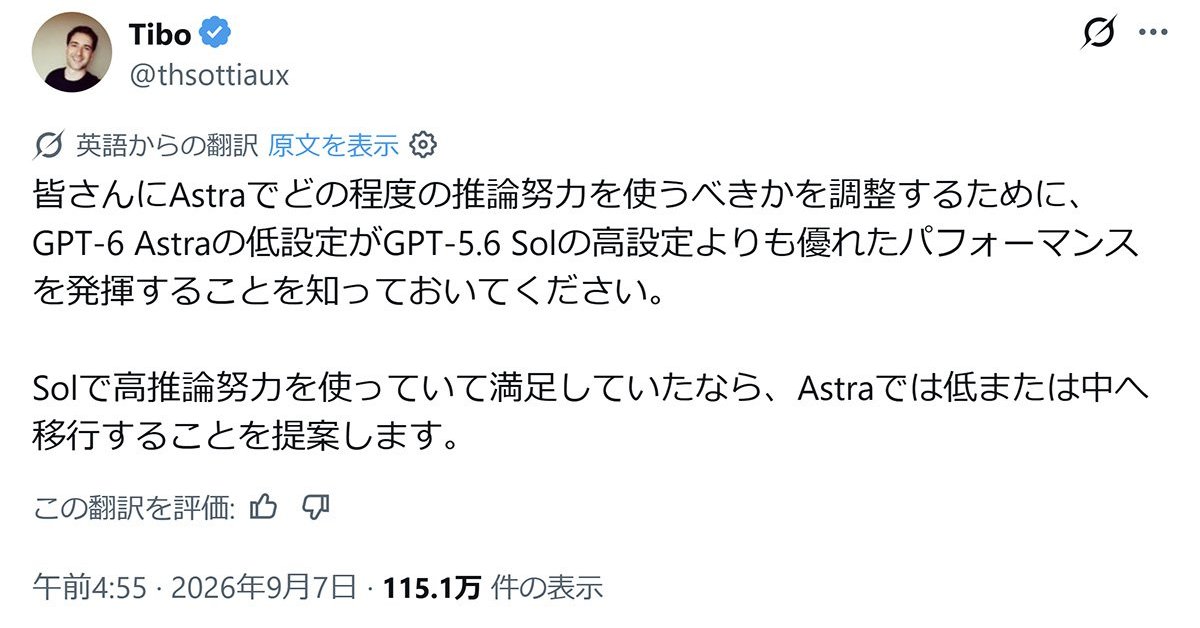
OpenAI's product lead Tibo Sotiou posted on X on September 6 that GPT-6 Astra's 'low' setting outperforms GPT-…
Nvidia disclosed roughly $99 billion of public and private equity investments as of July 26, plus about $25 bi…