What happened
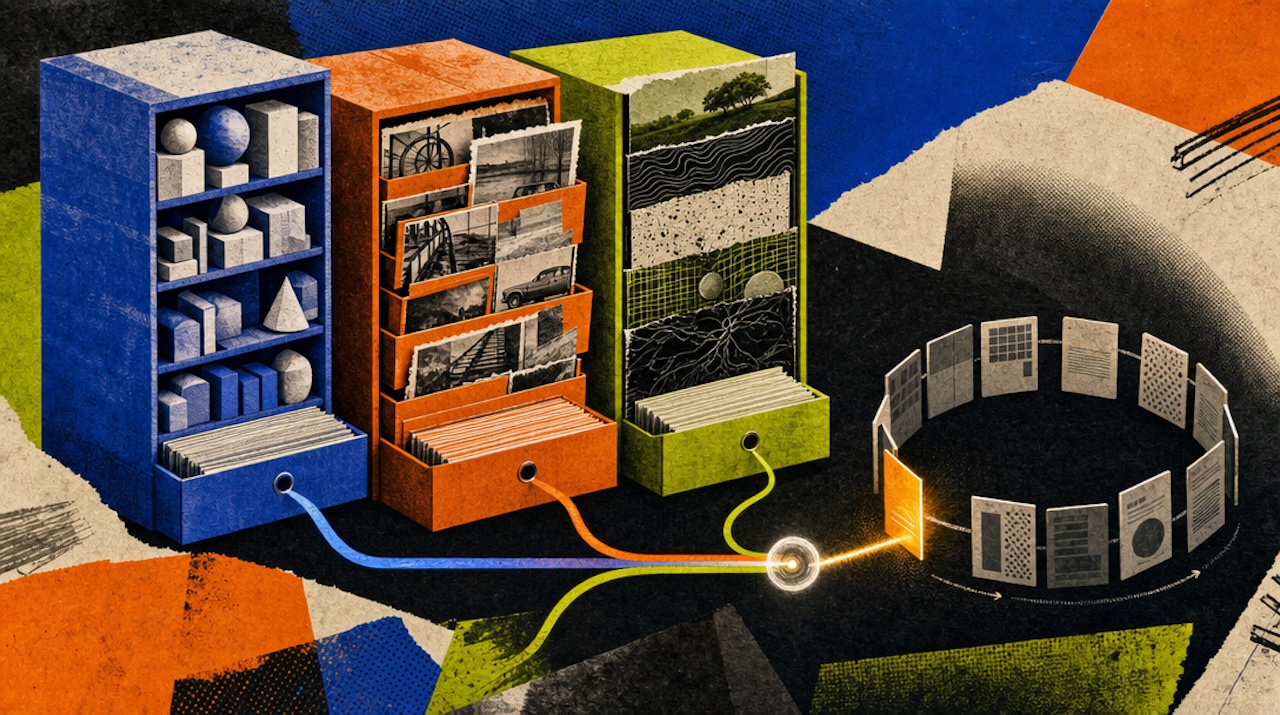
Meta AI researchers developed a system pairing an "action agent" (the main task-solving AI) with a separate "memory agent" that reviews recent task steps at fixed intervals and decides whether to send targeted reminders. The memory agent maintains a structured bank with three sections—a private status field, knowledge memory for stable facts, and procedural memory for what the agent tried and what happened—then chooses whether that stored state should influence the next step.
Why it matters
Long tasks cause "behavioral state decay," where the state guiding an agent's decisions becomes buried in growing task history or falls out of the context window entirely. Simply giving agents access to longer histories doesn't solve this. Meta's system shows that selective reminders outperform both constant recall (which adds latency and token consumption) and no reminders—suggesting this approach could improve AI reliability for multi-step work.
What to watch
On Terminal-Bench 2.0 (command-line tasks), the system solved 46 percent of tasks on first attempt versus 38 percent for the baseline; on tau2-Bench (conversational tool use), task-weighted average rose from 55 to 62 percent. Gains were larger for weaker models but persisted with stronger ones (Opus 4.6 improved by 2.4–2.5 percentage points). Meta has published the code on GitHub.
Summaries like this, in your inbox every morning.
The core problem Meta identified is that as task history grows, the behavioral state guiding an AI agent's decisions gets scattered and may become buried in the context window or fall out entirely. Even when the information technically remains available, it no longer reliably shapes the agent's behavior. This is distinct from personalization or recall challenges that existing memory systems handle well; agents working through a multi-step task need the system to actively decide *when* a past decision or constraint should re-enter the current work. Existing approaches—either constant recall (which adds latency and token overhead) or fixed summarization rules—fail because failure modes vary widely by task, so no single aggregation rule can reliably decide when intervention helps versus distracts.
Meta's design addresses this by separating concerns: a "memory agent" (prompted with no special training required) maintains a structured bank that captures what the action agent has tried, what happened, and what constraints apply, while an "action agent" remains unmodified and continues its work. The innovation is not storage but *selective intervention*—the memory agent has a "silence" option and only reminds when it believes memory should influence the next step. Testing showed this selective approach outperformed both always providing full memory and a production memory system (Mem0) that retrieves records through search. The gains persisted across model scales: with weaker Claude Sonnet 4.5 as the action agent, task completion rose from 38 to 46 percent on command-line benchmarks and from 55 to 62 percent on conversational benchmarks; with the stronger Opus 4.6, improvements of 2.4–2.5 percentage points still appeared, suggesting the memory system compensates for capacity constraints rather than merely masking a weak baseline.
Pick your industry and the AI tools you use, and get news related to your work every day.
Free · 30 seconds with Google · unsubscribe anytimeWhat is AIToday? →
Ask AI anything about this article. The AI reads this article, earlier AIToday articles, and Wikipedia, and cites its sources. Q&As are published on this page for other readers too.
Chunghwa Telecom president Rong-shy Lin said the shift from conversational AI to autonomous AI agents is resha…

CoreWeave fell 5% in premarket trading Friday and was on track to finish the week down 15%, after rebounding f…

Apple and Meta said they would jointly release a new open-weight AI model designed to run on high-end Macs, ai…

Investors put $38.5 billion into Asian startups in Q3, per Crunchbase data

A writer and entrepreneur opened his daily to-do list and found 156 items, and concluded that an AI assistant…

A longtime Anthropic investor told Fortune he expects shares priced around $1.8 trillion, below the company's…


