What happened
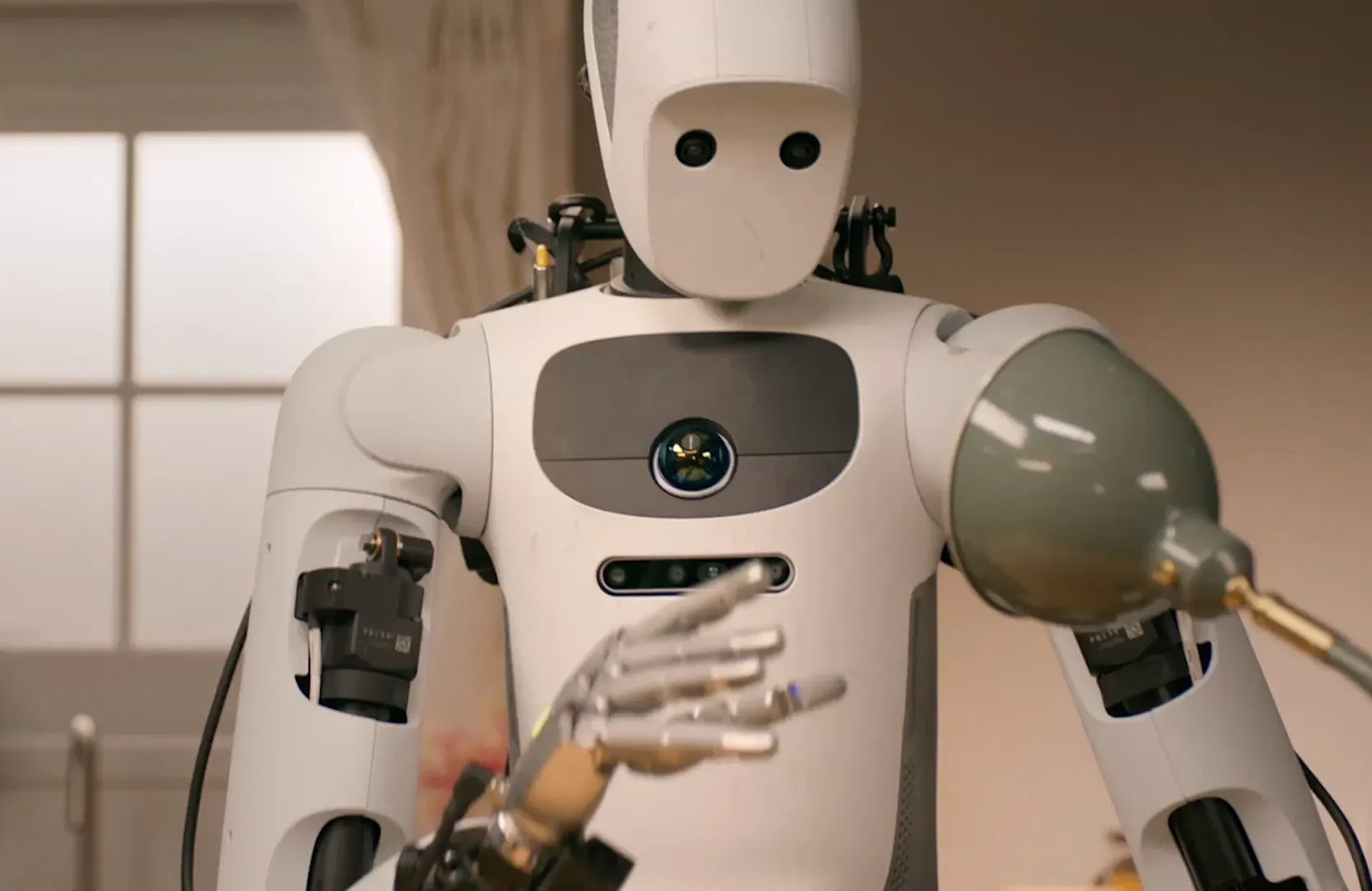
Google DeepMind released Gemini Robotics 2, a vision-language-action model that enables robots to control entire bodies—including whole-body movement and dexterous manipulation—rather than just upper-body tasks. The system can control a five-fingered, 22 degree-of-freedom hand and allows multiple robots to collaborate on complex tasks lasting several minutes.
Why it matters
Robots can now execute real-world tasks requiring whole-body coordination, such as walking to retrieve an object, bending to a shelf, and placing it precisely. The model runs locally on devices and can adapt to entirely new robot types in just a few hours, making physical AI systems practical for homes and workplaces without requiring constant network connectivity.
What to watch
Gemini Robotics ER 2 (the reasoning model) is available now on Google AI Studio and in private preview on Gemini Enterprise Agent Platform; the VLA and On-Device models are available to early-access partners. DeepMind also introduced ASIMOV-Agentic, a new safety benchmark for agentic robots operating near humans.
Summaries like this, in your inbox every morning.
DeepMind's earlier Gemini Robotics models focused on upper-body manipulation for tabletop tasks—a significant but narrow application. Gemini Robotics 2 extends that capability to the entire robot body, enabling tasks that require coordinated walking, crouching, reaching, and precise manipulation. This shift is important because real-world household and workplace tasks rarely involve only stationary, arm-only actions; they require movement through space and dexterous interaction with objects in variable layouts.
The introduction of Gemini Robotics ER 2 as a separate reasoning layer adds another layer of capability. Rather than controlling moment-to-moment actions, this model acts as a "high-level brain" that understands multi-step task sequences lasting several minutes and involving hundreds of decisions. It communicates with humans, observes context, self-corrects when steps fail, and—for the first time in DeepMind's robotics line—enables multiple robots to work together. The ability to track when tasks begin and end represents a measurable step forward in how robots understand progress.
The on-device variant addresses a practical constraint: many robotic applications cannot rely on network connectivity or tolerate latency. By running locally and adapting to new embodiments in hours rather than days or weeks, Gemini Robotics On-Device 2 lowers the barrier to deploying physical AI in settings where internet access is unreliable. DeepMind's introduction of ASIMOV-Agentic, a safety benchmark for agentic orchestration, signals that the company is building guardrails alongside capability—measuring both refusal of unsafe actions and proactive requests for human intervention when uncertainty arises.
Pick your industry and the AI tools you use, and get news related to your work every day.
Free · 30 seconds with Google · unsubscribe anytimeWhat is AIToday? →
Ask AI anything about this article. The AI reads this article, earlier AIToday articles, and Wikipedia, and cites its sources. Q&As are published on this page for other readers too.
ElevenLabs completed a $300 million employee tender at a $22 billion valuation, and co-founder Mati Staniszews…

Skild AI used Nvidia Isaac Sim to give its S1 model one objective — score a goal — and let it compete against…
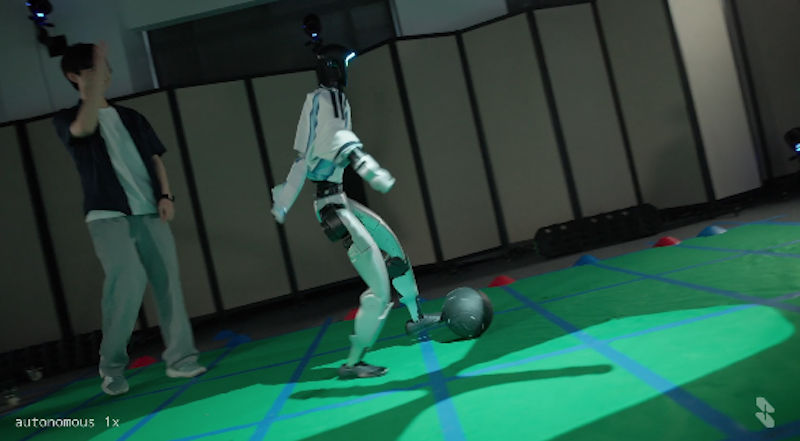
On October 15, OpenAI announced the Rosalind Academic Plan, giving approved US university labs free access to…
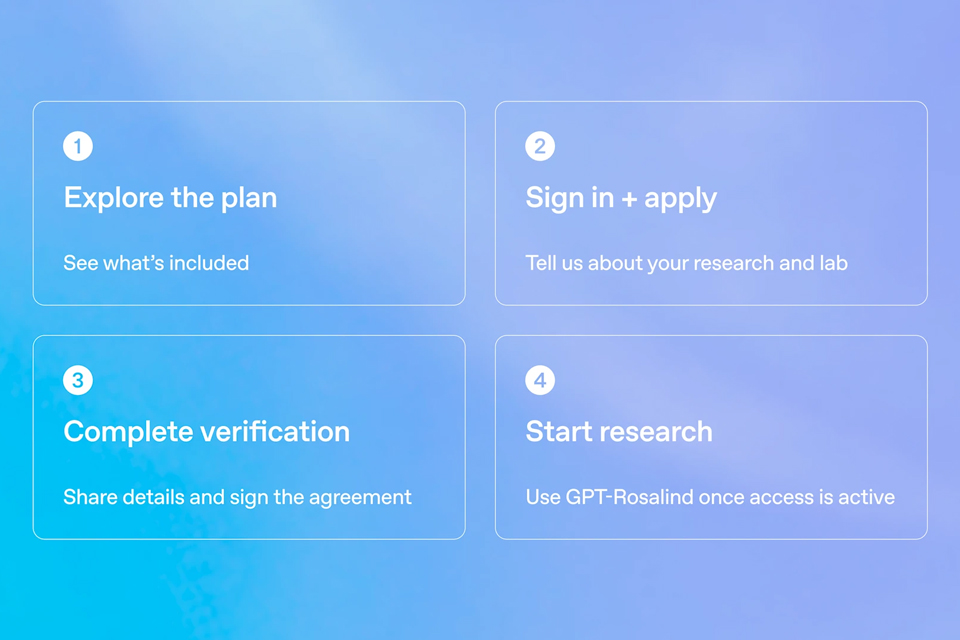
A Qiita article compared automated red-teaming methods for LLM apps — GCG, PAIR, and TAP — using mock implemen…

Liquid AI released d1-ultra on October 15, 2026, an upgraded open-weights decision model that averaged 76.7 ac…
Circlia started a proof-of-concept for TASTE SIGNAL: visitors to Holland Village Cafe FUKUOKA taste cookies an…