
What happened
Cisco IT deployed a multi-tenant AI factory across its global data centers, raising average GPU utilization from 15% to ~50% and expanding from ~250 to over 1,568 enterprise GPUs in under two years without new real estate.
Why it matters
The results suggest that pooling fragmented GPU capacity and adding high-density cooling can lift utilization and compute density inside existing data centers, easing the power and space constraints that limit enterprise AI scaling.
WHO IT HITSEnterprise IT and infrastructure teams running on-premises AI workloads are the clearest audience; the results indicate that network pooling and cooling changes can raise GPU utilization without new data center space, though the figures come from a single company's deployment.
Summaries like this, every morning.
Cisco's account traces a shift from dedicated, project-specific AI clusters to a shared, multi-tenant setup as AI moved from prototypes to mission-critical operations. The stated catalyst was the global deployment of MyAgent across its 90,000-person workforce and scaled capacity for Cisco IQ, which hosts live production workloads for thousands of enterprise accounts. That surge in agentic workflows exposed four barriers Cisco lists: stranded capacity with GPU utilization at 10%-15%, unpredictable token costs, expanding security attack surfaces, and thermal and power density ceilings.
The company's response combined a high-bandwidth pooled network fabric, heterogeneous compute using Cisco UCS-X servers with a mix of NVIDIA and AMD GPUs, rear-door heat exchangers, and natively embedded security through Cisco AI Defense and Hypershield. Splunk Observability Cloud, Splunk Cloud Platform, and Splunk IT Service Intelligence form the observability layer. Cisco says it is expanding that layer to Agent Observability and Tokenomics.
Looking ahead, Cisco IT plans to shift toward inference as demand outpaces training by 60%, with dynamic resource pooling, automated GPU reclaims, and adaptive networking. It also cites agent-generated traffic projected to be 450% higher per task than human traffic as a reason to move to an AgenticOps model. The results are a single company's internal deployment, so the figures may not translate directly to other enterprises.
Pick your industry and the AI tools you use, and get news related to your work every day.
Free · 30 seconds with Google · unsubscribe anytimeWhat is AIToday? →
Ask AI anything about this article. The AI reads this article, earlier AIToday articles, and Wikipedia, and cites its sources. Q&As are published on this page for other readers too.
After the post-election market rout, Sozzi says fundamentals at Nvidia, Micron, Sandisk and other AI names wer…

Berkshire Hathaway, now led by CEO Greg Abel, has seen its stock rise 13.58% year to date through the November…

Visa launched its Agentic Commerce Benchmark, a framework to evaluate AI-powered shopping experiences for cons…

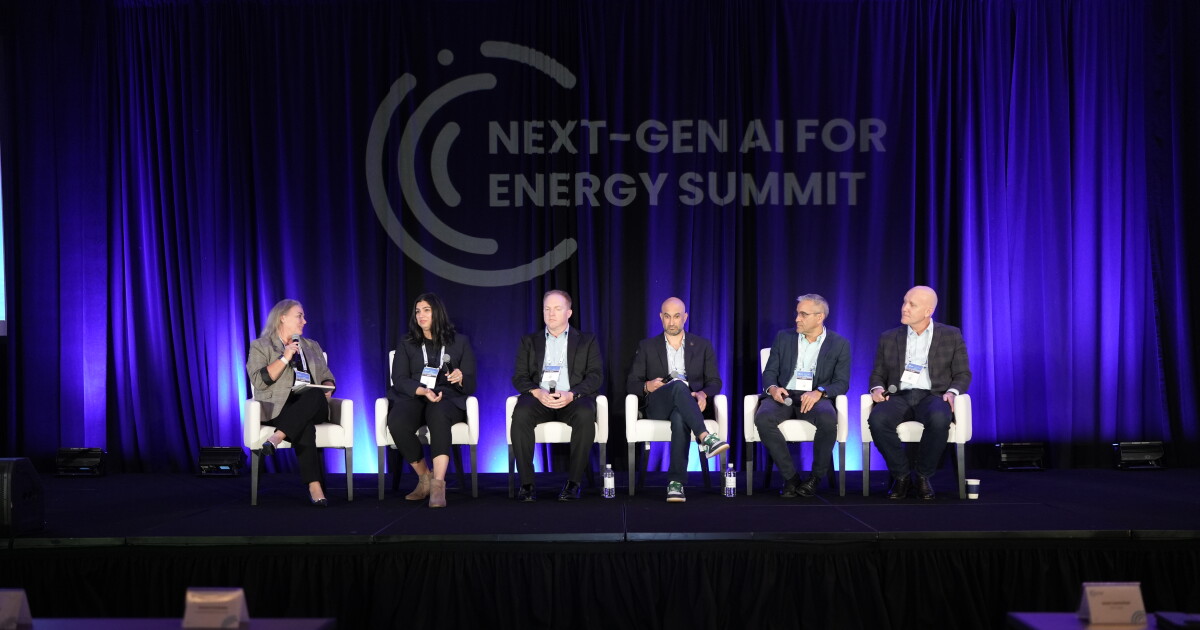
At the Next-Gen AI for Energy Summit in Houston on 3 November, Anthropic's Boaz Nur said AI will take over the…
Democrat Gina Hinojosa, who wants an immediate moratorium on data centers in Texas, beat Republican Gov

Salesforce agreed to acquire Cresta, adding voice agents, real-time agent assistance, and conversation intelli…