What happened
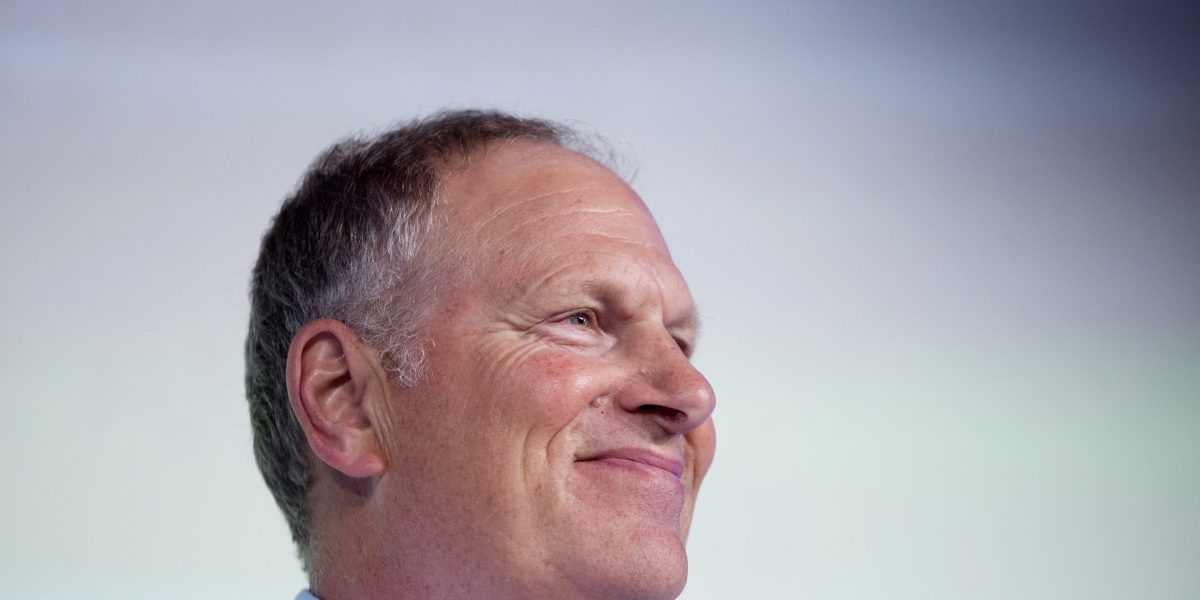
Vertiv, a traditional air-conditioning supplier founded in 1946, has grown its market cap almost 10× from under $11 billion to $109 billion since going public in early 2021. CEO David Cote, a retired Honeywell executive, repositioned the company to serve hyperscalers like Google and Microsoft instead of banks, and invested in liquid direct-to-chip cooling technology—a system critical for cooling dense GPU racks that power AI data centers.
Why it matters
Cote identified a structural trend: pre-AI data generation was growing at 20% per year while data center capacity grew at only 4%, meaning new capacity would be needed. Rather than chase AI as a hot trend, he positioned Vertiv as indispensable infrastructure. Since its 2021 debut, Vertiv's annualized return of 50.5% ranks third in the S&P 500, behind only Comfort Systems (55.2%) and Nvidia (54.9%), despite starting as an overlooked industrial company.
What to watch
Vertiv faced near-collapse in early 2023 when the stock fell to $13 (down roughly 55% from nearly $29 eighteen months earlier) due to underpricing. Cote replaced the CEO with Giordano Albertazzi in January 2023 and tripled R&D spending to 6% of sales. The company's success now depends on scaling its liquid direct-to-chip cooling technology as hyperscalers expand GPU data centers.
Summaries like this, in your inbox every morning.
David Cote's track record at Honeywell—where he engineered a spectacular revival and delivered shareholder returns beating the S&P 500 by 150% over 15 years—positioned him to recognize opportunity where others saw a dying business. When Goldman Sachs presented Vertiv after reviewing over 1,000 companies, Cote saw the same underperformance and margin-expansion potential that had defined his Honeywell turnaround. Critically, Cote did not chase the AI boom as a trend; instead, he identified a structural imbalance that predated AI itself. Data generation was growing at 20% annually while data center capacity grew at only 4%, a gap he recognized would eventually require massive new infrastructure. When AI demand arrived, Vertiv was already positioned at the center of the solution.
Vertiv's early performance nearly derailed the thesis. COVID struck three weeks after the NYSE listing, the stock plummeted, and by early 2023 it had fallen roughly 55% from its peak as the company underpriced equipment to win hyperscaler customers. Cote's response was direct: he replaced the CEO with Giordano Albertazzi, a mechanical engineer with deep Emerson (and Vertiv's predecessor) experience and a philosophy that operational solutions come from the shop floor, not the boardroom. Simultaneously, Cote increased R&D spending from 3% to 6% of sales—mirroring the R&D-driven approach that had powered Honeywell's transformation. The decisive move, however, came through a small acquisition: a collaboration with British startup CoolTera on liquid direct-to-chip cooling technology, validated by Nvidia itself as essential for deploying next-generation GPUs. This technology—not available from traditional air-cooling competitors—became Vertiv's defensible advantage as GPU-intensive data centers scaled.
Pick your industry and the AI tools you use, and get news related to your work every day.
Free · 30 seconds with Google · unsubscribe anytimeWhat is AIToday? →
Ask AI anything about this article. The AI reads this article, earlier AIToday articles, and Wikipedia, and cites its sources. Q&As are published on this page for other readers too.
The Motley Fool argues Amazon is the AI company of the two, since AWS was just 21% of first-half 2026 revenue…

Hewlett Packard Enterprise stock is down 5% at $55.87

Vercel data published Thursday shows TypeSafe AI's Jev, a lightweight decision model for choosing among predet…
Chunghwa Telecom president Rong-shy Lin said the shift from conversational AI to autonomous AI agents is resha…
CoreWeave fell 5% in premarket trading Friday and was on track to finish the week down 15%, after rebounding f…
Apple and Meta said they would jointly release a new open-weight AI model designed to run on high-end Macs, ai…