What happened
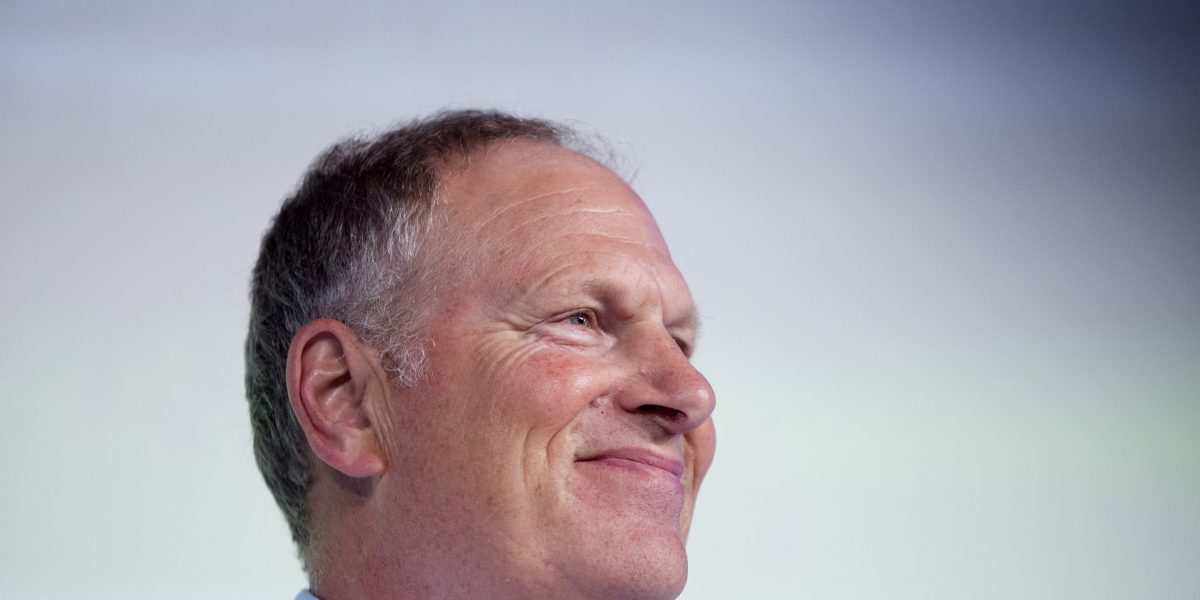
Vertiv, a data-center cooling company founded in 1946, has surged 10x in market value from under $11 billion to $109 billion since its early 2021 public debut. Under David Cote—a veteran industrialist who left Honeywell in 2019—the company pivoted to supply liquid direct-to-chip cooling for AI data centers, a technology it obtained through a 2021 partnership with British startup CoolTera and collaboration with Nvidia.
Why it matters
Cote spotted a structural opportunity: pre-AI data generation was growing at 20% per year while data centers expanded at only 4%, signaling inevitable demand for new infrastructure. Unlike hyperscalers chasing headlines, he positioned a legacy industrial operator as essential to AI deployment—Vertiv's annualized return of 50.5% since the IPO ranks third in the S&P 500, behind only Nvidia (54.9%) and Comfort Systems (55.2%).
What to watch
Vertiv's near-bankruptcy in early 2023 (stock at $13, down 55% from $29) tested the strategy. Cote responded by installing engineer Giordano Albertazzi as CEO in January 2023 and raising R&D spending from 3% of sales to 6%—the same playbook he used at Honeywell, where he delivered shareholder returns 150% above the S&P 500 over 15 years.
Summaries like this, in your inbox every morning.
David Cote's career path—from night-shift GE worker to Honeywell CEO, then to retirement at Goldman Sachs seeking a new mission—mirrors the unconventional trajectory he engineered at Vertiv. After Jack Welch fired him in 1999 with unexplained finality, Cote rose to lead Honeywell through a methodical strategy of acquisition and operational tightening, buying over 100 companies and delivering returns that beat the market by 150 percentage points over 15 years. That same playbook—identifying overlooked operators, repositioning them toward growth markets, and improving margins through engineering focus—proved portable to Vertiv.
What made Vertiv's opportunity unique was not AI itself, which was nascent in 2019–2020, but Cote's prescient reading of the underlying trend: data generation was exploding far faster than data-center expansion, creating an inevitable supply constraint. Vertiv's prior owners (Emerson Electric, then private-equity firm Platinum Equity) had dismissed the business as "horrible," unable to see past its legacy customer base of banks and routine cloud operators. Cote's first move was to reposition Vertiv toward hyperscalers like Google and Microsoft—the companies that would drive the next phase of infrastructure buildout. When the AI boom arrived, Vertiv was already positioned at the center.
The path was not linear. Three weeks after Vertiv's March 2020 IPO, COVID-19 struck, and Wall Street feared bankruptcy. By early 2023, gross margin collapse from 20–30% underpricing had driven the stock down 55% to $13. Rather than withdraw, Cote doubled down, installing mechanical engineer Giordano Albertazzi—a veteran of both Emerson and the shop floor—as CEO in January 2023, and committing to sustained R&D investment. That willingness to fix a "big speed bump" rather than declare victory distinguished Vertiv from the many SPACs that failed to outlive their sponsors.
Pick your industry and the AI tools you use, and get news related to your work every day.
Free · 30 seconds with Google · unsubscribe anytimeWhat is AIToday? →
Ask AI anything about this article. The AI reads this article, earlier AIToday articles, and Wikipedia, and cites its sources. Q&As are published on this page for other readers too.
The Motley Fool argues Amazon is the AI company of the two, since AWS was just 21% of first-half 2026 revenue…

Hewlett Packard Enterprise stock is down 5% at $55.87
Vercel data published Thursday shows TypeSafe AI's Jev, a lightweight decision model for choosing among predet…
Chunghwa Telecom president Rong-shy Lin said the shift from conversational AI to autonomous AI agents is resha…

CoreWeave fell 5% in premarket trading Friday and was on track to finish the week down 15%, after rebounding f…
Apple and Meta said they would jointly release a new open-weight AI model designed to run on high-end Macs, ai…


