
What happened
Z.ai released GLM-5.4 on November 23, 2026, its first flagship built on a Loop Transformer that runs the same middle layers twice without adding parameters; the reviewer's own 25-task benchmark ranked it 9th out of 11 models.
Why it matters
The ranking puts GLM-5.4 in the lower group, with a clear gap to the top models, so this new design has not yet translated into leading results on the reviewer's tasks.
Summaries like this, every morning.
Z.ai's own blog describes the Loop Transformer as a way to deepen reasoning without enlarging the model: the same middle layers are passed twice with the same weights, so the number of layers stays the same while the number of passes through the middle increases. The idea itself is not new, as the 2018 Universal Transformer proposed it, but Z.ai says training a loop model from scratch loses to a standard model at equal compute. Z.ai therefore converted an already-trained model into the loop form through additional training. According to Z.ai, the conversion raises two issues: internal values grow too large as loops repeat, and memory grows with the number of loops. Two cost-related components are the KV cache, which stores previously read information to avoid rereading, and sparse attention, which reads only selected important parts.
The reviewer's benchmark offers a separate view. It used 25 tasks spanning web pages, games and video, scored one by one by Claude Opus on a deduction basis, with the model connected through opencode to the Coding Plan at maximum effort. GLM-5.4 landed in the lower group and did not reach Claude's Opus and Sonnet in any category. A recurring pattern in the scoring was that internal mechanics and calculations were handled carefully while obvious defects visible on opening the output remained. In one soccer-game task, a single undeclared variable stopped the drawing process every frame even though the match calculation ran correctly behind the scenes; about a third of the total-score gap to DeepSeek, the model just above it, came from this problem alone. Conditions also matter: 14 of the 25 tasks initially hit the response limit during thinking and were rerun with a higher limit, 7 of those resumed after waiting due to Z.ai's concurrency limit, and 2 tasks timed out at 60 minutes and were scored on the output at that point.
On the official side, the blog's supporting numbers come from a 30B experimental model comparing loop versus no-loop, where the loop version won on every listed test and produced shorter outputs; the blog carried no scores for the product model itself or comparisons with Claude or GPT. Speed measured directly against the Coding Plan endpoint during the stated off-peak 19:00 hour was 73–78 tokens per second across three runs, while GLM-5.3 measured once at the same time was faster. The reviewer notes that the admitted heavy thinking, the benchmark's limit exhaustion and the long wait in Claude Code appear to point the same way, but whether the loop design causes this cannot be determined from the available material and remains the reviewer's guess.
Pick your industry and the AI tools you use, and get news related to your work every day.
Free · 30 seconds with Google · unsubscribe anytimeWhat is AIToday? →
Ask AI anything about this article. The AI reads this article, earlier AIToday articles, and Wikipedia, and cites its sources. Q&As are published on this page for other readers too.
The Digital Agency said a public call for Japanese-made large language models for ガバメントAI 源内 in 令和9年度(2027年度)…

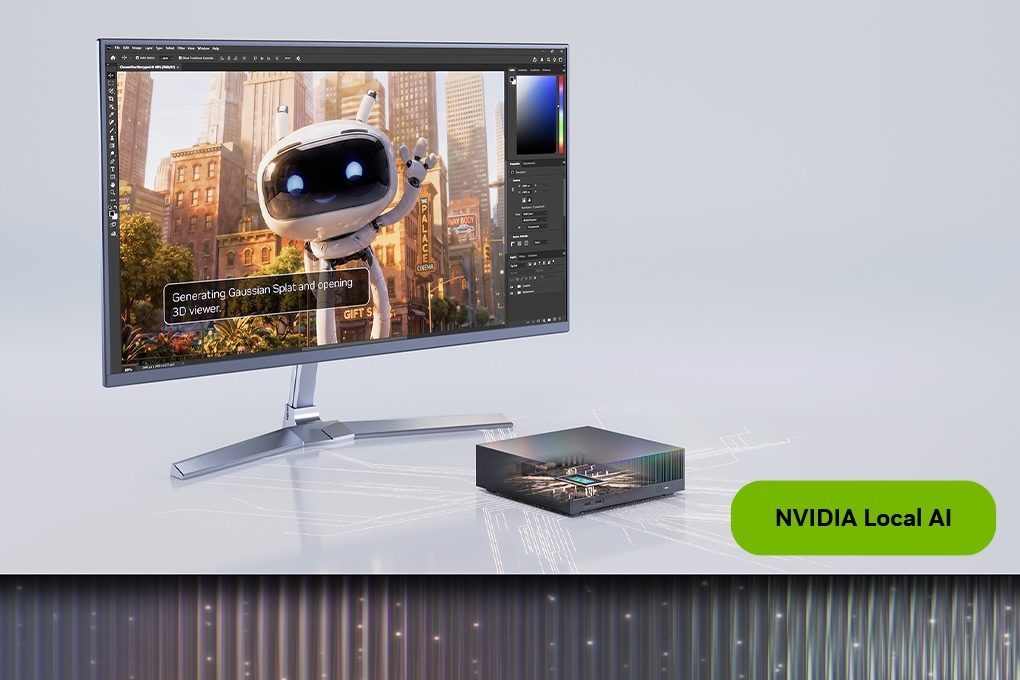
NVIDIA said on November 27 that its RTX Spark compact desktop is on sale from ASUS, Dell and MSI, with a 20-co…
Soracom said on November 27 that Wisora Enterprise now standardly includes technical writers who organize manu…

RayNeo will run a Black Friday sale from November 27 to December 7, 2026, on Amazon.co.jp and its Japan site…

MetAI launched MetAI Creator Studio, which uses AI to propose new titles, descriptions, chapters, thumbnails a…

The Digital Agency is soliciting domestic LLMs — including small and domain-specific models — to be trialled o…

